
Interiors & Remodeling
Polished Concrete Garage Flooring Installation Price Guide (2026)
Plan polished concrete garage flooring costs with a dated pricing reference, calculated area examples, finish specifications, slab checks, and contractor questions.

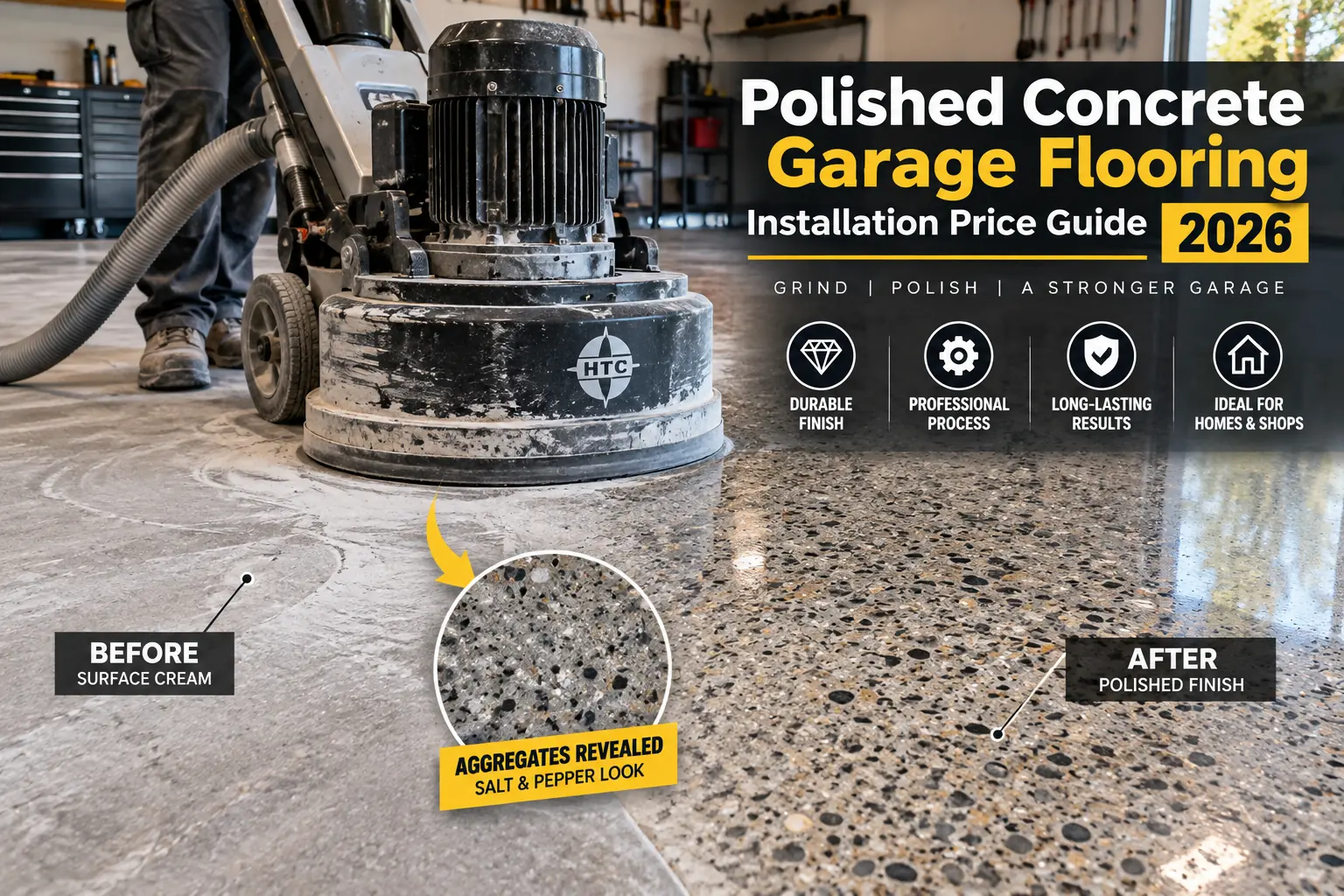
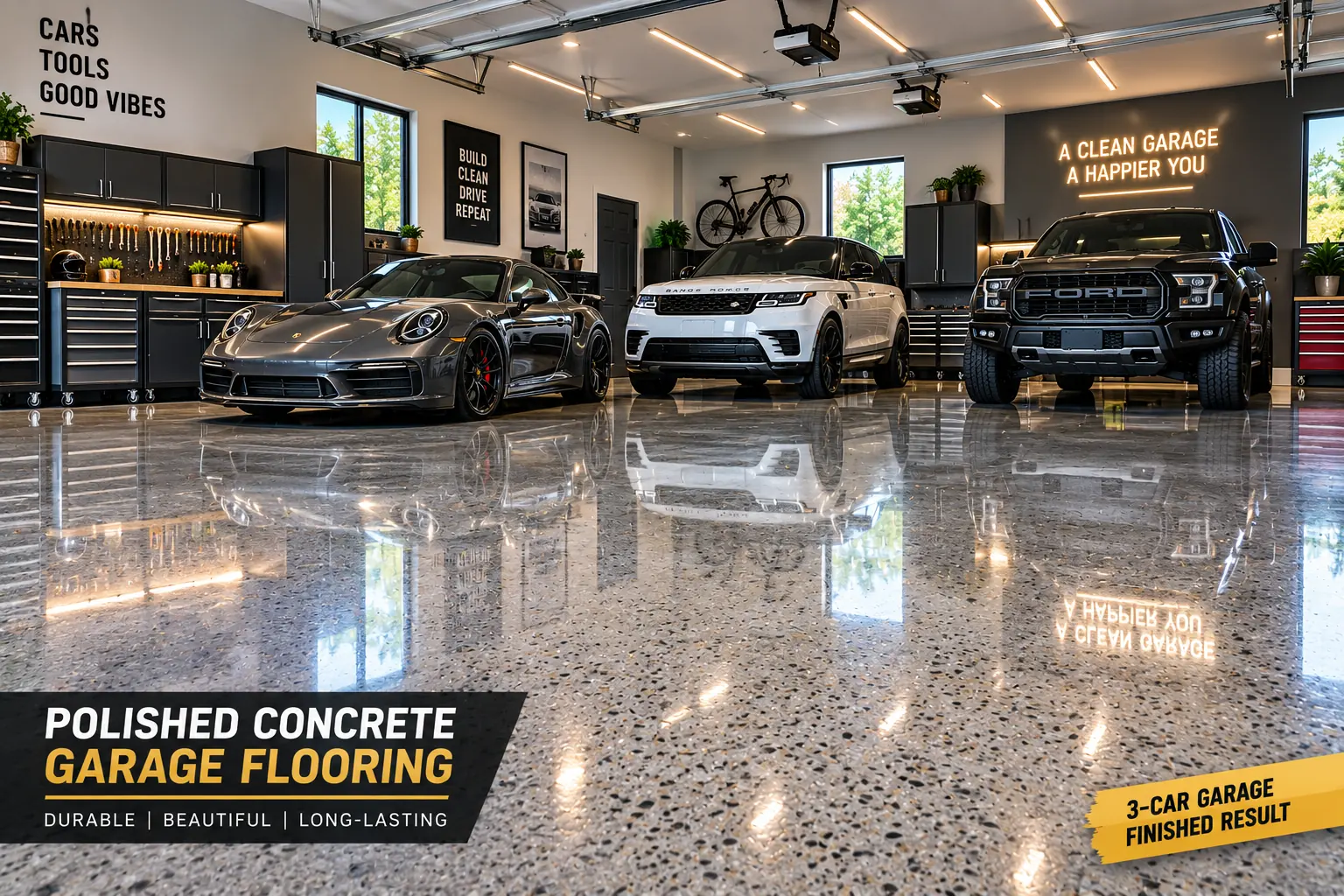
Image disclosure: Images are AI-generated illustrations, not photographs of FixingManual projects or hands-on product tests.
Polished concrete garage flooring is priced from the existing slab, the preparation it needs, and the finish you specify. The car count alone is not a reliable estimate. A small garage with old coating, stained concrete, and difficult edges can require more work per square foot than a large open floor.
For a published benchmark, Concrete Network’s concrete-floor cost guide, reviewed January 27, 2026, lists polished concrete at about $4–$20+ per square foot. That broad range covers differing preparation and design levels. It is not a surveyed average for your particular garage, and a local inspected proposal should establish the actual price.
Calculate the Measured Garage Area
Ask the contractor to confirm the area to be polished, including edges and any separate steps or raised sections. Use measured dimensions rather than a “two-car garage” package label. The following examples multiply the published benchmark by a hypothetical floor area; they are arithmetic illustrations rather than quotes.
| Measured area | At $4 per square foot | At $20 per square foot |
|---|---|---|
| 240 square feet | $960 | $4,800 |
| 480 square feet | $1,920 | $9,600 |
| 720 square feet | $2,880 | $14,400 |
The source range extends beyond the upper rate shown. Minimum charges, substantial repairs, removal, new concrete, or specialized finishes can change the total. Ask which items are already included before adding an extra allowance.

Inspect the Slab Before Choosing a Look
Record existing coatings, oil stains, patches, cracks, uneven areas, and recurring dampness. A contractor should distinguish cosmetic preparation from a condition needing structural or moisture investigation. Polishing exposes and refines the slab; it does not guarantee a uniform new-concrete appearance.
Ask whether a representative sample is possible and which repairs are likely to remain visible. If you want an even decorative color or a different surface system, compare the options in our epoxy versus polished concrete guide before committing to grinding.
Aggregate Exposure and Sheen Are Separate Decisions
Aggregate exposure describes how much of the concrete’s stone and sand is visible. Sheen describes the final surface appearance. More exposed aggregate does not automatically mean higher gloss. The slab’s original placement and composition affect what can be achieved consistently.
Specify the desired appearance using a sample and plain language. Ask the contractor to explain the proposed process, how edges will be handled, and which variations are normal. Avoid assuming that a universal grinding depth or grit number guarantees the look in a reference photograph.
What the Quote Should Include
| Item | Question to resolve |
|---|---|
| Removal | Which coatings or contaminants must be removed, and is disposal included? |
| Repairs | Which cracks and patches are covered, and how will additional damage be approved? |
| Finish | What exposure, sheen, edge treatment, and sample are agreed? |
| Products | Which densifier, guard, or other treatment is proposed? |
| Protection | How are dust, nearby surfaces, belongings, and waste managed? |
| Handover | When can vehicles return, what care is required, and what warranty applies? |
Ask for optional color, decorative cuts, or additional treatment as separate alternatives. Compare proposals on the same base scope before deciding whether an upgrade is worth its cost.
Dust Control and Safe Work
Concrete grinding can create respirable crystalline silica exposure. Professional crews need the controls appropriate to their equipment and tasks under applicable OSHA construction requirements. Ask how they will isolate the work area, collect dust, clean up, and prevent occupants from entering while work is underway.
Do not rent a grinder and dry-grind an unknown slab without appropriate expertise and controls. Existing coatings or other materials may require separate assessment before disturbance. Have persistent wet areas or significant slab movement investigated before a decorative finish is chosen.
Consider Everyday Garage Use
Explain whether the space is primarily for parking, a workshop, storage, or another use. Discuss wet tires, spills, dropped tools, rolling equipment, and cleaning. Ask whether the selected finish and protective treatment suit those conditions. A showroom photograph does not establish wet-use suitability or chemical resistance.
Request written cleaning and maintenance instructions for the actual products. Ask how spills should be handled and how worn areas or future patches can be renewed. Do not budget around a guaranteed lifespan that the contractor cannot support with the proposed system and conditions.
Define the Finish Before Comparing Square-Foot Rates
Ask for a sample or written description of aggregate exposure, sheen, edges, visible patches, joint treatment, and protective products. Confirm whether coating removal and repairs are included. A grit number alone does not describe every aspect of the finished floor. Compare the alternatives in our epoxy versus polished concrete guide, and request a site-specific price rather than relying on a garage-size label.
Frequently Asked Questions
Can every garage slab be polished?
No. Suitability depends on the concrete, damage, contamination, existing treatments, moisture, and the finish you expect. Ask for an inspection and a clear description of limitations before agreeing to the work.
Does more grinding always produce a better finish?
No. It produces a different exposure and can reveal variations or repairs. Agree on the intended appearance and the limits of the existing slab instead of requesting the deepest grind.
Is polishing the same as applying a clear coating?
No. Mechanical polishing refines the concrete surface. A proposal may also include protective products, so ask the contractor to identify both the process and every treatment.
What is the best way to compare prices?
Use the same measured area, preparation assumptions, repair scope, exposure, sheen, products, and handover requirements. Resolve exclusions before comparing the totals.
Before You Approve the Work
Make the price follow an inspected slab and an agreed finish. Keep preparation, repairs, optional decoration, and maintenance visible in the proposal. A useful estimate explains both what the contractor will deliver and what the existing concrete may prevent.
Sources
Keep reading
Related Articles
Interiors & Remodeling
Professional Toxic Mold Remediation Cost Breakdown per Square Foot

Interiors & Remodeling