
Home Systems & Energy
Top Signs You Have a Slab Leak Hidden Under Concrete Floors
FixingManual guide: Recognize signs of a slab leak, including warm floors, meter movement, high water bills, damp flooring and low pressure. Learn when to call for leak detection.
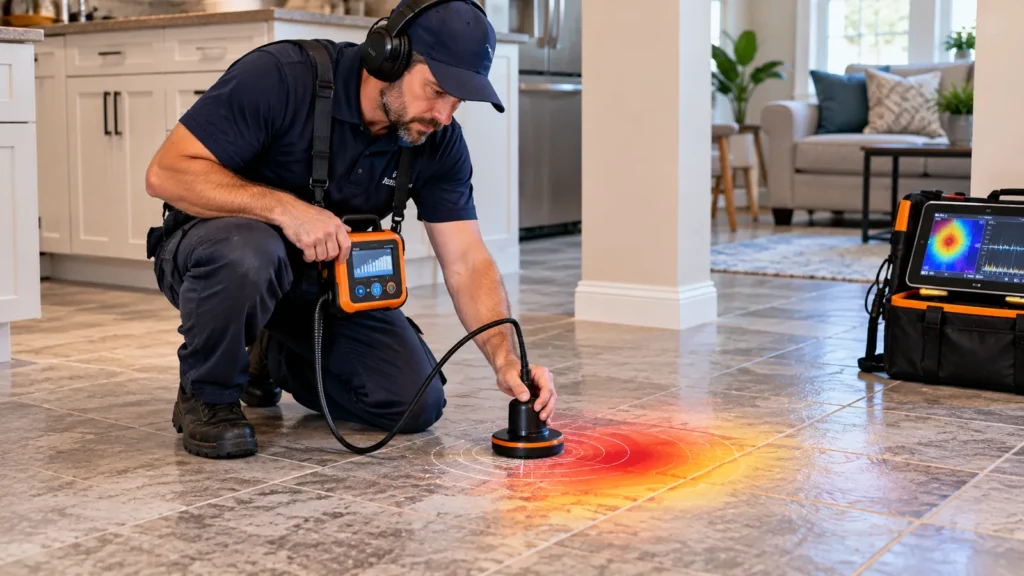
Image disclosure: Images are AI-generated illustrations, not photographs of FixingManual projects or hands-on product tests.
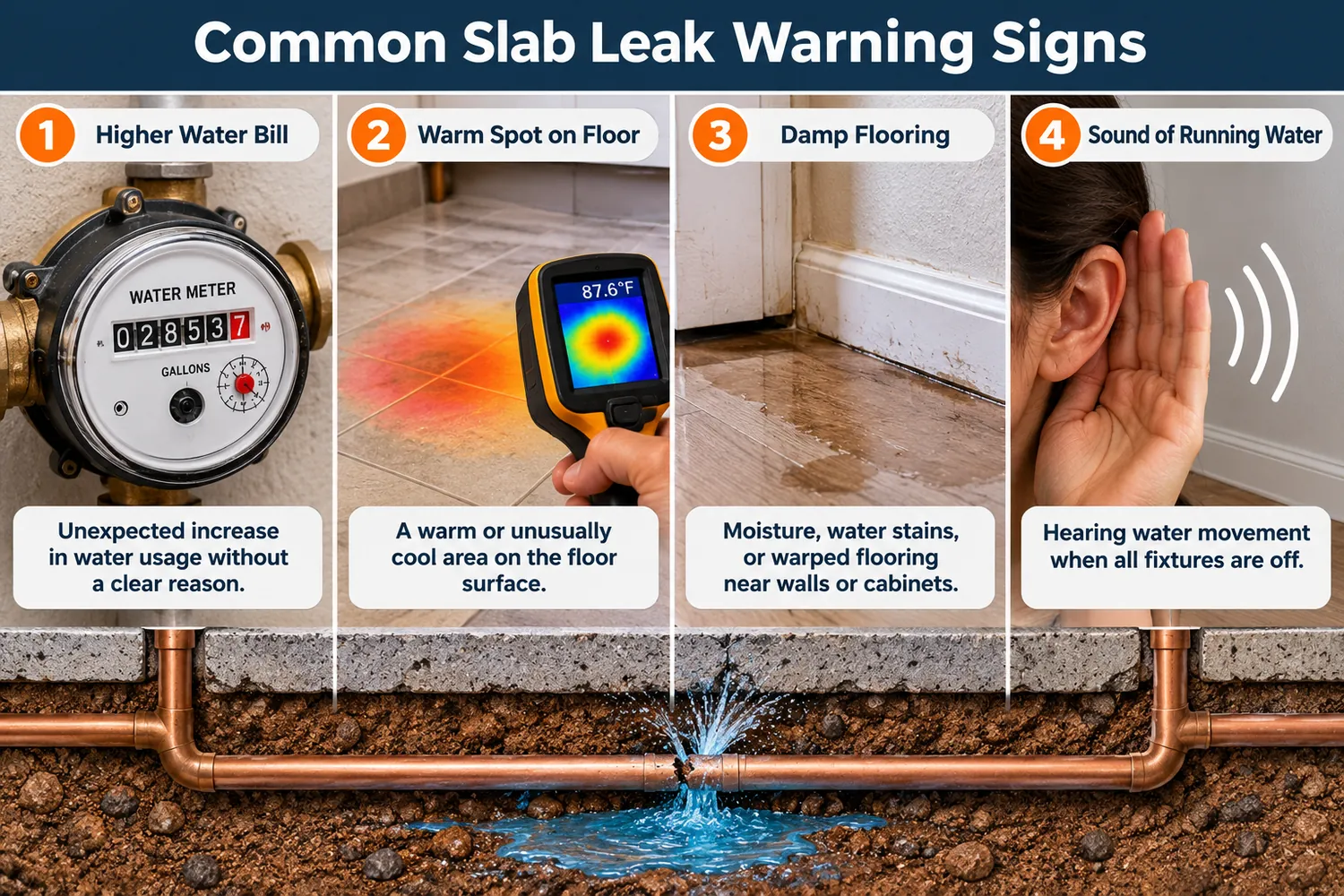
A slab leak is a water-line leak below or within a home’s concrete foundation. Because the pipe is hidden, the first signs of a slab leak may be a higher water bill, a warm patch of flooring, or a faint sound of water running when every fixture is off. None of these clues alone proves that a pipe beneath the slab has failed, but several appearing together deserve quick attention.
Early diagnosis matters. Escaping water can damage flooring and cabinets, encourage microbial growth, waste water, and potentially wash soil away from parts of the foundation. The sensible response is to document the symptoms, perform a few noninvasive checks, and arrange professional slab leak detection before anyone cuts concrete.
1. Your Water Bill Rises Without a Clear Reason
Compare current use with the same season last year, not just the previous month. Irrigation, guests, a running toilet, and rate changes can all raise a bill. If household habits are stable but consumption jumps, look for visible leaks first. Check toilets, faucets, the water heater, hose bibs, irrigation zones, and appliances.
When those areas are dry, an underground supply-line leak becomes more plausible. Save bills or utility-portal screenshots so a plumber can see when the increase began. The EPA WaterSense home-maintenance guidance recommends comparing usage with the same time the previous year when investigating a high water bill.
2. The Water Meter Moves When Everything Is Off
Turn off faucets, the dishwasher, washing machine, ice maker, irrigation, and devices that automatically use water. Do not operate water during the test. Note the meter reading or photograph the leak indicator, wait 15 to 30 minutes, and check again. Movement suggests water is flowing somewhere, although it does not identify the location.
Some homes have irrigation, fire-sprinkler, pool, or water-treatment connections that complicate the test. Your plumber or utility can explain the meter. Never open a sealed utility meter assembly or enter a hazardous meter pit. The EPA’s Fix a Leak Week guide also describes comparing readings over a two-hour period without water use to screen for hidden waste.
3. A Warm or Unusually Cool Spot Appears on the Floor
A leak in a hot-water line can warm tile, concrete, or another floor finish. Homeowners sometimes notice a hot spot on floor surfaces while walking barefoot or when a pet repeatedly chooses the same spot. A cold-water leak may create a cooler or damp area, but temperature differences can also come from sunlight, HVAC ducts, radiant heat, or missing insulation.
Treat the location as a clue, not proof of a water leak under concrete. A professional may compare surface temperatures with an infrared camera and confirm the finding with pressure or other tests. Thermal colors alone do not identify the exact pipe failure.
4. You Hear Water Running Behind a Quiet House
With fixtures and water-using appliances off, listen near the floor and plumbing walls. Hissing, faint rushing, or intermittent movement can come from a supply leak. Appliances, recirculation pumps, humidifiers, toilets, and HVAC condensate can make similar sounds, so note the time and conditions.
Do not rely on the sound alone. Leak-detection specialists use sensitive acoustic listening equipment, pressure measurements, and pipe isolation to narrow the source. If water is audibly running continuously and the meter shows rapid movement, a licensed plumber should assess the situation promptly.
5. Flooring Becomes Damp, Warped, or Discolored
Moisture may darken grout, loosen resilient flooring, cup hardwood, stain carpet, or swell baseboards. A musty odor may appear before visible damage. However, roof leaks, exterior drainage, appliance hoses, bathroom waterproofing failures, and condensation can create similar patterns.
Photograph the affected area, move belongings away, and avoid covering the damp section with rugs or furniture. If water is near electrical equipment, do not touch the area; shut power off only if you can do so safely from a dry location and contact the appropriate professional. Our water damage restoration guide explains how larger water-damage jobs are assessed and dried.
6. Water Pressure Drops at Several Fixtures
A significant supply-line leak can reduce pressure, but a partially closed valve, clogged filter, failing pressure regulator, mineral buildup, or utility work can cause the same symptom. Test more than one fixture and ask neighbors whether they see a similar change. Sudden whole-house pressure loss combined with meter movement warrants urgent plumbing leak repair assessment.
7. Cracks or Movement Appear Alongside Moisture Symptoms
Hairline concrete or drywall cracks are common and do not automatically mean a slab leak. Concern increases when a new or widening crack appears with damp flooring, unexplained water use, sticking doors, or localized settlement. Photograph it with a ruler and date the image.
A plumber diagnoses the water line; a structural engineer evaluates foundation movement. Be cautious of anyone who declares major foundation failure from a single cosmetic crack or sells extensive foundation leak repair without measurements.
Signs of a Slab Leak: Quick Diagnostic Checklist
| Observation | What it may indicate | Practical next step |
|---|---|---|
| Meter moves when every use is off | Active leak somewhere on the property | Confirm devices are off; arrange a plumber’s assessment |
| Warm floor plus rising water use | Possible hot-water slab leak | Limit hot-water use and schedule detection |
| Damp floor without meter movement | Drain, rainwater, appliance or condensation issue | Inspect moisture source before demolition |
| Low pressure at several fixtures | Supply loss or pressure-system problem | Check utility notices; seek diagnosis |
| Multiple fixtures backing up | Possible drain or sewer restriction, not a supply leak | Stop water use and call a drain professional |
What to Do If You Suspect a Leak Under Concrete
When several signs of a slab leak appear together, locate the home’s main water shutoff before an emergency. If water is actively spreading, a pipe is audibly running, or the meter shows rapid flow, shut off the supply if it is safe and you know the correct valve. Protect valuables and contact a licensed plumber. Notify the insurer promptly when covered damage may be involved, but take reasonable steps to prevent additional loss.
Avoid breaking flooring or concrete based on a guess. The visible wet spot may be some distance from the failed pipe because water can travel along the slab, vapor barrier, or flooring layers. For after-hours assistance, compare dispatch and diagnosis terms with our emergency plumbing services cost guide.
How Professionals Locate a Slab Leak
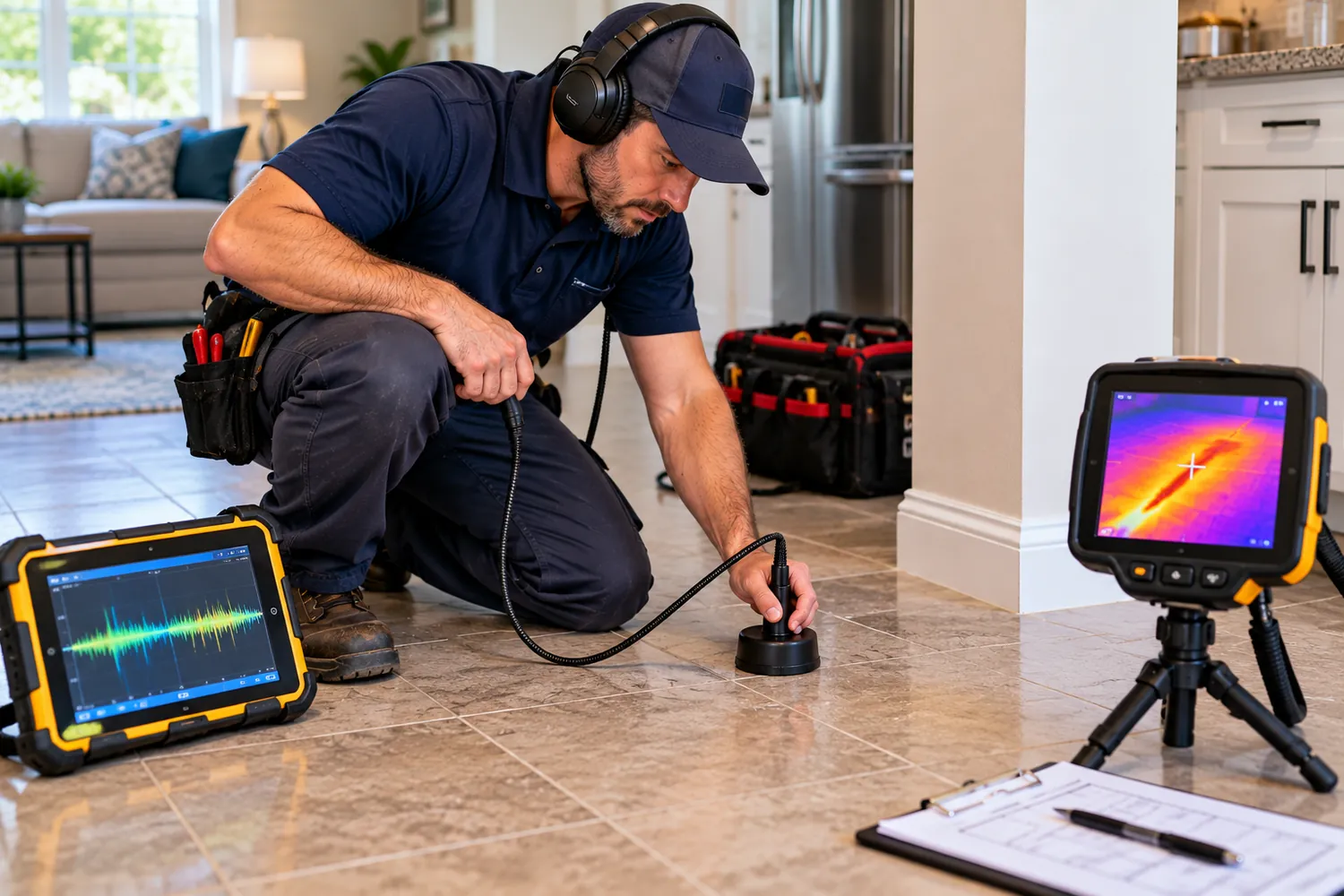
A slab leak detection service usually begins with a review of the plumbing layout and a pressure test. A technician may isolate hot and cold lines, listen with acoustic equipment, inspect temperature differences, use tracer gas where appropriate, or evaluate suspected drain lines with a camera. No single tool works in every building, and thermal imaging alone does not prove a leak.
Ask for the suspected location, the evidence supporting it, the proposed access method, and what happens if the first location is wrong. A careful contractor explains the limits of noninvasive detection rather than promising perfect pinpoint accuracy. Request written findings before authorizing removal of tile or concrete.
Common Slab Leak Repair Approaches
Direct Access and Spot Repair
The contractor opens the flooring and slab near the failure, repairs a localized section, pressure-tests it, and closes the opening. This can be efficient when the remaining pipe is sound and the location is accessible. It also creates dust, noise, and finish-restoration costs that should be identified in the estimate.
Rerouting or Repiping
Instead of reopening the slab, a plumber may abandon the failed run and route new pipe through walls, ceilings, an attic, or another permitted path. This is often considered when embedded piping has several weak locations. Ask the repipe contractor to include drywall and paint restoration or state clearly that those are separate.
Trenchless Lining or Specialized Repair
Some piping and leak conditions may allow a liner or another specialized method. Suitability depends on pipe material, diameter, bends, access, and local code. Request product documentation, expected service life, and warranty terms before committing. A technique appropriate for a drain line may not apply to a pressurized potable-water supply pipe.
How to Compare Slab Leak Repair Estimates
Get a written scope that separates detection, plumbing work, demolition, drying, flooring, concrete restoration, permits, and post-repair testing. Confirm license and insurance requirements with the state or local authority. Ask whether the company performs repairs itself or transfers parts of the project to subcontractors. The FTC recommends comparing written estimates and verifying contractor credentials.
Prices vary widely because a short exposed reroute is different from an occupied-home slab opening with custom flooring. Treat a phone quote as preliminary until the line is tested and access is reviewed. Ask your insurer which portion may be covered; policies often distinguish sudden water damage from pipe repair, long-term seepage, and foundation work. The Insurance Information Institute’s coverage guide describes these broad policy distinctions, but the actual policy controls.
Prepare a Leak-Diagnosis Record
Give the plumber a short record of water-meter observations, recent bills, the affected rooms, and when moisture or warmth appears. Include irrigation, toilets, and other possible water users when discussing the observations. Ask the diagnostician to distinguish evidence of a leak from proof of its location before approving demolition. If flooring or walls are wet, discuss water-damage drying and documentation as a separate scope.
Frequently Asked Questions
Can a slab leak stop on its own?
A symptom can appear intermittent as pressure or hot-water use changes, but a damaged pressurized pipe does not heal. Continued delay can increase water loss and hidden damage.
Does a warm floor always mean a hot-water leak?
No. Sun exposure, heating ducts, radiant systems, and appliance heat can create warm areas. Meter and pressure testing help establish whether water is escaping.
Should I call a plumber or a foundation company first?
When water-use and plumbing symptoms lead the concern, start with a licensed plumber experienced in noninvasive leak detection. Seek a structural engineer if measured movement or significant structural cracking is also present.
The Bottom Line
The strongest evidence is a pattern of signs of a slab leak: unexplained water use, meter movement, a temperature or moisture anomaly, and supporting pressure-test results. Record what you observe, limit damage, and pay for diagnosis before demolition. Accurate source tracing makes the repair plan more targeted and contractor estimates easier to compare.
Sources
Keep reading
Related Articles
Home Systems & Energy
Aluminum Wiring Pigtail Repair Cost for an Older Home
Home Systems & Energy