
Home Systems & Energy
How Certified Water Damage Restoration Services Handle Flooded Basements
See how certified water damage restoration services inspect, extract, dry, clean, document, and repair a flooded basement.
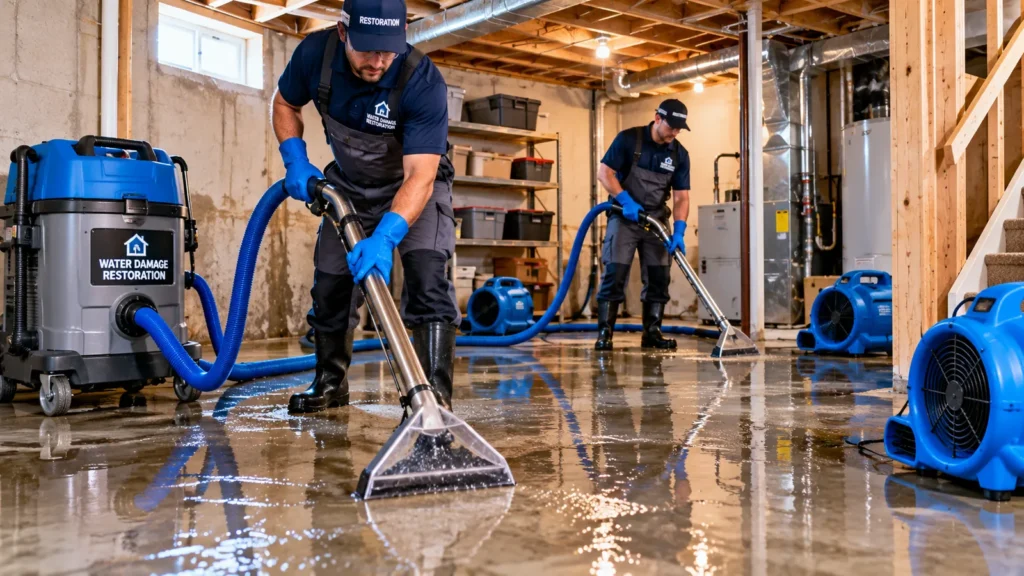
Image disclosure: Images are AI-generated illustrations, not photographs of FixingManual projects or hands-on product tests.
A flooded basement is not simply a pumping job. Water can move under flooring, wick into drywall, soak insulation, enter wall cavities, and leave moisture where the surface already looks dry. If moisture appears on a concrete floor without an obvious flooding source, see our guide to the signs of a slab leak before authorizing demolition. Certified water damage restoration services follow a documented process to control hazards, remove water, track drying, clean affected materials, and prepare the space for repair.
The exact response depends on the source of water, the time it has been present, the materials affected, and whether electricity, sewage, fuel, or structural damage is involved. Homeowners should not enter standing water when electrical equipment may be energized. If there is a gas odor, damaged structure, or active sewage backup, leave the area and contact the appropriate emergency or utility service.
At FixingManual, this guide focuses on what homeowners should expect from professional basement flood restoration, how to compare providers, and which records matter before reconstruction begins.
What Certified Water Damage Restoration Services Do First
During the emergency call, the dispatcher will usually ask when the flooding began, how deep the water is, where it came from, whether the source has stopped, and whether utilities are affected. Photos and a short video can help, but no one should cross water to collect them.
The company may advise the homeowner to shut off a supply valve only if it can be reached safely. A basement flood caused by stormwater, a failed sump pump, a burst pipe, or a sewer backup requires different controls. The source should be stopped or stabilized before drying equipment can solve the problem. If the loss started with a plumbing failure, our emergency plumbing service cost guide explains what after-hours calls can include.
Contact the insurer promptly as well. Ask what documentation is required, whether emergency mitigation can begin immediately, and whether the policy has separate rules for groundwater or flood coverage. Restoration contractors can document damage, but they do not decide coverage unless they are acting in a formally authorized insurance role.
Technicians Inspect the Basement Before Extraction
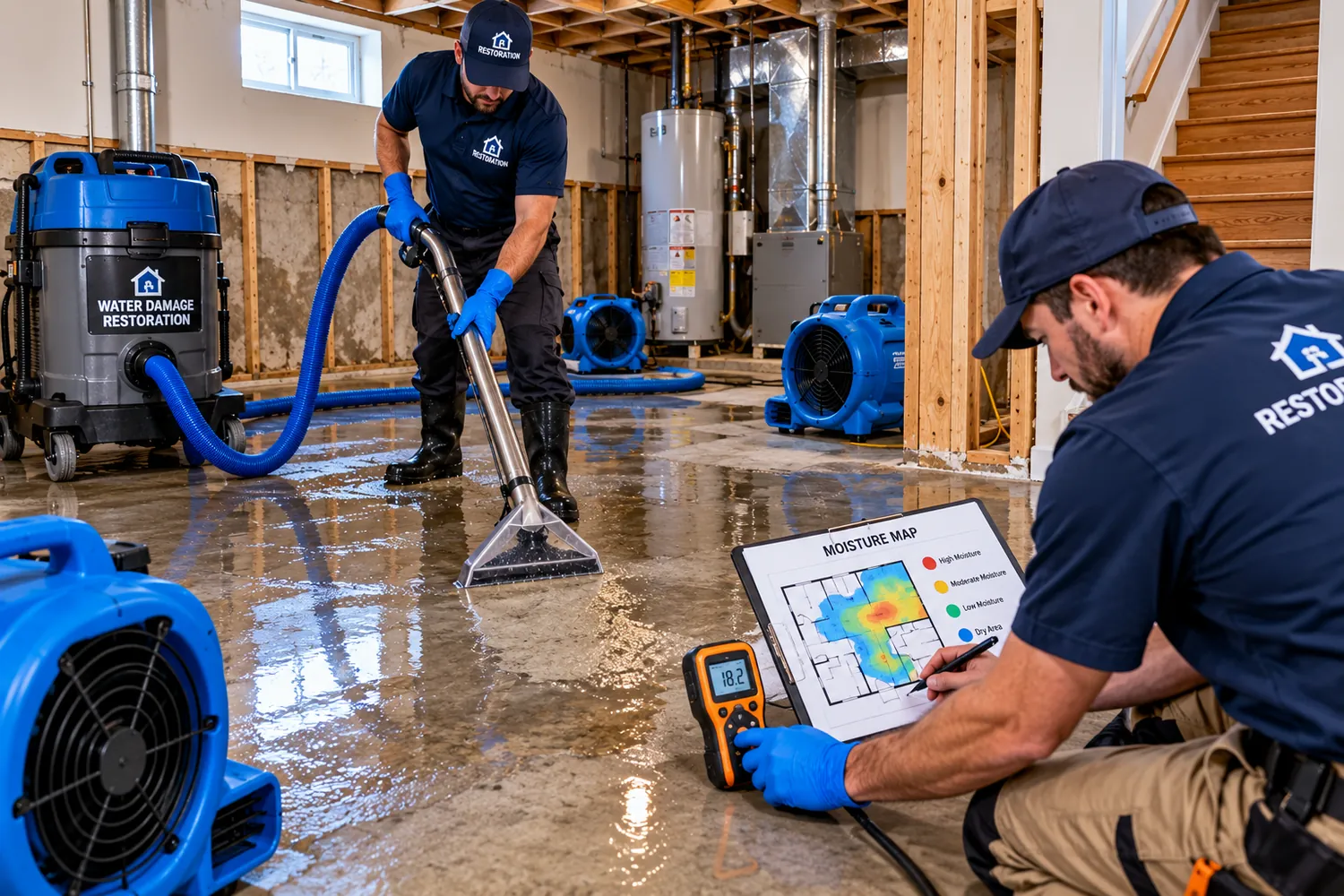
Certified water damage restoration services begin by establishing the affected area and the likely path of moisture. Technicians may use moisture meters, thermal imaging as a screening tool, humidity readings, and visual checks around baseboards, wall cavities, stairs, mechanical equipment, and adjoining rooms. Thermal images can indicate temperature differences, but meter readings and physical inspection are still needed to confirm moisture.
The team also evaluates the water source and contamination risk. A clean supply-line loss is handled differently from water containing sewage, chemicals, or outdoor flood contaminants. Conditions can worsen as water sits and contacts dirty materials, so the original source is only part of the assessment.
| Inspection question | Why it matters |
|---|---|
| Where did the water originate? | Guides protective measures and cleaning decisions |
| How far did moisture travel? | Defines the work area beyond visible water |
| Which materials are porous? | Helps determine what may be dried or removed |
| Are utilities or structures affected? | Identifies specialists and access restrictions |
| How long has the area been wet? | Influences microbial risk and drying strategy |
How Certified Water Damage Restoration Services Handle Emergency Water Extraction
Professional emergency water extraction equipment removes water faster than small household vacuums. Depending on access and depth, crews may use submersible pumps, truck-mounted extraction units, portable extractors, or weighted tools designed to pull water from carpet and pad.
The fastest possible pump-out is not always the only consideration. Deep exterior flooding can place pressure against foundation walls, and utilities or structural conditions may require specialist direction. The crew should explain the plan rather than begin without checking the site.
As water is removed, technicians protect unaffected areas and may move contents to a dry zone. Restorable items are separated from materials that cannot be safely cleaned or economically saved. The company should create a clear inventory for items removed from the house.
Flooded Basement Cleanup: When Damaged Materials Must Be Removed
Porous materials can trap contamination and slow drying. Depending on the water source and condition, crews may remove carpet pad, sections of drywall, insulation, laminate flooring, swollen cabinetry, or other unsalvageable materials. Clean, structurally sound framing and hard surfaces may be retained after proper cleaning and drying.
Removal should be limited to what the documented condition requires. Ask the project manager to show moisture readings or visible damage and explain why each material is being removed. If asbestos or lead-based paint may be present, especially in an older home, testing and qualified abatement may be required before demolition.
Structural Drying Services After a Flooded Basement
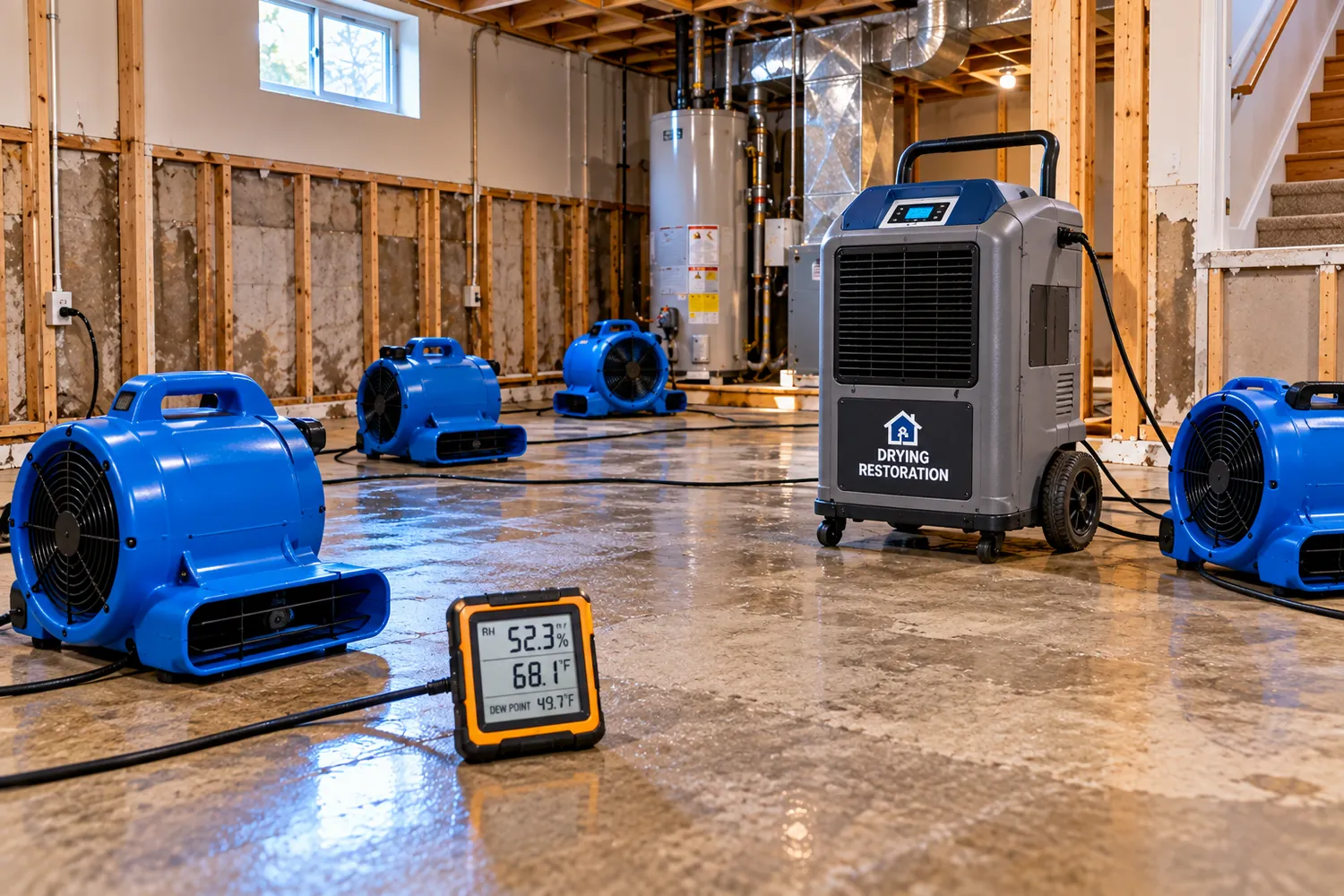
After extraction, the team designs a drying setup for the basement. Air movers increase evaporation across wet surfaces, while dehumidifiers remove moisture from the air. In some assemblies, technicians may use floor mats, wall-cavity drying systems, or carefully planned openings to reach trapped moisture.
Equipment quantity is not a reliable quality measure by itself. The important issue is whether the system produces measurable drying without creating unsafe conditions. The crew should record moisture and environmental readings during follow-up visits and adjust equipment as the building responds.
The CDC recommends cleaning and drying or removing wet items within 24 to 48 hours after flooding to reduce mold growth. That target does not mean every saturated structure will be completely dry in two days; it emphasizes starting effective cleanup and drying without delay. Actual drying time may extend for several days depending on materials, weather, and the extent of water movement.
Cleaning and Sanitizing Depend on the Water Source
Certified water damage restoration services base cleaning decisions on contamination risk, not on whether the water looks clear. Technicians may use physical cleaning, controlled removal, HEPA vacuuming after materials are dry, and appropriate antimicrobial products where justified. Product labels and dwell times matter, and chemicals should never substitute for removing contamination and drying the structure.
Sewage and outdoor floodwater require stronger precautions because they may contain microorganisms, debris, or chemicals. EPA guidance advises professional help when water or mold damage involves sewage or other contaminated water. The company should describe worker protection, containment, waste handling, and how clean areas will be protected.
Odor treatment comes after source removal and cleaning. Fragrance alone is not remediation. A persistent musty odor may indicate hidden moisture or affected material that still needs attention. If cleanup is needed, our mold remediation cost per square foot guide explains typical pricing, containment, and the difference between remediation and rebuilding. If a roof leak contributed to the moisture problem, see our guide on detecting and fixing roof leaks before mold spreads.
How Certified Water Damage Restoration Services Monitor Drying
Certified water damage restoration services should provide more than a verbal statement that the basement “feels dry.” The file may include an initial moisture map, equipment log, daily or periodic readings, photographs, demolition notes, and a final drying record.
Basement Flood Restoration Before Reconstruction Begins
Before repairs begin, certified water damage restoration services should confirm that the original cause has been corrected. That may involve plumbing repair, sump-pump replacement, exterior drainage work, foundation repair, backwater protection, or grading. New drywall and flooring will not prevent another flood.
Where the problem involves a damaged sewer lateral or recurring backup, compare the scope with our main sewer line replacement cost guide before approving major underground work.
What Certified Water Damage Restoration Services May Cost
National price guides vary because a small clean-water loss is very different from a finished basement affected by sewage. A 2026 SERVPRO cost guide, citing Angi data, lists broad planning figures of about $3.50 per square foot for minor clean-water work, $5.25 per square foot for moderate gray-water work, and $7.50 per square foot for severe black-water or structurally complex work. It also reports a wide overall project range of roughly $450 to $16,000.
| Example severity | Planning figure | Typical context |
|---|---|---|
| Minor | About $3.50/sq. ft. | Clean-water spill or limited damage |
| Moderate | About $5.25/sq. ft. | Gray-water cleanup or more involved drying |
| Severe | About $7.50/sq. ft. | Black water, multiple rooms, or structural repairs |
| Broad project range | About $450–$16,000 | Varies widely by size, contamination and repairs |
These are planning figures, not a quote for a specific basement. Ask for a written scope that separates emergency extraction, demolition, equipment, monitoring, cleaning, contents handling, and reconstruction where applicable.
How to Compare Certified Water Damage Restoration Services
Certification is useful, but it should be verified and combined with insurance, experience, and a clear contract. Ask who holds the certification, whether that person will supervise the project, and which published restoration standard guides the work.
- Request proof of liability insurance and workers’ compensation where required.
- Ask for a written scope, equipment rates, monitoring schedule, and change-order process.
- Confirm whether mold, sewage, contents, and reconstruction are included or separate.
- Ask how the company documents the drying goal and project completion.
- Compare multiple estimates when the emergency is stable enough to do so.
The FTC recommends checking contractor credentials and insurance, obtaining written estimates, and avoiding full payment upfront. Emergency work may require quick authorization, but the company should still explain pricing and obtain documented approval.
Collect the Drying Record Before Reconstruction
Ask for the affected-area map, initial readings, equipment placement, progress readings, and the criteria used to end drying. Confirm what was removed and which repairs remain outside the restoration contract. Photograph the work for your own records without entering an unsafe area. Where mold remediation is proposed, compare the separate scope with our mold remediation cost guide.
Frequently Asked Questions
Will every flooded basement develop mold?
No, but delayed drying raises the risk. Rapid water removal, cleaning, humidity control, and removal of unsalvageable porous materials help limit growth. If mold is visible or suspected in a large area, ask for a professional assessment.
Does homeowners insurance cover basement flooding?
Coverage depends on the cause and policy. Sudden indoor water releases may be treated differently from groundwater, surface flooding, sewer backup, or poor maintenance. Contact the insurer promptly and request a written coverage explanation.
How do I know when the basement is dry?
The contractor should use documented moisture measurements, not appearance alone. Request the final readings and a list of any areas that could not be accessed or verified.
A Documented Process Protects the Repair
A flooded basement needs quick action, but speed should not replace careful assessment. Certified water damage restoration services should control hazards, identify the water source, extract standing water, remove unsalvageable material, dry the structure, record progress, and fix the cause before reconstruction. That documentation gives the homeowner a better basis for insurance discussions, contractor comparisons, and future repairs.
Sources
Keep reading
Related Articles
Home Systems & Energy
Aluminum Wiring Pigtail Repair Cost for an Older Home
Home Systems & Energy