
Home Systems & Energy
Central Air Conditioner Installation Cost Guide for Cold Climates
Central air conditioner installation cost in cold climates depends on equipment, labor, ducts, electrical work and permits. FixingManual explains realistic planning ranges and HVAC quote comparisons.
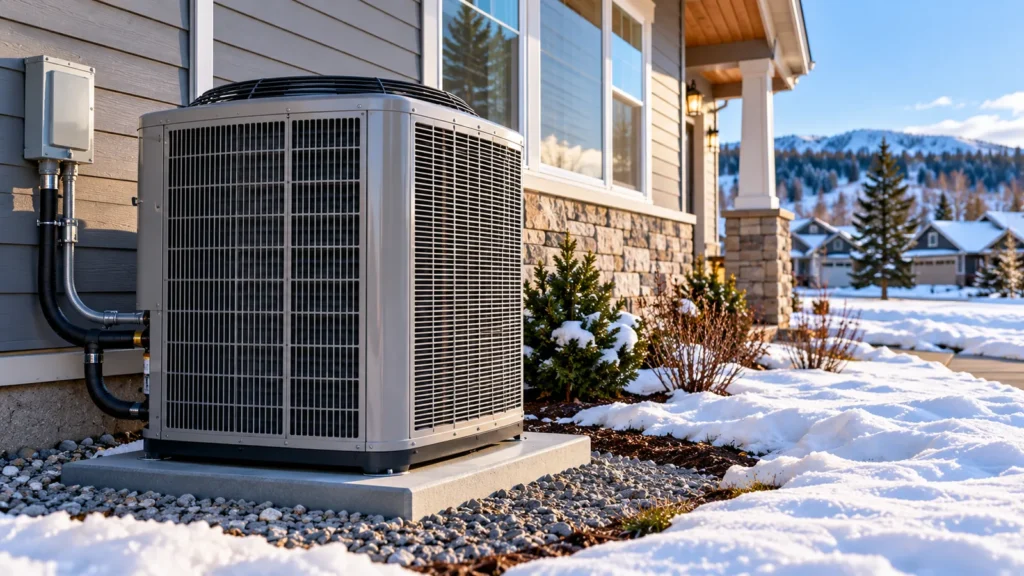
Image disclosure: Images are AI-generated illustrations, not photographs of FixingManual projects or hands-on product tests.
Central air conditioner installation cost in a cold climate is not automatically lower just because the cooling season is shorter. Homes in Minnesota, Maine, upstate New York, and other northern areas may have boilers, radiators, older duct systems, limited electrical capacity, or equipment locations affected by snow and ice.
HomeGuide’s AC replacement guide, dated July 25, 2025, lists about $5,000–$8,300 for standard-efficiency replacement, $8,300–$12,500 for mid-range systems, and $12,500–$14,000+ for high-end systems. Its table assumes a 2,000-square-foot home and excludes duct modifications. These are source-specific screening ranges, not a northern-climate price survey or a sizing method.
This FixingManual guide explains the main cost components, cold-climate design choices, the difference between central AC and a cold-climate heat pump, and what to look for when comparing HVAC contractor proposals.
Central Air Conditioner Installation Cost at a Glance
| Source replacement category | Published installed range | Check before using |
|---|---|---|
| Standard efficiency | $5,000–$8,300 | Existing ducts and the actual included scope |
| Mid-range | $8,300–$12,500 | Specified equipment and controls |
| High-end | $12,500–$14,000+ | Premium equipment and excluded infrastructure |
The wide ranges are intentional. A tight 1,600-square-foot house may need less capacity than a smaller drafty home with large west-facing windows. Online price-per-square-foot shortcuts cannot replace a room-by-room load calculation.
What Is Included in a Professional HVAC Installation Estimate?
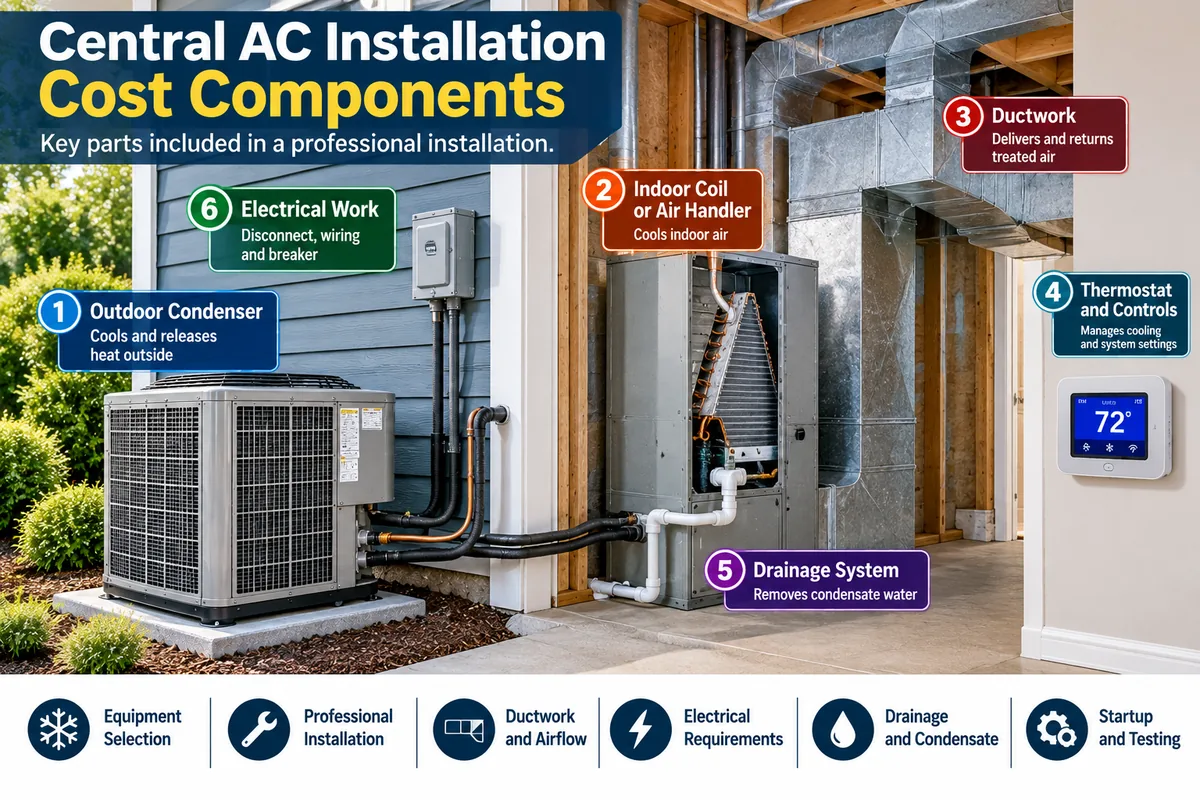
A complete HVAC installation estimate should identify the outdoor condenser, indoor coil or air handler, rated system efficiency, capacity, thermostat or controls, refrigerant lines, condensate drainage, electrical disconnect, startup, and disposal of replaced equipment.
The proposal should also state whether permits, crane service, duct sealing, equipment pad, finish repairs, and warranty registration are included. Ask for the matched-system reference or AHRI certificate information. Mixing components that were not tested together can affect efficiency, performance, and warranty coverage.
Major Factors That Change Central Air Conditioner Installation Cost
Equipment capacity and load calculation
An HVAC contractor should perform a Manual J or equivalent load calculation using insulation, air leakage, windows, orientation, occupancy, and local design temperatures. Bigger is not better. Oversized equipment may cycle quickly, control humidity poorly, and cost more. Undersized equipment may struggle during design conditions.
Existing duct condition and ductwork replacement cost
Cold-climate houses with forced-air furnaces may already have usable ducts, but heating ducts are not always ideal for cooling. Supply location, return capacity, leakage, insulation, and airflow all matter. A boiler-heated home may need an entirely new distribution system or a ductless alternative.
If your attic or duct system also needs efficiency work, review our attic spray foam vs. fiberglass cost guide before final equipment sizing. Air sealing and insulation can change the load the new system must handle.
Efficiency and compressor design
Higher-efficiency, two-stage, and variable-capacity systems usually cost more up front. They may improve comfort and part-load performance, but savings depend on summer operating hours, electricity rates, correct sizing, and installation quality. In a short cooling season, the payback for the highest efficiency tier can be longer.
Electrical and condensate work
The outdoor unit needs a correctly sized dedicated circuit, disconnect, and wiring. An older panel or crowded service may require additional work. If a service upgrade is part of the project, our 100 amp to 200 amp electrical service upgrade cost guide explains the main cost components.
The indoor coil also creates condensate. A compliant drain, trap, pump, overflow protection, or freeze-resistant routing can affect the final central air conditioner installation cost. This is why a complete central air conditioner installation cost estimate should separate equipment from electrical, drainage, and duct corrections.
Access, permits, and local labor
Attics, crawlspaces, finished ceilings, long refrigerant-line routes, urban equipment placement, and historic-home restrictions add labor. Permit and inspection requirements differ by jurisdiction. Snow-load exposure and roof-shed areas also influence where the outdoor unit can safely sit.
Cold-Climate Air Conditioning Design Choices That Matter
Place the condenser where drifting snow, roof runoff, and falling ice will not block or damage it. The installer should follow manufacturer clearances and local requirements. An improvised tall stand can create vibration or service problems if it is not engineered for the equipment.
Air sealing and insulation often provide more year-round value than simply buying a larger system. Sealing accessible ducts and insulating ducts outside conditioned space can reduce loss. The return-air path should be designed rather than assumed.
Cold regions also experience mild spring and fall days. Variable-capacity or appropriately sized equipment can run steadily at lower output instead of short cycling. If wildfire smoke or allergies are concerns, discuss filtration and ventilation without selecting a filter that the blower cannot support.
Heat Pump vs Central AC in a Cold Climate
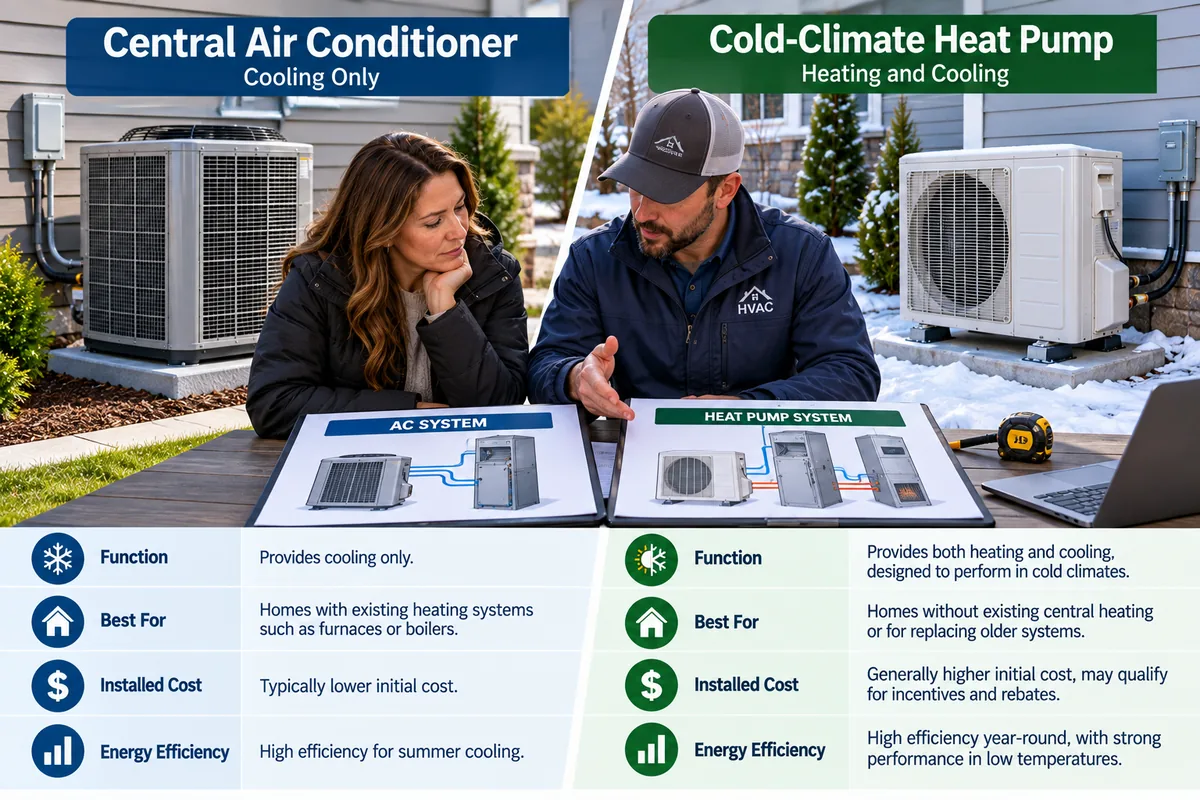
A central air conditioner cools only. An air-source heat pump can cool and provide heat, and qualifying cold-climate models are designed to operate at low outdoor temperatures. A heat pump may reduce fossil-fuel use or serve as the primary system with electric or fuel backup. The economics depend on electricity and fuel rates, climate, the building envelope, and available incentives.
Keep an existing boiler or furnace only after the contractor explains how the controls will coordinate the systems. If an existing furnace fails during cold weather, our emergency furnace repair services guide explains safe no-heat checks, after-hours repair costs, and when to call for urgent help. “Dual fuel” is not simply two appliances in the same house; it needs a control strategy and an agreed switchover point. Compare life-cycle cost and comfort, not only the equipment price.
Sample Central AC Budget for a Northern U.S. Home
| Quote component | Information to request |
|---|---|
| Matched equipment | Indoor/outdoor models, capacity, and matched-system reference |
| Installation | Labor, refrigerant piping, and startup checks |
| Ductwork | Measured repair or replacement scope and balancing |
| Electrical | Circuit, disconnect, and any service changes |
| Other work | Controls, condensate, base, permits, and restoration |
These categories overlap among contractors. One company may bundle labor with equipment while another itemizes it. Use the table to identify omissions, not to add a guaranteed total.
How to Compare HVAC Installation Estimates
Get at least two or three written proposals based on the same comfort goals. Each should show the load calculation result, model numbers, capacity, efficiency rating, duct scope, electrical responsibility, controls, labor warranty, equipment warranty, payment schedule, and permit handling.
- What measured problem supports each duct modification?
- Is the indoor and outdoor equipment a rated match?
- Who performs the electrical and permit work?
- How will airflow and refrigerant charge be verified at startup?
- Does the price include haul-away and finish repairs?
- Who registers the warranty, and what maintenance is required?
Verify the contractor’s license and insurance where required. Avoid large cash payments, pressure to sign immediately, or a proposal that sizes equipment only from the old nameplate.
Ways to Control the Budget Without Cutting Quality
Schedule estimates before the first heat wave, when contractor availability may be better. Improve obvious air leaks and insulation before final sizing. Keep the equipment location reasonably close to the indoor coil when design and code allow. Choose efficiency based on modeled operating cost rather than the highest rating on the sales sheet.
Check federal, state, utility, and manufacturer incentives before signing. Eligibility can depend on exact model numbers, efficiency tiers, installation date, tax liability, and paperwork. Treat any incentive as separate from the contractor’s base price until eligibility is confirmed.
If you are also considering connected controls, see our smart home automation installation cost guide for planning around thermostats, sensors, and network-dependent controls.
Ask for the Design Documents With the Quote
Request the proposed equipment model numbers, design calculation summary, ductwork scope, controls, and the reason for the selected capacity. Ask who handles permits, electrical changes, condensate routing, and startup checks. Compare any heat-pump alternative on the same included scope. If service capacity needs investigation, use our electrical upgrade guide to separate a panel change from a full service upgrade.
Frequently Asked Questions
Does a cold climate require a smaller air conditioner?
Not automatically. Cooling load depends on the house and local summer design conditions. A professional load calculation may support a smaller unit than the existing one, but latitude alone is not enough.
Can central air use boiler radiators?
No. Radiators distribute heated water or steam, not cooled air. A boiler-heated house needs ducts, ductless indoor units, or another cooling distribution design.
How long does central air conditioner installation take?
A compatible replacement may take one or two working days. New ducts, electrical upgrades, asbestos procedures, finish work, or complex controls can extend the schedule significantly.
The Bottom Line
The central air conditioner installation cost should be compared on a complete, matched-system scope. Use the cited replacement ranges only as background; a home needing ducts, electrical changes, or a heat-pump conversion needs a separate inspected proposal. Correct sizing, airflow, and startup verification matter alongside price.
Sources
Keep reading
Related Articles
Home Systems & Energy
Aluminum Wiring Pigtail Repair Cost for an Older Home
Home Systems & Energy