
Interiors & Remodeling
Professional Toxic Mold Remediation Cost Breakdown per Square Foot
FixingManual guide: Review mold remediation cost per square foot, sample project totals, price factors, extra charges, and questions to ask a professional remediation contractor.
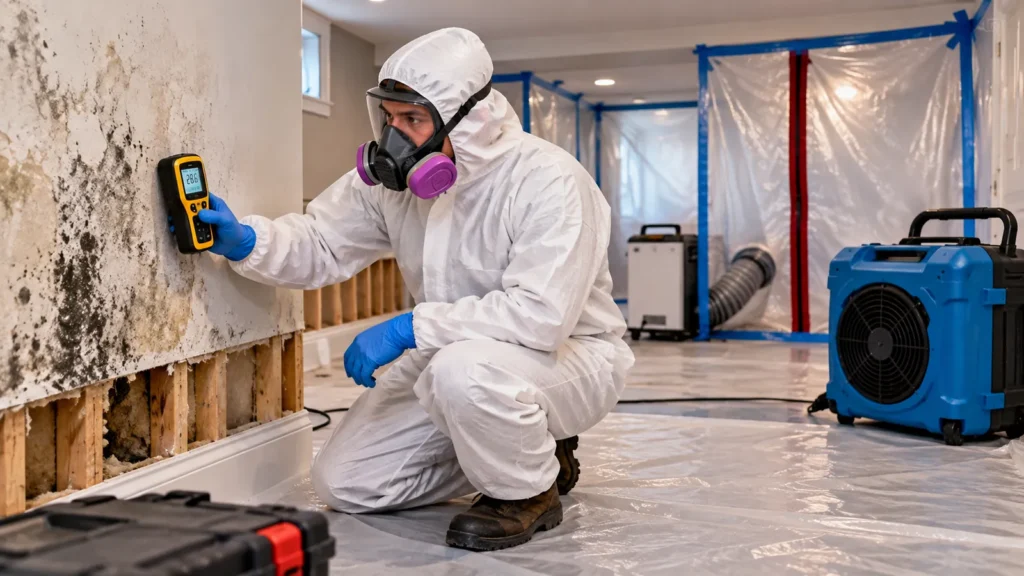
Image disclosure: Images are AI-generated illustrations, not photographs of FixingManual projects or hands-on product tests.
Mold remediation cost per square foot is a useful starting point for budgeting, but a simple rate never tells the whole story. Professional mold remediation can include containment, access work, material removal, detailed cleaning, HEPA air filtration, moisture correction, disposal, documentation, and reconstruction. A small area behind a vanity may carry a minimum service charge, while the same number of square feet inside an HVAC system can cost far more.
The phrase “toxic mold” is widely used in searches, yet it is not a reliable pricing or risk category. The CDC advises that homeowners do not need to identify the mold type before removing it. Visible or musty mold should be addressed, and the moisture source must be corrected. This guide uses current national planning ranges while explaining what a professional proposal should include.
Average Mold Remediation Cost per Square Foot
A March 2026 cost guide from This Old House reports a typical professional range of about $10 to $25 per square foot, with an average project near $2,300 and a common overall range of approximately $1,200 to $3,750. Small projects may run about $500 to $1,500, while extensive whole-house work can reach $10,000 to $30,000.
These numbers are budgeting references, not fixed prices. Minimum mobilization charges can make a 20-square-foot job cost more than the result of multiplying 20 by a published rate. Conversely, a large open area may have a lower unit cost than a cramped wall cavity because containment and equipment setup are spread over more square footage.
| Affected area | Planning range at $10–$25 per sq. ft. |
|---|---|
| 50 square feet | $500–$1,250 |
| 100 square feet | $1,000–$2,500 |
| 200 square feet | $2,000–$5,000 |
| 500 square feet | $5,000–$12,500 |
| 1,000 square feet | $10,000–$25,000 |
Use the table to check whether an estimate is broadly plausible, then evaluate the actual scope. A mold remediation cost per square foot that includes demolition and disposal cannot be compared directly with a quote for surface cleaning only.
Why “Toxic Mold” Can Be Misleading
Color does not establish how dangerous a growth is, and black-colored mold is not automatically a separate billing category. The practical remediation questions are how much material is affected, what became wet, whether growth is hidden, how contamination will be contained, and whether the moisture problem has been fixed.
The CDC says it does not recommend routine home mold testing and notes that there are no set federal standards for an acceptable quantity of different mold types in a home. Testing may still be used in a specific investigation, dispute, healthcare-directed assessment, or post-remediation plan, but homeowners should ask what decision the test will change before paying for it.
Main Factors That Change Mold Remediation Cost per Square Foot
Size and Containment
Larger areas require more labor, cleaning, and disposal. They may also need multiple containment zones or larger negative-air equipment. EPA guidance says many homeowners can handle a moldy area smaller than about 10 square feet in ordinary circumstances, but professional help is more appropriate when there has been extensive water damage, contamination covers a larger area, sewage is involved, the HVAC system may be affected, or occupants have health concerns.
Location and Access
Open basement walls are easier to reach than mold behind built-in cabinets, inside a tight crawl space, or above a finished ceiling. Difficult access increases setup and demolition time. High-rise access, occupied multifamily buildings, and areas near sensitive contents may require additional protection. This is why basement mold remediation can price differently from concealed wall or ceiling work even when the measured area is similar.
Materials Affected
Hard, nonporous surfaces can often be cleaned and dried. Porous materials such as drywall, carpet pad, ceiling tile, and some insulation may need removal because growth can penetrate spaces that are difficult to clean completely. Structural wood may be retained when it remains sound and can be properly cleaned and dried, but damaged framing may require separate repair.
HVAC Involvement
Suspected mold in an air handler or duct system changes the project. EPA warns against operating an HVAC system that is known or suspected to be contaminated because it may spread material through the building. Specialized inspection, cleaning, or component replacement can add substantial cost, and ordinary duct cleaning is not a substitute for correcting the moisture source.
Water Source and Time
A small plumbing leak caught quickly is different from long-term seepage or a sewage event. Contaminated water requires stronger protective measures and may make more materials unsalvageable. Delayed discovery also increases the chance that moisture has moved behind finishes. If the project follows a flood or burst pipe, our certified water damage restoration services guide explains extraction, structural drying, and cleanup planning.
What a Professional Mold Remediation Price Should Include
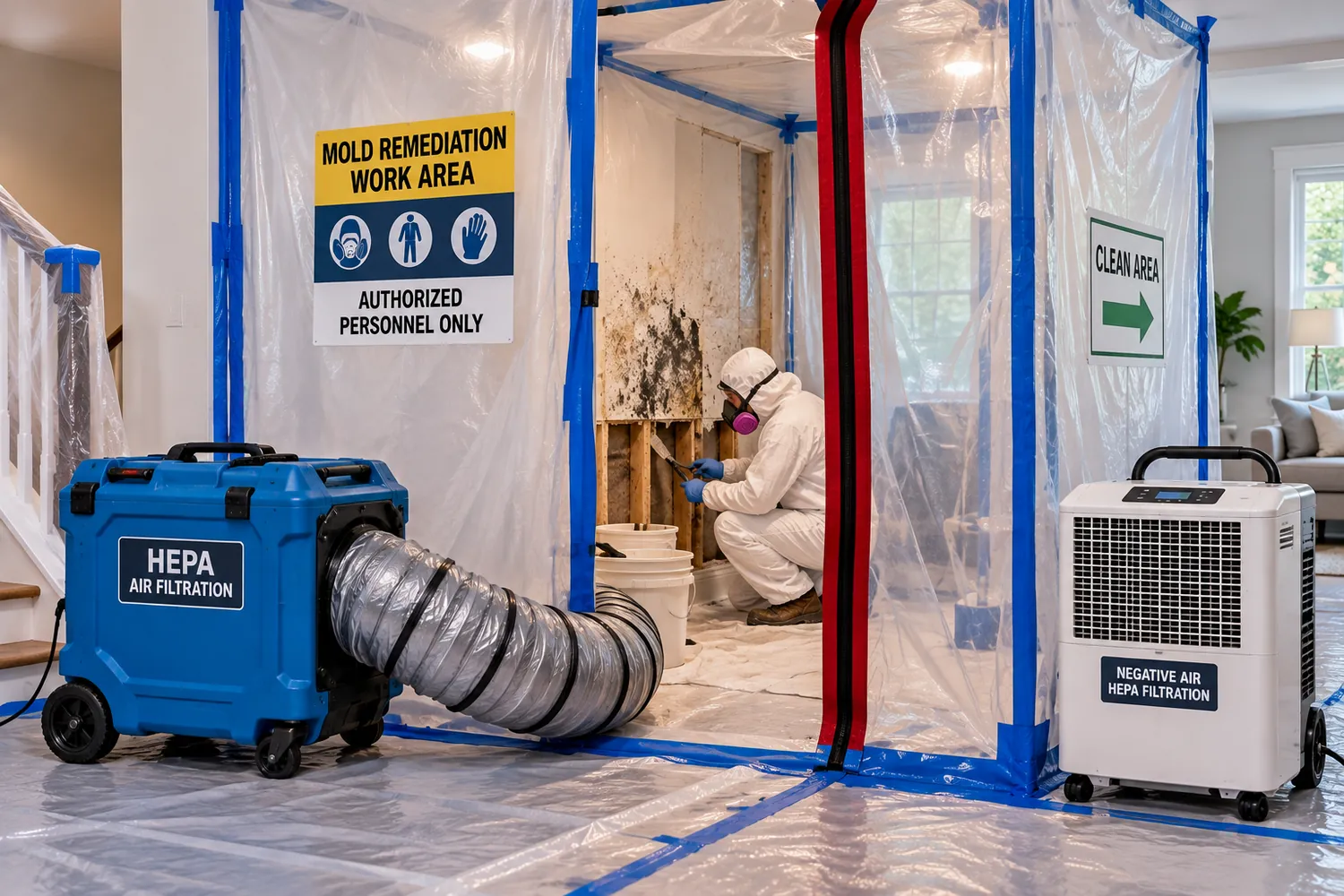
A complete scope normally begins with an inspection of the affected materials and moisture source. To compare mold remediation cost per square foot fairly, first confirm which services the estimate actually covers. The mold remediation contractor then defines the work zone and the method for protecting occupied areas. Depending on the project, the price may include:
- Site protection and containment barriers.
- Negative-air or HEPA-filtered air-scrubbing equipment.
- Removal and bagging of unsalvageable porous materials.
- HEPA vacuuming and detailed cleaning of retained surfaces.
- Equipment setup, monitoring, and final cleanup.
- Disposal fees and project documentation.
Moisture repair and reconstruction are frequently separate. A professional mold removal company may remove moldy drywall but exclude the plumbing repair and new drywall, paint, baseboards, cabinets, or flooring. Request a line-by-line division between investigation, remediation, source repair, and rebuilding.
Common Extra Costs Beyond the Square-Foot Rate
Demolition and Disposal
Removing drywall, insulation, carpet, flooring, cabinetry, or personal property increases labor and waste fees. Materials that may contain asbestos or lead-based paint require appropriate evaluation before disturbance, which can pause the project and add specialized abatement costs.
Moisture Repairs
Professional mold remediation will not last if the water source remains. Plumbing repair, roof work, foundation drainage, grading, sump-pump installation, dehumidification, or ventilation changes may cost more than the cleanup itself. If the moisture source is a roof leak, see our roof leak detection and repair guide. These items should be priced separately so the homeowner can see what prevents recurrence.
Sample Mold Remediation Cost Scenarios
Equal square footage can produce different project totals. These examples show why the headline mold remediation cost per square foot should be treated as a planning reference rather than a contractor quote.
| Scenario | Likely cost position | Reason |
|---|---|---|
| 60 sq. ft. on accessible basement drywall | Lower to middle range | Straightforward containment and removal |
| 60 sq. ft. behind cabinets after a plumbing leak | Middle to upper range | Cabinet removal and restricted access |
| 200 sq. ft. in an open unfinished basement | Middle range | Larger area but easier access |
| 200 sq. ft. involving HVAC and multiple rooms | Upper range or separate system pricing | Complex containment and specialized cleaning |
A proposal should explain why the project sits at the lower or upper end. If the contractor cannot connect the price to materials, access, containment, equipment, and repairs, ask for clarification before signing.

How to Compare Professional Mold Remediation Estimates
Request written proposals from experienced remediation contractors when conditions allow. Each proposal should identify the affected area, removal limits, cleaning method, equipment, duration assumptions, disposal, documentation, exclusions, and payment schedule. A useful estimate should make it clear how the quoted mold remediation cost per square foot connects to the actual work.
- What professional standard or written protocol will guide the work?
- How will clean rooms and the HVAC system be protected?
- Which materials will be removed, and which will be cleaned in place?
- Who repairs the moisture source and reconstructs the room?
- What completion criteria will be used?
- Is post-remediation verification included, optional, or performed by an independent party?
Verify applicable state licensing, insurance, training, and references. The Federal Trade Commission recommends multiple written estimates, clear contracts, and avoiding full payment upfront. Mold-specific insurance coverage is also worth asking about because a general policy may contain exclusions.
Ask What the Square-Foot Figure Measures
Have each bidder identify whether the quoted area means visible affected surface, material being removed, room floor area, or a larger containment zone. These quantities are not interchangeable. Request separate treatment of moisture repairs and reconstruction so a low cleanup rate does not hide a larger unfinished job. Where roof water is suspected, trace the roof leak and drying work before planning finish repairs.
Frequently Asked Questions
Is black mold more expensive to remove?
Not solely because of color or a common label. Black mold remediation cost is driven mainly by affected area, location, materials, containment, access, water source, and HVAC involvement. Any visible mold and moisture problem should be addressed appropriately.
Can I remove a small mold patch myself?
EPA guidance says an area under about 10 square feet can often be handled by a homeowner in ordinary circumstances. Professional help is more appropriate for extensive damage, contaminated water, HVAC involvement, recurring growth, or occupant health concerns.
Does the remediation price include rebuilding walls?
Often it does not. Many quotes cover containment, removal, cleaning, and disposal but exclude new drywall, paint, trim, flooring, cabinets, and plumbing or waterproofing repairs. Confirm every inclusion in writing.
Is mold testing required before remediation?
Not routinely. The CDC does not generally recommend home mold testing. Testing may have a role when an independent professional defines a specific purpose, but it should lead to a clear decision rather than simply confirm visible growth.
Mold Remediation Cost per Square Foot: Use the Rate as a Starting Point
A square-foot estimate helps create a preliminary budget, but professional mold remediation should be purchased from a detailed scope. Compare containment, material removal, moisture correction, cleaning, verification, exclusions, and reconstruction—not just the headline mold remediation cost per square foot. The strongest proposal explains both how the mold will be removed and how the conditions that supported it will be corrected.
Sources
Keep reading
Related Articles

Interiors & Remodeling
What to Expect During Your First Consultation with a Bath Designer

Interiors & Remodeling