
Interiors & Remodeling
Epoxy Garage Floor Coatings vs Polished Concrete: Full Comparison & Cost Guide
Compare epoxy garage floor coatings and polished concrete by slab condition, pricing scope, product-specific moisture limits, maintenance, and garage use.
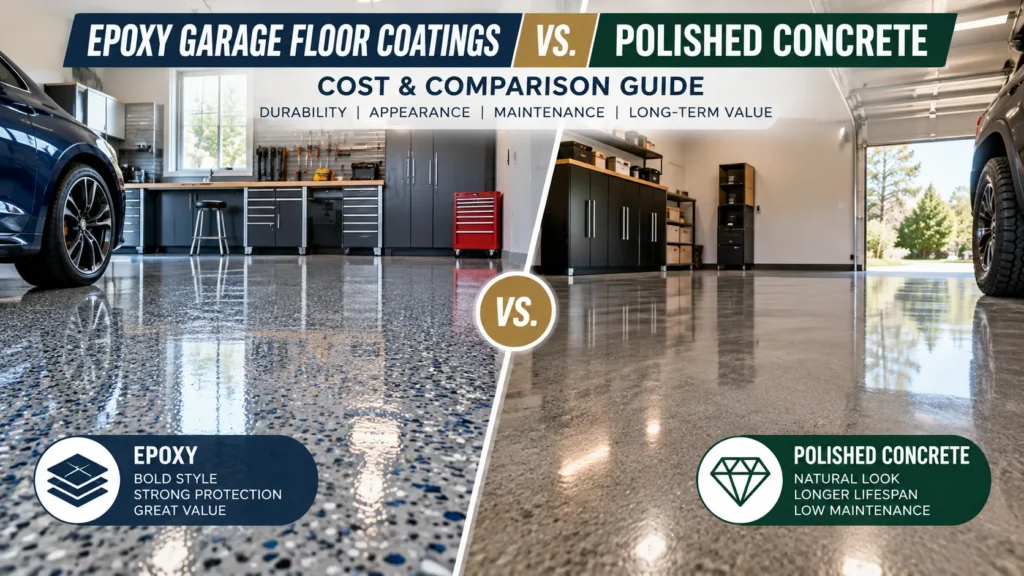
Image disclosure: Images are AI-generated illustrations, not photographs of FixingManual projects or hands-on product tests.
Epoxy garage floor coatings vs polished concrete is a choice between adding a protective surface system and refining the concrete already in place. Neither option repairs an unstable slab, guarantees a stain-free floor, or suits every damp garage. Start with the slab condition, the way you use the space, and a written specification for the finish.
This FixingManual guide compares the decisions a homeowner needs to make. It does not report laboratory testing or guarantee a service life. Product chemistry, preparation, moisture, traffic, maintenance, and installation quality affect the result.
What Is Being Installed?
A garage coating adds a bonded finish over prepared concrete. A proposal described as “epoxy” may include an epoxy primer or base with another type of topcoat. Ask for every layer, its manufacturer, and its intended use rather than relying on the name of the package.
Mechanical polishing grinds and refines the existing concrete. The finished appearance depends on the slab, how much aggregate is exposed, and the selected sheen. Densifiers and protective treatments may be part of the specification. Polishing does not make cracks, patches, or variations disappear.
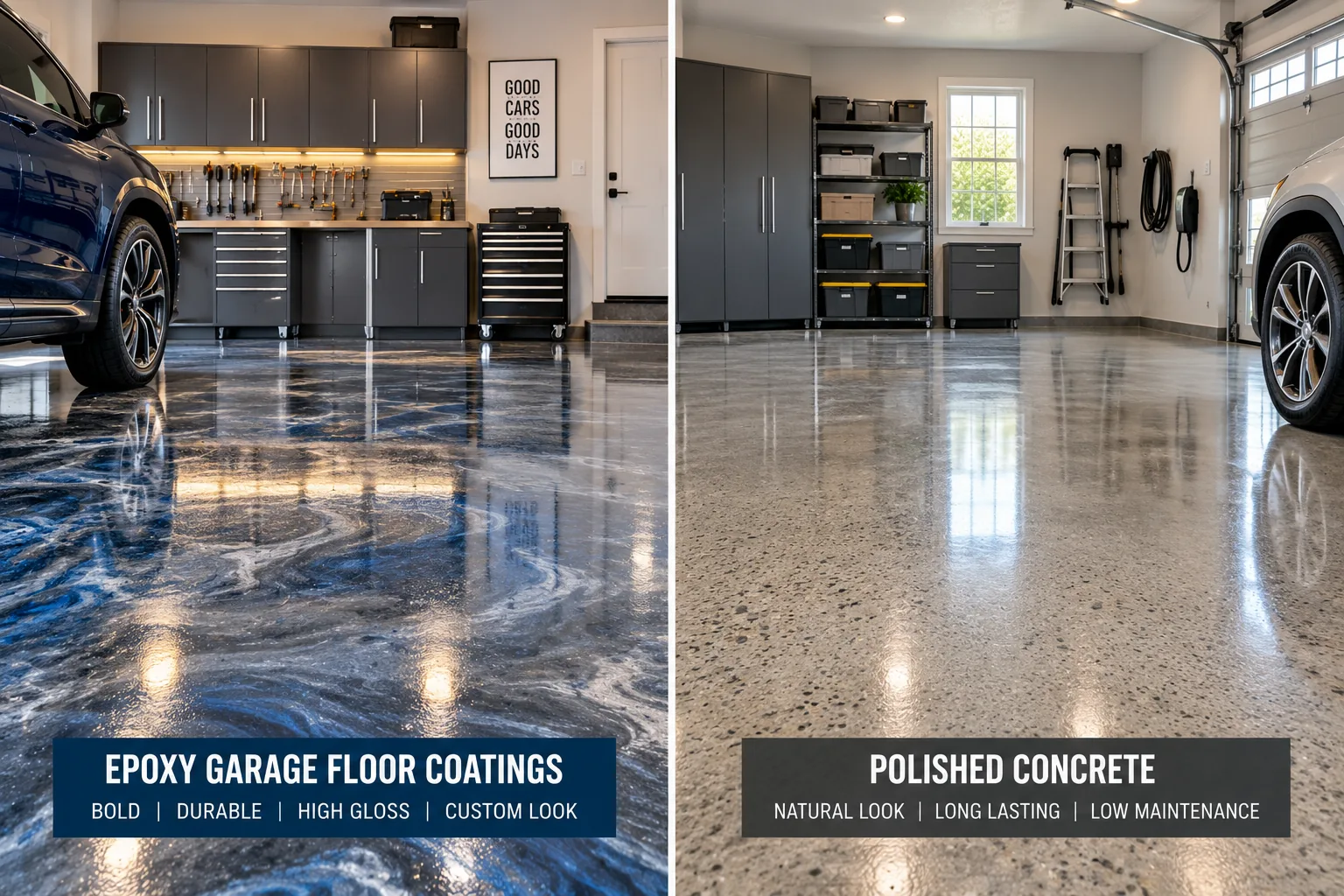
Compare the Floors by Your Main Concern
| Concern | Coating questions | Polished-concrete questions |
|---|---|---|
| Oil and household chemicals | Which named chemicals does the complete system resist, and for how long? | Which protective treatment is used, and what spills can stain or etch it? |
| Wet shoes and tires | What texture is specified, and how does it affect cleaning? | Is the selected finish suitable for the intended wet-use conditions? |
| Sunlight at the door | What color and UV limitations apply to the topcoat? | How visible will slab or treatment variations be in that light? |
| Moisture in the slab | What tests and limits does the manufacturer require? | Will moisture affect the chosen guard or other treatment? |
| Future repairs | How are worn areas recoated or color-matched? | How will a repaired patch differ in aggregate and sheen? |
Installed Cost: Compare the Same Scope
HomeGuide’s garage-coating guide publishes about $4–$10 per square foot for an epoxy garage floor. Concrete Network’s concrete-floor cost guide, reviewed January 27, 2026, lists polished concrete at about $4–$20+ per square foot. These sources cover differing finish and preparation levels; they are screening references, not interchangeable local bids.
For an illustrative 480-square-foot garage, those unit rates calculate to $1,920–$4,800 for coating or $1,920–$9,600+ for polishing. Minimum charges, removal, substantial repairs, moisture treatment, and decorative work can change the total. Do not add separate allowances to a quote until you know whether the contractor has already included them.
For a more detailed polishing scope, see our polished concrete garage flooring guide. Ask both bidders to measure the same area and describe the condition they assumed.
Moisture Limits Belong to the Specified Product
There is no universal moisture reading above which every epoxy floor will fail. Test methods and acceptable results depend on the coating and the complete assembly. Moisture vapor and liquid-water problems also need different investigation. Ask which method will be used, where readings will be taken, what limits apply, and what happens if the floor does not pass.
As one product-specific example, Rust-Oleum’s RockSolid technical sheet gives its own moisture, preparation, and application instructions. That document is not a specification for every epoxy, polyaspartic, or polished-concrete treatment. Use the current sheet for the exact products being proposed.
Polished concrete should not be presented as an automatic cure for dampness. Have the source of persistent wet areas assessed before selecting a decorative finish.
Preparation Matters More Than a Fast Installation Promise
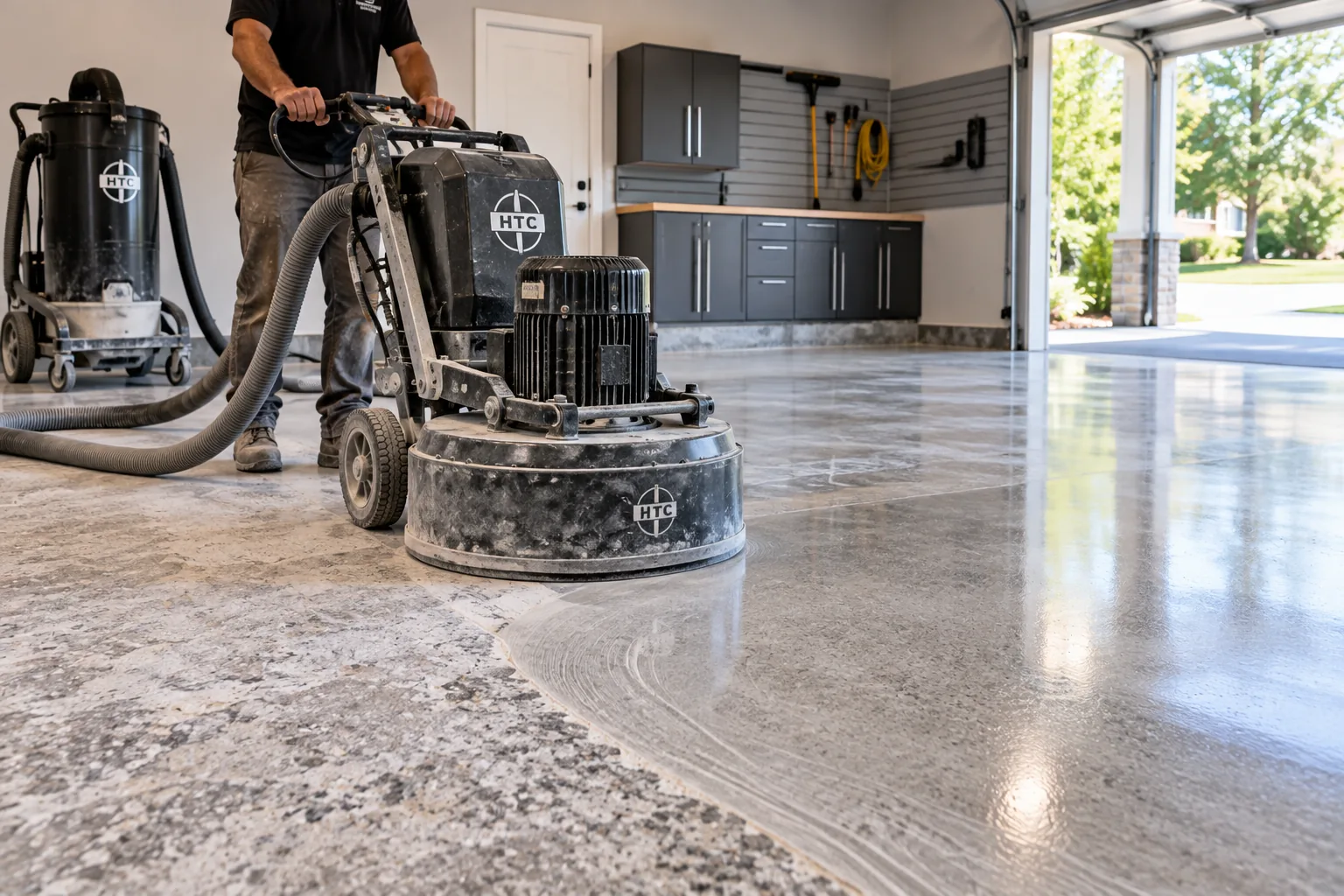
Ask what existing coatings, oil, sealers, adhesive, cracks, and unsound concrete must be addressed. The contractor should explain the preparation required by the selected manufacturer. Some systems require mechanical preparation; other products permit different methods. A universal instruction to reject every etched surface or demand one surface-profile number is too broad.
Grinding concrete creates respirable crystalline silica hazards. Professional crews need the controls appropriate to their work under applicable OSHA construction requirements. Ask how dust will be controlled, how adjacent areas will be protected, and who removes the waste. Keep household occupants away from the work area as directed.
Do Not Treat “Hot-Tire Resistant” as a Complete Warranty
Check the vehicle-use rating, preparation requirements, cure conditions, return-to-service instructions, and written warranty. A coating’s marketing claim does not remove the need to install and cure the complete system correctly. Foot-traffic readiness and vehicle readiness can be different milestones.
Polished concrete has no comparable coating film to peel from tire pickup, but it can still suffer staining, wear, or damage. Ask for an appropriate cleaner and spill-response instructions. Neither option removes the need to manage water and automotive fluids.
Ask for a Sample and a Handover Plan
For polishing, request agreement on aggregate exposure, sheen, edge work, patch visibility, and any mockup. For coatings, confirm color, flake coverage, texture, and the complete layer system. View examples in lighting similar to your garage, and ask which variations the contractor considers normal.
The handover should identify when people and vehicles can return, the cleaning method, maintenance products, warranty exclusions, and the contact for repairs. Ask what routine upkeep will cost rather than comparing unsupported lifespan promises.
Frequently Asked Questions
Which garage floor lasts longer?
There is no single lifespan for either system. Compare the proposed assembly, traffic, preparation, maintenance, and written warranty. Ask how the surface will be renewed when wear occurs.
Can either finish hide all cracks?
No. Repairs may remain visible, and moving cracks can affect a new finish. Ask the contractor to distinguish cosmetic repair from a slab problem requiring other professional assessment.
Which is better for a home workshop?
List the actual liquids, tools, rolling loads, and cleaning needs, then compare product-specific resistance and maintenance instructions. Choose from that use case rather than appearance alone.
Choose From an Inspected Slab
Obtain written proposals for both options if the slab is suitable. Compare preparation, moisture evaluation, finish expectations, wet-use suitability, downtime, maintenance, and exclusions. The clearer specification is more useful than a blanket claim that one material is indestructible.
Sources
Keep reading
Related Articles
Interiors & Remodeling
Professional Toxic Mold Remediation Cost Breakdown per Square Foot

Interiors & Remodeling