
Roofing & Exterior
Commercial Roofing Replacement Companies: Pricing and Selection Guide
FixingManual explains how to compare commercial roofing companies, material specifications, complete project scopes, drainage, safety, and warranty coverage.
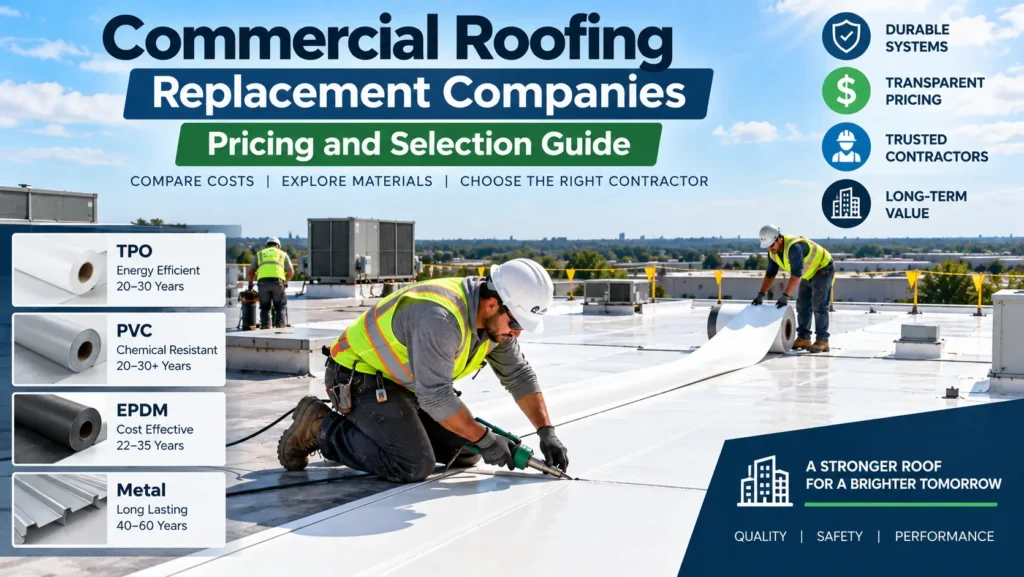
Image disclosure: Images are AI-generated illustrations, not photographs of FixingManual projects or hands-on product tests.
Commercial roofing replacement companies handle projects that go far beyond simply installing a new membrane. A commercial roof replacement affects building operations, energy performance, drainage, insulation, warranties, safety planning, and long-term capital costs. Choosing the right contractor can influence whether the new system performs for decades or becomes a source of repeated leaks and operational disruption.
This guide explains how to compare commercial roofing replacement companies, understand current system pricing, evaluate TPO, PVC, EPDM, and metal options, and identify the bid details that matter most before signing a contract.
Commercial Roofing Replacement Companies: What Should You Compare?
Price matters, but the lowest total does not automatically represent the best commercial roofing value. A strong proposal should explain the roof system, insulation, tear-off or recover strategy, drainage work, edge details, warranties, safety planning, and what happens when hidden conditions appear.
Before comparing proposals, make sure every bidder is pricing the same scope. If one company includes new insulation and another assumes the existing insulation stays in place, the totals cannot be compared fairly.
Commercial Roofing Systems Pricing Matrix
Commercial roof replacement cost is commonly discussed per square foot or per roofing “square,” which equals 100 square feet. Material selection, insulation thickness, building height, access, tear-off requirements, penetrations, drainage, and flashing complexity can all move the final price.
| System to compare | Specification to request | Installation checks |
|---|---|---|
| TPO | Named membrane and complete assembly | Substrate, seams, attachment, drainage, and details |
| PVC | Named membrane and compatibility requirements | Existing materials, seams, details, and exposure |
| EPDM | Named membrane and attachment system | Substrate, seams, edges, and penetrations |
| Metal | Named panel, coating, and fastening system | Roof geometry, attachment, expansion, and details |
For background, HomeGuide’s flat-roof guide, dated November 5, 2025, lists commercial flat-roof construction at about $4–$11 per square foot installed. This broad source category does not establish the price of a full tear-off, deck repair, insulation upgrade, or your selected assembly. Have each bidder state what its total includes.
TPO, PVC, EPDM, and Metal: What Is the Difference?
TPO Roofing
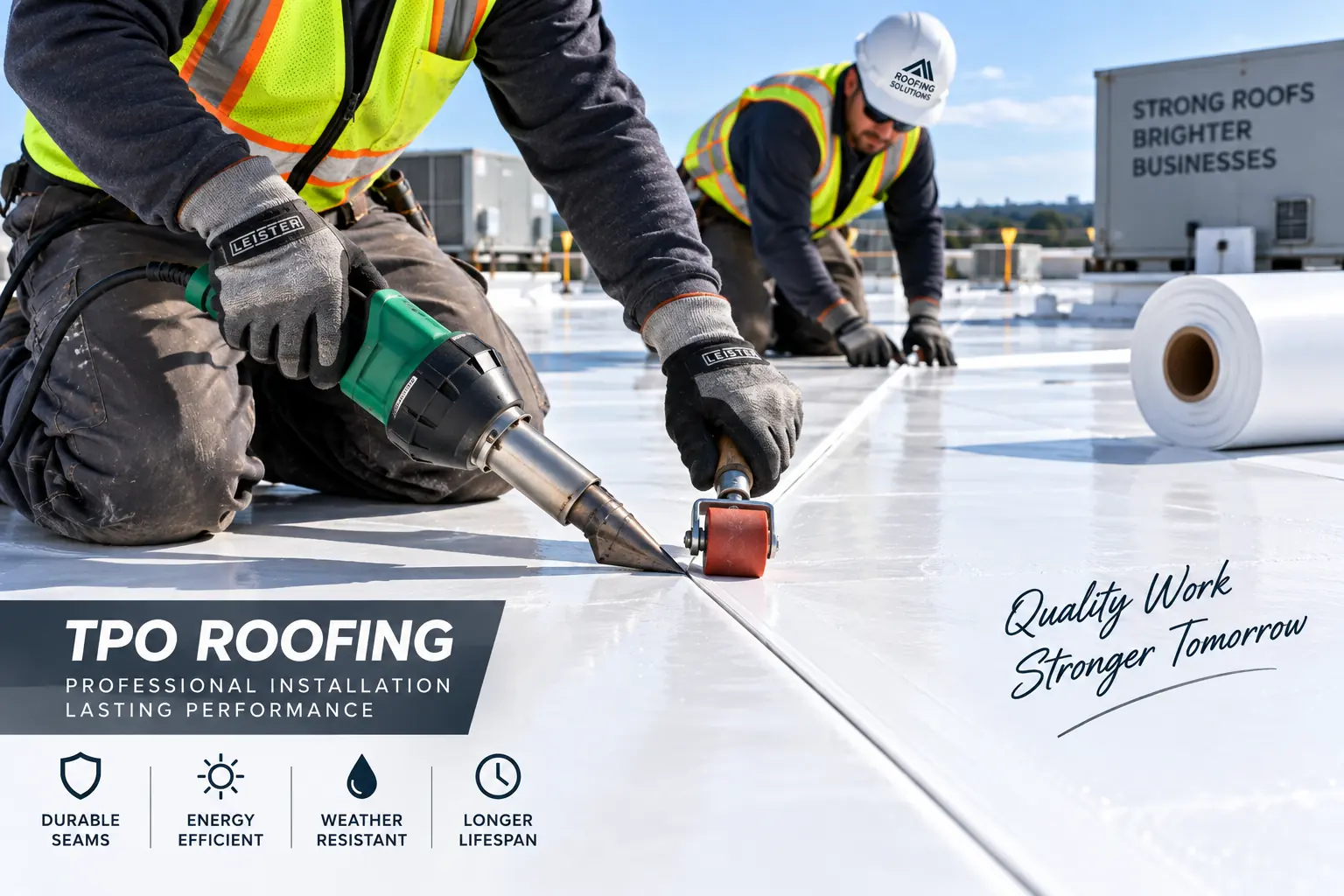
TPO is a reflective single-ply membrane widely used on low-slope commercial buildings. Light-colored surfaces can reduce solar heat absorption, while hot-air-welded seams create a continuous membrane connection. TPO often appeals to owners looking for a balance between installed cost, reflectivity, and system availability.
PVC Roofing
PVC looks similar to TPO but is frequently selected where resistance to oils, grease, and harsh rooftop contaminants matters. That can make it attractive for restaurants, manufacturing facilities, and buildings with heavy rooftop exhaust exposure.
EPDM Roofing
EPDM is a synthetic rubber membrane known for flexibility and durability through temperature changes. Traditional black EPDM absorbs more solar heat than white membranes, although reflective coating options may be available depending on the roof system.
Standing Seam Metal Roofing
Do not choose metal or a membrane from an assumed lifespan ranking alone. Ask for documented suitability for the building, a complete assembly specification, required maintenance, and separate material and workmanship warranty terms. Warranty duration is not a guaranteed service life.
Why Commercial Roof Replacement Quotes Can Vary So Much
Building owners are often surprised when commercial roofing replacement companies submit significantly different prices for the same property. The gap is usually explained by differences in scope, material specifications, labor assumptions, access, insulation, and risk allowances.
Tear-Off vs. Recover
A full tear-off requires more labor, disposal, staging, and deck preparation than a recover installation. Existing roof layers and local code requirements can affect whether a recover is allowed, so the proposal should clearly state which approach is being priced.
Insulation Configuration
Polyisocyanurate insulation thickness, required R-value, tapered insulation for drainage, and damaged-board replacement can materially affect the project total. Ask each bidder to list insulation type, thickness, and quantity rather than burying it inside a single lump-sum figure.
Logistics and Access
High buildings, limited staging space, crane requirements, street closures, restricted delivery hours, and occupied facilities all add planning complexity. A contractor that has priced these realities may initially look more expensive than one that has not included them.
Roof Complexity and Penetrations
A large open warehouse roof is faster to install than a roof filled with skylights, HVAC curbs, drains, expansion joints, parapet walls, and specialty flashings. Detail work takes time and often becomes the difference between a durable system and repeated leak calls.
How to Vet Commercial Roofing Replacement Companies
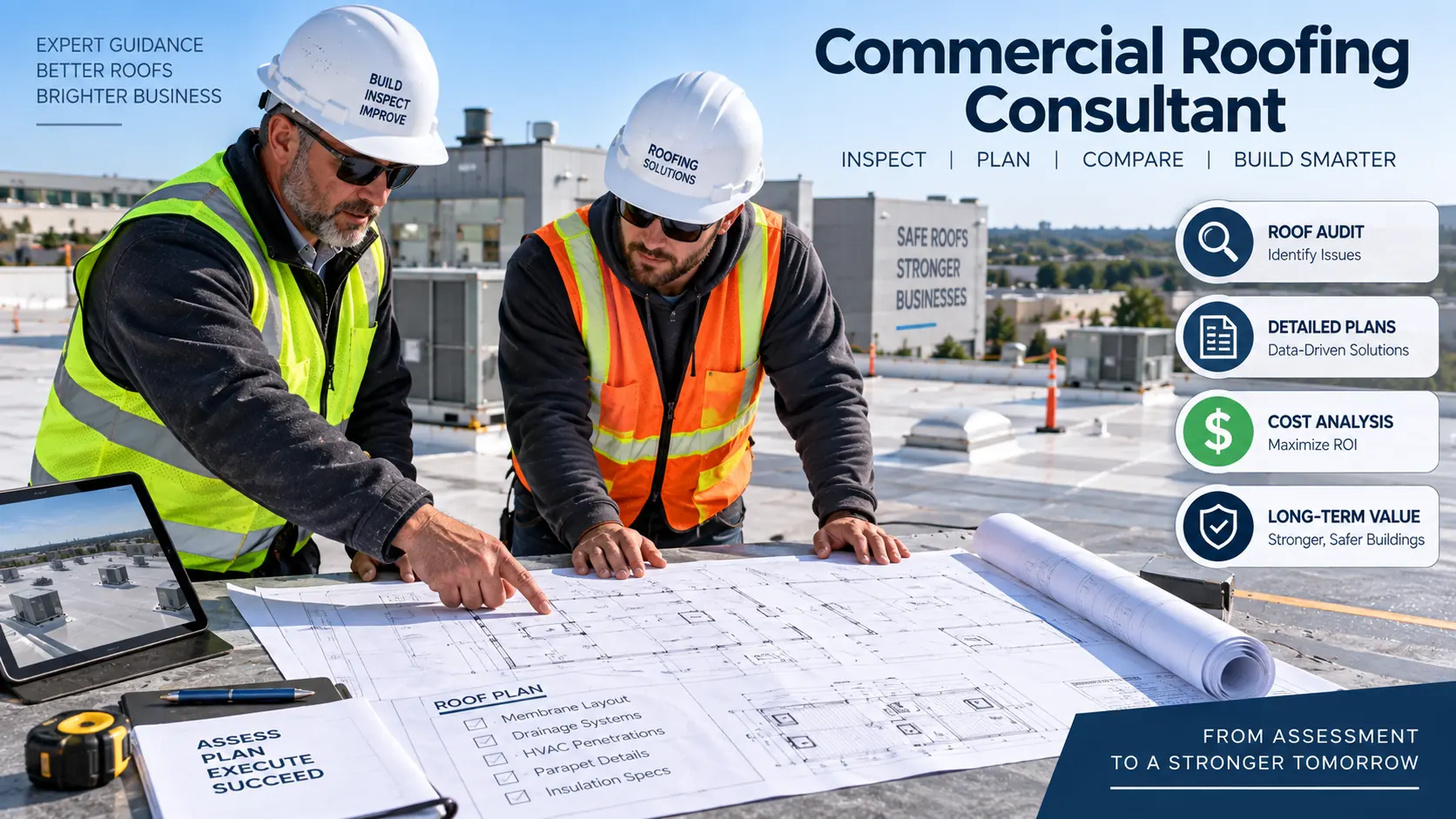
Do not rely on price alone. A useful contractor review includes safety performance, manufacturer credentials, insurance, commercial experience, warranty eligibility, and the quality of the proposed scope.
| Vetting area | What to review | Why it matters |
|---|---|---|
| Safety performance | Current safety program and incident history | Shows how the contractor manages high-risk roof work |
| Manufacturer credentials | Certification relevant to the proposed roofing system | May affect access to manufacturer-backed warranty options |
| Insurance | Commercial liability and workers’ compensation documentation | Helps protect the property owner from project-related exposure |
| Commercial experience | Comparable facilities and roof systems | Shows familiarity with complex commercial logistics and details |
| Proposal quality | Itemized materials, insulation, flashing, edge work, and exclusions | Makes bids easier to compare and reduces ambiguity |
The source guide suggests using safety history, manufacturer certification, substantial insurance coverage, and established commercial experience as screening benchmarks. Treat them as evaluation criteria rather than assuming one exact threshold fits every project, insurer, or jurisdiction.
Commercial Roofing Contractor Red Flags
- No manufacturer-backed warranty option: Ask whether the contractor can offer the warranty level promised for the selected system and who ultimately backs it.
- Vague lump-sum pricing: A proposal that does not identify membrane, insulation, flashing, tear-off, disposal, and exclusions is difficult to compare.
- Unclear deposit terms: Large upfront payments should be explained in writing along with material procurement and payment milestones.
- No safety plan: Commercial roof work should include site-specific access and fall-protection procedures. Review applicable OSHA fall-protection requirements with the contractor.
Hidden Structural Problems That Can Change the Final Price
A commercial roof replacement proposal can look complete and still encounter hidden conditions after tear-off begins. The best way to reduce surprises is to investigate likely problem areas before final pricing.
Trapped Moisture and Damaged Decking
Wet insulation and deteriorated steel, concrete, or wood decking may not be visible from the roof surface. Infrared moisture scanning and other investigation methods can help identify suspect areas before the project starts.
Drainage and Slope Problems
Low-slope roofs still need positive drainage. Ponding areas, structural sagging, and poor drain placement may require tapered insulation or additional drainage work that was not obvious during a basic visual estimate.
Parapet Walls, Flashings, and Edge Metal
Leaks frequently occur around transitions, penetrations, flashings, coping, and edge conditions. Ask the proposal to identify which existing components will be reused and which will be replaced. A low base price can become expensive if critical edge work is left as an open-ended change order.
Compare Replacement With Roof Restoration Before Committing
If the existing roof is structurally sound and mostly dry, full replacement may not be the only option. Before authorizing a complete tear-off, compare the proposal with our commercial roof restoration vs. replacement guide. A documented moisture assessment and condition review can help determine whether restoration deserves consideration or whether full replacement is the more appropriate path.
Make the Commercial Bid Explain Business Disruption
Ask how the contractor will protect occupied areas, equipment, entrances, and inventory; handle debris and weather exposure; and coordinate noisy or access-restricting work. Identify the daily contact and the process for reporting an active leak during construction. Request a separate explanation of why replacement was selected over the options in our commercial roof restoration comparison.
Frequently Asked Questions
Can a Commercial Roof Replacement Be Done While the Building Is Occupied?
Often, yes. Commercial roofing replacement companies can stage work around occupied facilities, but the plan should address access, safety zones, noise, odors, material handling, and business-sensitive work hours before the project begins.
What Is a No Dollar Limit Warranty?
An NDL warranty is a manufacturer-backed commercial roofing warranty structure designed to cover qualifying repair obligations without a stated dollar cap. Coverage, exclusions, term, inspection requirements, and installer eligibility vary by manufacturer, so review the actual written warranty before relying on the label.
How Long Does a Commercial Roof Replacement Take?
The source guide gives about 5 to 10 business days as an example for a standard 20,000-square-foot TPO overlay, while complex tear-offs and detailed flashing work may take several weeks. Weather, inspections, logistics, and hidden damage can change the schedule.
Should I Choose the Lowest Commercial Roofing Bid?
Not automatically. Compare membrane specifications, insulation, tear-off, flashings, edge metal, warranty coverage, exclusions, safety planning, and change-order rules. The best value is the proposal that clearly prices the complete scope needed for the building.
Final Commercial Roofing Selection Checklist
- Confirm the roof system and membrane specification.
- Verify insulation type, thickness, and drainage design.
- Clarify tear-off, disposal, and deck-repair allowances.
- Review manufacturer credentials and warranty terms.
- Verify insurance and site safety planning.
- Compare at least two or three detailed bids using the same scope.
- Document exclusions, change-order procedures, and project schedule.
Commercial roof replacement is a long-term investment in the building envelope. The strongest selection process focuses on transparent scope, proven commercial experience, suitable materials, safety planning, and warranty details rather than price alone.
Editorial Note
The cited commercial flat-roof range is background only. No universal service life or cost ranking is assigned to the four systems. Actual price and suitability depend on building conditions, location, code requirements, material specification, access, and the complete scope. Obtain inspected proposals before making a capital decision.
Keep reading
Related Articles
Roofing & Exterior
How to Choose Asphalt Shingles for Your Next Residential Project
Roofing & Exterior