
Home Systems & Energy
Tankless vs Traditional Water Heater Installation Costs: 2026 Price Guide
FixingManual compares tankless and storage water heaters using published installed costs, household demand, conversion work, maintenance, and qualified energy comparisons.
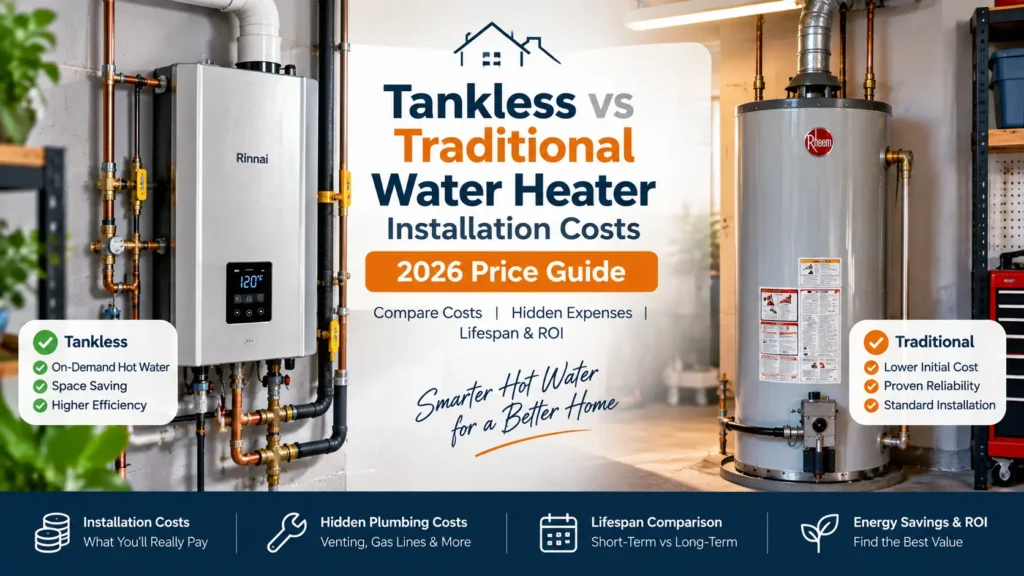
Image disclosure: Images are AI-generated illustrations, not photographs of FixingManual projects or hands-on product tests.
Tankless vs traditional water heater installation costs can differ by thousands of dollars because the comparison is not only about equipment price. A standard storage tank usually works with existing plumbing, venting, gas, and electrical connections, while a tankless system may require gas-line expansion, new venting, electrical upgrades, condensate drainage, or other retrofitting.
For U.S. homeowners planning a 2026 replacement, comparing tankless vs traditional water heater installation costs means looking at the complete installed cost, the infrastructure changes your home needs, expected maintenance, energy use, and how long you expect to keep the property.
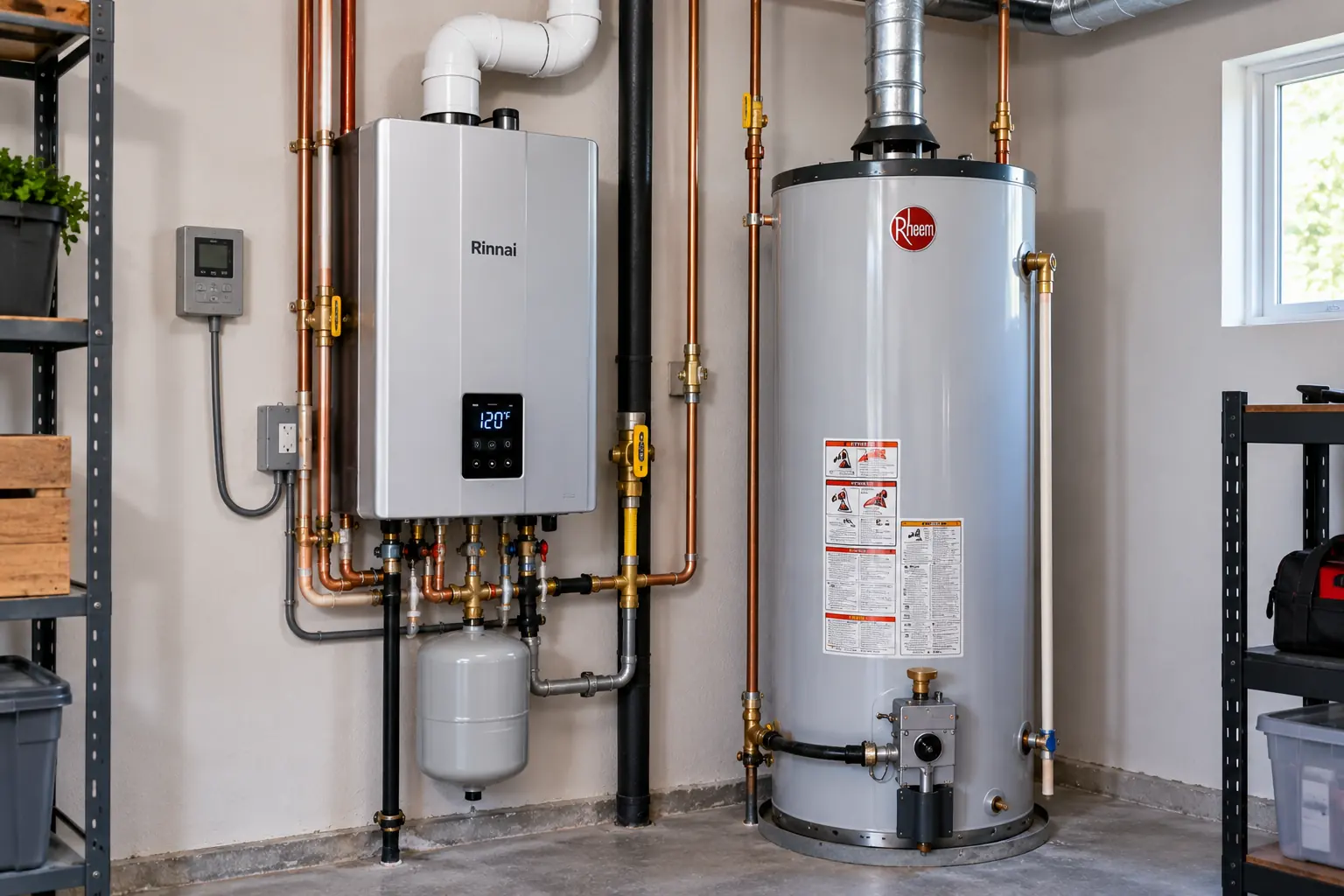
Tankless vs Traditional Water Heater Installation Costs
Tankless vs traditional water heater installation costs are driven largely by installation complexity. A traditional storage unit heats and stores a fixed volume of water. A tankless unit heats water on demand and may require a much higher instantaneous gas or electrical supply.
| System | Published installed screening range | Scope to confirm |
|---|---|---|
| Standard 40–50 gallon storage tank | $600–$3,100 | Fuel, capacity, venting, code corrections, and removal |
| Tankless system | $1,400–$5,600 | Fuel, output, gas/electrical capacity, venting, and conversion work |
These are HomeGuide’s published installed ranges, reviewed January 2, 2026, not local quotes. See its water-heater installation guide. A difficult conversion can exceed a broad guide range. Compare complete proposals and do not add equipment prices again if they are already included.
Why Tankless vs Traditional Water Heater Installation Costs Differ
Replacing a conventional storage tank with another similar unit is often relatively straightforward because much of the existing infrastructure can be reused. Converting to tankless may require several additional upgrades before the new unit can operate correctly.
Gas Line Expansion
Traditional gas water heaters often use far less fuel at any one moment than a whole-home tankless unit. Gas input varies by model. The installer must check the selected appliance’s BTU-per-hour rating and the capacity of the existing gas supply. That higher demand can require a larger dedicated gas line from the meter to the appliance.
Specialized Venting
Traditional naturally vented gas tanks may use a simple vertical metal flue. High-efficiency condensing tankless units require sealed venting appropriate for the appliance and may discharge through an exterior wall. The venting route can become a meaningful part of the labor and material cost.
Electrical Service Capacity
Whole-home electric tankless systems can place a very large load on a home’s electrical service. The required circuits and service capacity depend on the selected model. A licensed electrician should assess the nameplate rating, manufacturer instructions, and household load before installation. Older homes may therefore require an electrical service upgrade before installation. If that applies to your project, see our 100 amp to 200 amp upgrade cost guide before budgeting the water heater conversion.
Condensate Drainage
Condensing tankless units create acidic condensate as heat is recovered from the exhaust stream. Installation may therefore include a drain line and, depending on local requirements and the system design, a neutralization component before discharge.
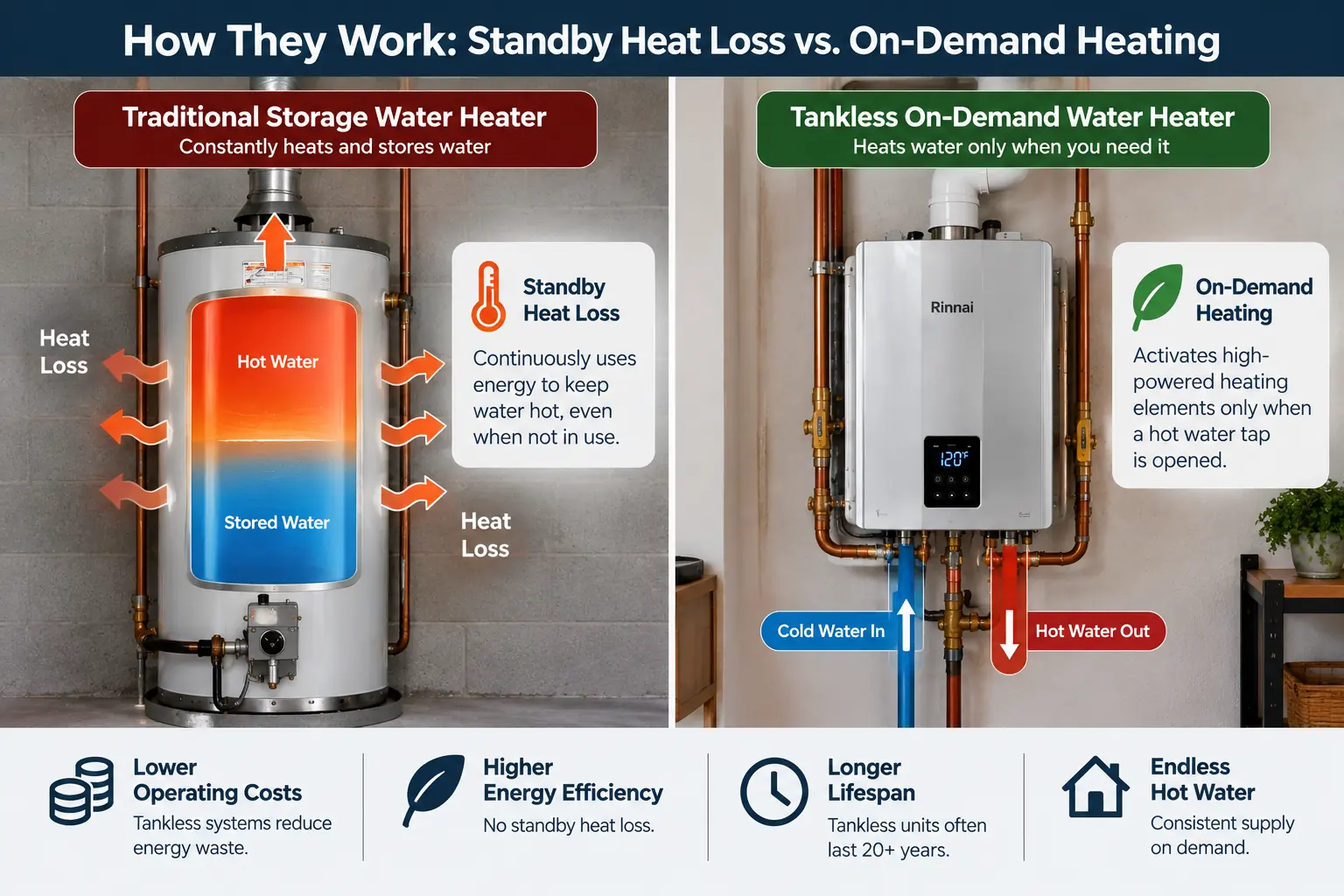
Standby Heat Loss vs On-Demand Heating
A storage water heater keeps a reservoir of water hot even when no faucet is open. That means energy is used to replace heat lost from the tank and associated piping. Tankless systems avoid storing a large volume of hot water and activate when hot water is requested.
The DOE Energy Saver guide (2022) describes tankless water heaters as potentially 24%–34% more energy efficient than conventional storage tanks for homes using 41 gallons or less of hot water daily; its estimate is 8%–14% for about 86 gallons daily. These are scenario-dependent energy comparisons, not a promise of an equivalent bill reduction. Compare the selected models, household demand, fuel rates, and service costs.
Water Heater Lifespan and Long-Term ROI
| Decision | Traditional storage tank | Tankless unit |
|---|---|---|
| Demand | Stored hot-water capacity and recovery rate | Flow rate at the required temperature rise |
| Energy comparison | Read the selected model’s EnergyGuide information | Use comparable fuel, usage, and rating assumptions |
| Space | Allow installation and service clearance around the tank | Allow mounting, service, utility, and venting clearance |
| Maintenance | Follow the exact model’s inspection and service instructions | Follow its flushing, descaling, and inspection instructions |
A longer equipment lifespan can improve the economics of a tankless installation, but the higher upfront cost means the payback period varies significantly by household. When evaluating tankless vs traditional water heater installation costs, a homeowner who must also upgrade gas piping, electrical service, or venting will have a different ROI than someone whose home is already prepared for a tankless unit.
Hard Water and Maintenance Costs
Water quality can strongly affect maintenance. Tankless heat exchangers have narrow internal passages where mineral scale can reduce heat transfer. Hard-water areas may therefore require regular descaling to maintain performance.
Tankless Flushing
Follow the manufacturer’s flushing and descaling schedule; hard water may require more frequent service. Many installations include service valves so a technician can circulate a cleaning solution through the heat exchanger.
Traditional Tank Maintenance
Traditional storage tanks commonly use a sacrificial anode rod to protect the steel tank from corrosion. Follow the manufacturer’s guidance for anode inspection and replacement. Sediment flushing and routine inspection can also help maintain performance and reduce premature failure.
When a Traditional Water Heater Makes More Sense
- You want the lowest possible upfront replacement cost.
- Your existing gas, electrical, and venting systems already match a standard storage unit.
- You expect to sell the property in the next few years.
- You want to avoid major utility or panel upgrades.
When a Tankless Water Heater Makes More Sense
- You plan to remain in the home long enough to benefit from a longer equipment life.
- Your household frequently runs out of stored hot water.
- You value the floor-space savings of a wall-mounted unit.
- Your existing utility infrastructure can support the unit without unusually expensive upgrades.
- You want to reduce standby heat loss and improve water-heating efficiency.
Professional Installation and Safety
Water-heater installation can involve natural gas, high-voltage electricity, combustion venting, pressure-relief devices, and hot pressurized water. The contractor should follow local plumbing and mechanical codes, manufacturer installation requirements, and applicable permit and inspection rules. This is another reason tankless vs traditional water heater installation costs can vary significantly from one home to another.
Before approving the project, ask the installer to identify all work included in the quote: equipment, labor, gas piping, electrical work, venting, condensate management, permits, old-unit removal, startup, and warranty registration. A detailed scope makes tankless vs traditional water heater installation costs much easier to compare.
Compare Annual Cost Before Assuming Payback
Ask for an annual-cost estimate using your household’s demand, the selected equipment, local fuel rates, and expected service. Keep the extra conversion price separate from a straightforward replacement. Dividing that premium by an assumed annual saving is only a scenario, not a guaranteed payback period. If electrical work is proposed, check whether it is a circuit change or the larger scope described in our service upgrade guide.
Frequently Asked Questions
Why Does a Tankless Water Heater Cost More to Install?
The equipment is usually more expensive, and a conversion may require larger gas piping, specialized venting, electrical upgrades, condensate drainage, permits, or other retrofitting.
How Long Does a Tankless Water Heater Last?
The DOE Energy Saver guide (2022) gives about 10–15 years for most storage heaters and says tankless units can last more than 20 years. These are broad expectations, not a model warranty. Water quality, maintenance, installation, and replacement-part availability affect actual life.
Does Tankless Mean Unlimited Hot Water?
A correctly sized tankless unit can provide continuous hot water while demand remains within its flow and heating capacity. Multiple simultaneous fixtures can exceed that capacity, so proper sizing matters.
Is a Tankless Water Heater Worth the Higher Upfront Cost?
It can be for households that value space savings, longer service life, continuous hot water, and lower standby energy use. The economics are less favorable when major gas, electrical, or venting upgrades are required.
Tankless vs Traditional Water Heater Installation Costs: Final Comparison
When comparing tankless vs traditional water heater installation costs, the best choice is not simply the system with the lowest purchase price. Compare the complete installed cost, expected utility use, maintenance, available space, household demand, and the infrastructure already present in the home. A traditional tank often remains the simplest low-cost replacement, while tankless can offer stronger long-term value when the home is well suited to the conversion.
Editorial Note
Cost figures and performance ranges in this guide are planning estimates, not local quotes or guaranteed performance. Local contractor rates, fuel costs, code requirements, equipment specifications, and household usage can change the final result. Obtain an itemized local estimate before making a purchase decision.
Keep reading
Related Articles
Home Systems & Energy
Aluminum Wiring Pigtail Repair Cost for an Older Home
Home Systems & Energy