
Outdoor & Garden
Full Backyard Tree Removal Services Pricing Scale Breakdown
FixingManual guide: Backyard tree removal cost varies by tree size, access, stump work and cleanup. Fixing Manual explains 2026 pricing and how to compare local quotes.
Image disclosure: Images are AI-generated illustrations, not photographs of FixingManual projects or hands-on product tests.
Backyard tree removal cost often starts with a simple question: how much will it cost to get that tree out? The answer changes when a contractor sees the narrow gate, the branches above your garage, or the stump you want removed before installing a patio.
As a national reference, HomeGuide reports an average tree removal cost of about $850, with a common range of $400 to $1,200 per tree. Large or complicated jobs can cost several thousand dollars. A full backyard project needs a separate total covering every selected tree, access arrangements, debris disposal, stump work, and restoration.
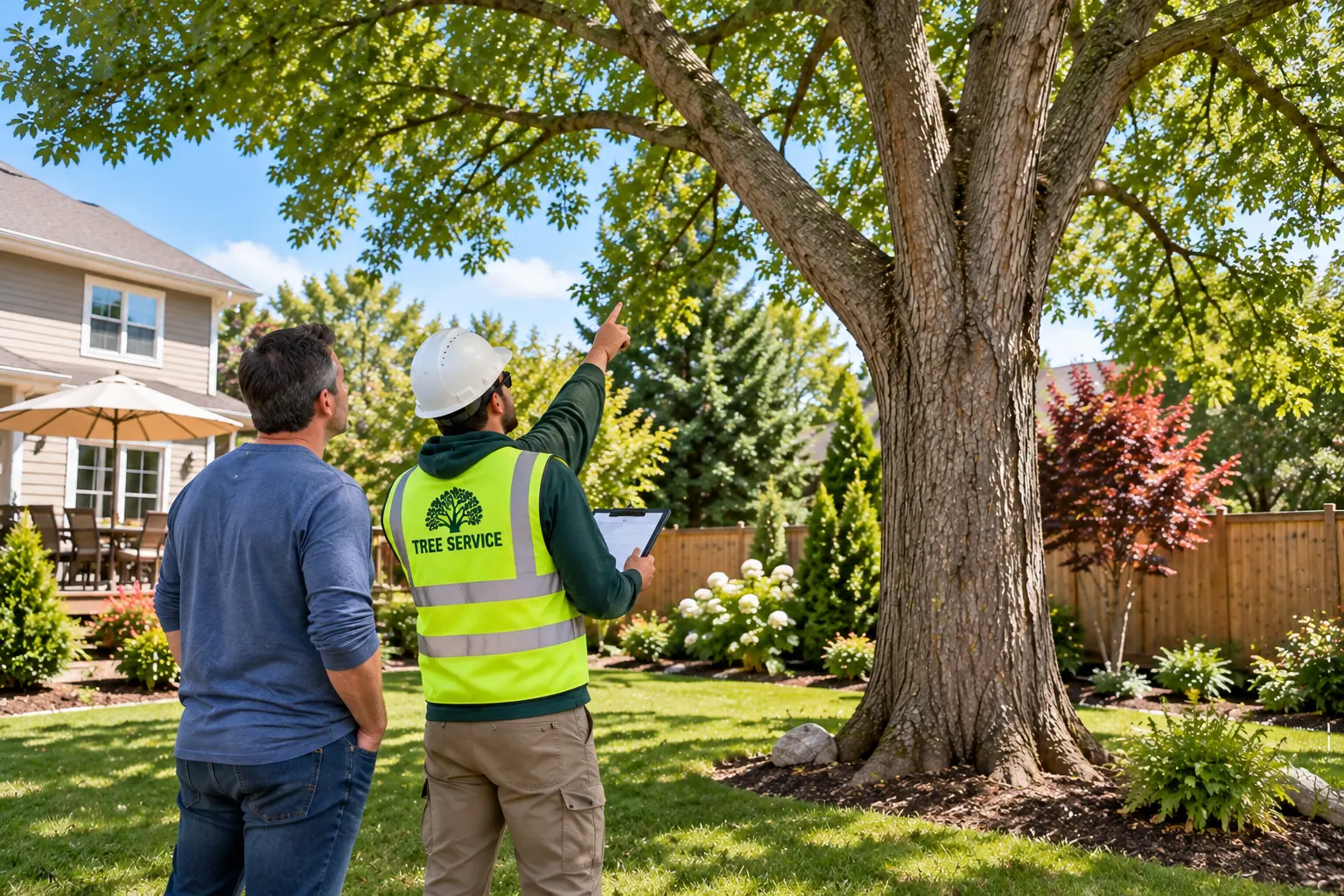
Backyard Tree Removal Cost by Tree Size
Height is a useful starting point, but it is not a complete pricing formula. HomeGuide publishes the following broad ranges for individual tree removal. Treat boundary heights as approximate categories rather than exact pricing cutoffs.
| Tree size | Approximate height | Published removal range |
|---|---|---|
| Small | Under 30 feet | $200–$500 |
| Medium | 30–60 feet | $500–$1,500 |
| Large | 60–80 feet | $850–$2,000 |
| Extra-large | Over 80 feet | $1,200–$2,500+ |
These figures are not all-inclusive backyard restoration prices. A shorter tree can still be difficult to remove if its branches surround a structure or there is little working space. Ask the estimator to explain the conditions behind your quote instead of choosing a price solely from the tree’s height.
What Should Full Backyard Tree Removal Include?
Define what you want the yard to look like when the crew leaves. “Remove three trees” might mean cutting them down and hauling away branches. It may leave three stumps, piles of grinding debris, and areas that need new soil or grass.
For each proposal, request a written answer to these questions:
- Which trees are being removed, and how are they identified?
- Will branches, trunk sections, and loose debris leave the property?
- Is stump grinding included, and to what agreed depth?
- Who removes the grindings and supplies replacement soil?
- Does the price include repairing agreed access areas and resetting any removed fence panel?
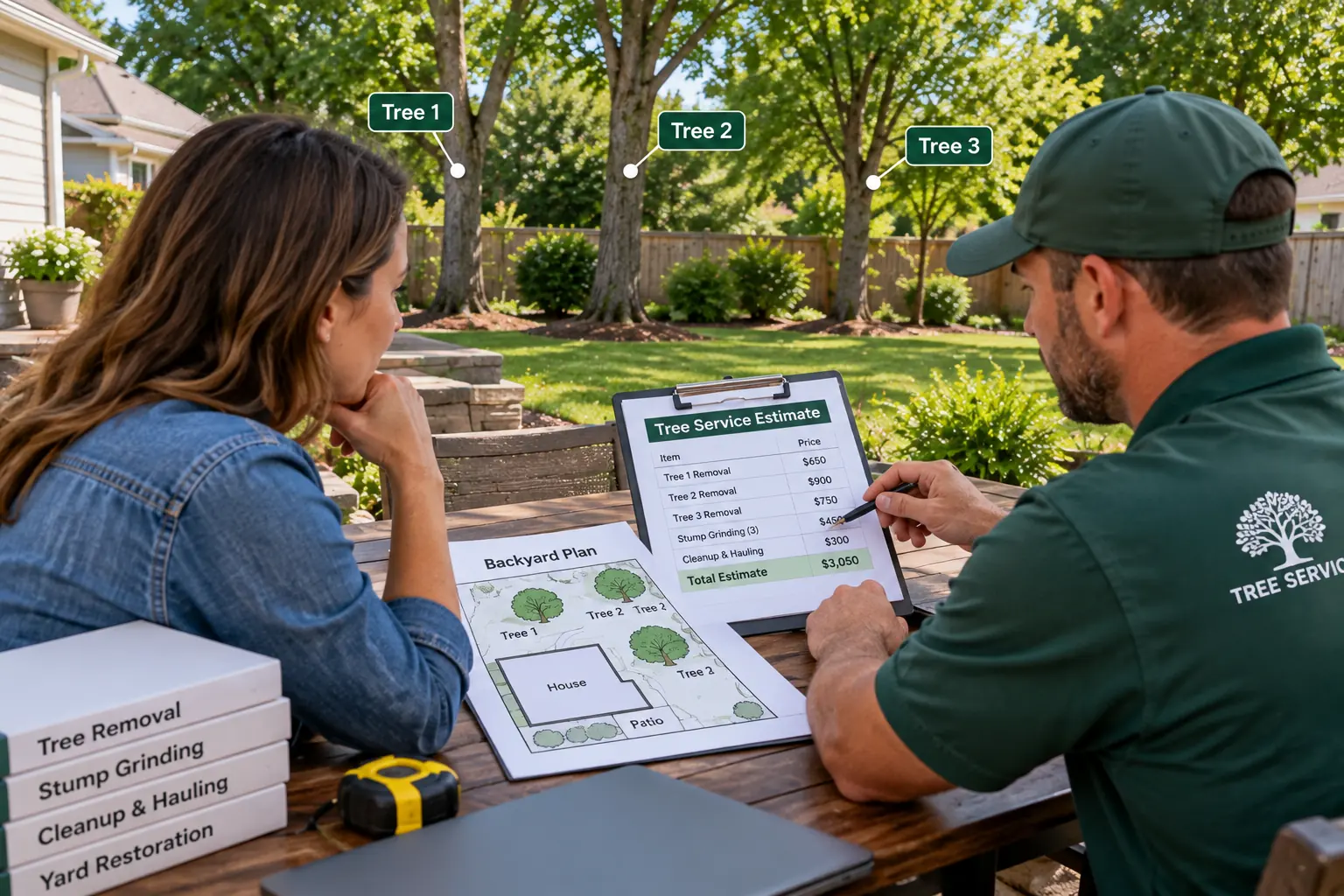
Ask the contractor to photograph or label each selected tree with you. This is especially useful where several trees stand close together or where a boundary tree could be confused with one entirely on your property.
Why Backyard Access Changes the Backyard Tree Removal Cost
Gates, Side Yards, and Carrying Distance
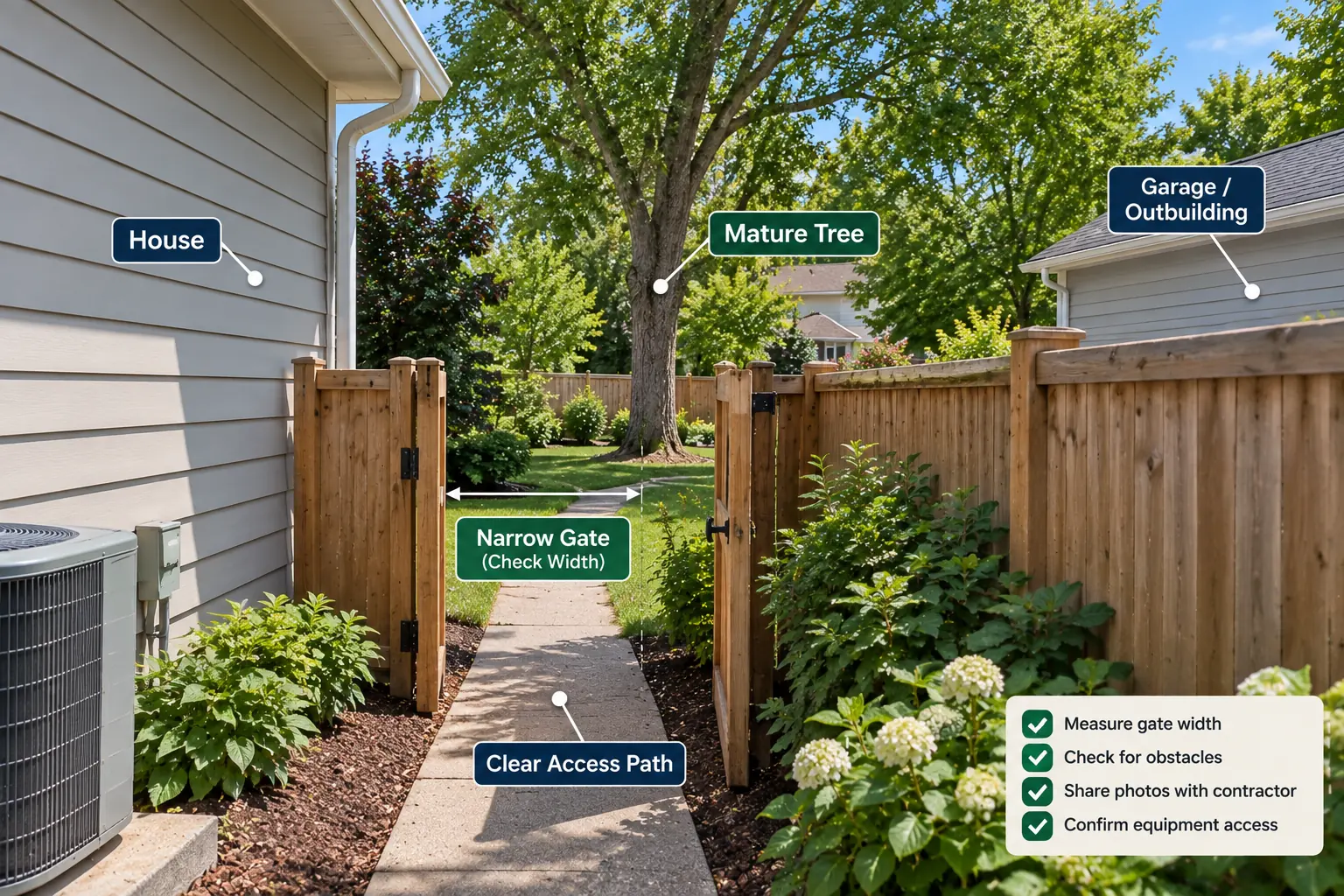
Access can materially change the backyard tree removal cost. Measure the usable gate opening and describe steps, tight turns, and slopes when requesting estimates. Send photographs of the route from the street to the tree. The contractor should confirm which equipment can reach the work area and explain any proposed alternative.
Also show where trucks could park and where material would be loaded. Ask whether parking arrangements, temporary fence removal, or access through another property must be arranged before the scheduled day.
Patios, Pools, Fences, and Buildings
Tell the estimator about everything you want protected. A pool cover, glass greenhouse, irrigation system, or recently installed patio may not be obvious from a distant photograph. Ask how the proposal accounts for protecting those areas and whether the protection is included in the total.
Photograph the lawn, paving, fence, and access route before work starts. Agree on how pre-existing damage and any new damage will be documented. A written restoration scope is more useful than a general promise to “leave it tidy.”
Equipment and Crew Arrangements
If a quote includes a crane or lift, ask what that charge covers: delivery, setup, operating time, and any required street arrangements. Request the reason for the equipment choice and whether the price is fixed or subject to additional hours.
For hourly proposals, clarify whether the rate covers one worker, the entire crew, or a particular machine. Ask for estimated hours and a process for approving overruns. An hourly number alone is not enough to compare with a fixed-price bid.
Does a Dead or Fallen Tree Cost Less?
Do not assume that a dead tree is cheaper because it has fewer leaves. The International Society of Arboriculture recommends professional assessment for removal decisions and notes that storm-damaged tree work can be dangerous. Condition and safe access need evaluating together.
Ask the contractor to distinguish between an urgent hazard and work that can be scheduled normally. If a tree has fallen, describe where it rests and what it has contacted. A trunk lying on open ground presents a different situation from one supported by a roof or entangled with other trees.
For an immediate threat, keep people and pets away and contact the appropriate emergency service or utility when needed. Do not move branches touching electrical lines. Request a clearly defined emergency scope: making the area safe, completing removal, and returning for cleanup may be separate stages.
Stump Grinding and Root Removal Costs
Stump work deserves its own line on the estimate because it can push the backyard tree removal cost above the basic cutting and hauling price. HomeGuide lists about $120 to $400 for grinding the first stump, with extra-large stumps potentially costing $300 to $800. Its reported pricing also includes $2 to $6 per inch of stump diameter, subject to minimum charges and job conditions.
Grinding reduces the stump below the agreed surface level; it does not mean every root is excavated. Full stump or root excavation is a different scope. Tell the contractor whether the space will become lawn, a planting bed, paving, or a building area before choosing the service.
| Stump-work detail | Why it belongs in the quote |
|---|---|
| Measured stump width | Clarifies what the price is based on |
| Grinding depth and area | Defines how much material will be removed |
| Treatment of exposed roots | Prevents assumptions about additional work |
| Grindings disposal | Identifies whether debris stays or leaves |
| Backfill and final surface | Distinguishes stump work from restoration |
Ask who coordinates checks for buried utilities and privately installed irrigation or lighting before ground-disturbing work. For a future structure or patio, have the relevant contractor confirm the required preparation rather than assuming routine grinding leaves a construction-ready base.
A Full Backyard Tree Removal Budget Example
To see how backyard tree removal cost can add up across a multi-tree project, suppose a homeowner selects three trees for removal: one small tree, one medium tree, and one larger tree near a fence. The following is an illustrative allocation using assumed prices. It is not a local quote or an additional national average.
| Project item | Assumed amount |
|---|---|
| Small tree removal | $350 |
| Medium tree removal | $950 |
| Larger tree removal | $1,800 |
| Hauling and disposal for the project | $400 |
| Grinding three stumps | $600 |
| Grindings removal and soil allowance | $300 |
| Fence-panel handling and surface repair | $250 |
| Subtotal | $4,650 |
| Illustrative 10% contingency | $465 |
| Planning total | $5,115 |
In this example, the three removal prices exclude hauling, which is listed separately. If your contractor includes disposal in each tree price, do not add it again. The contingency is money reserved for agreed changes, not an automatic fee paid to the company.
Permits, arborist reports, replacement planting, taxes, and specialist equipment are excluded from this example unless incorporated into an actual quoted line. Add any applicable charges before treating the budget as complete.
For a wooded property, ask whether the contractor is pricing selected-tree removal or land clearing. Mark the trees you intend to retain and describe the desired finished surface. An acreage rate is difficult to interpret without that information.
Permits, Property Boundaries, and Replacement Trees
Before scheduling removal, ask your municipal tree or planning office whether authorization is needed for the particular trees. Provide their location, species if known, approximate size, and reason for removal. Ask about protected-tree rules, supporting reports, and replacement planting obligations.
Request a written explanation of who obtains any approval and whether its cost is included. If ownership is uncertain, resolve the boundary before authorizing work. Obtain any necessary permission for equipment access across a neighbor’s property, with the access and restoration arrangements recorded.
Keep copies of approvals with the contract. Do not treat a contractor’s availability next week as confirmation that every required permission is in place.
Will Homeowners Insurance Pay for Removal?
Coverage depends on the cause of the loss, what the tree damaged, and your policy. Allstate explains that damage from a tree falling because of a covered event may be covered, while maintenance-related losses and debris removal without structural damage often are not. Exceptions and limits vary.
Contact your insurer with photographs and the contractor’s proposed scope. Ask separately about removal from a damaged structure, debris disposal, and any remaining stump. Request the deductible and applicable limits before assuming the entire invoice will be reimbursed.
For routine planned removal, build the budget without relying on an insurance payment unless the insurer has confirmed coverage. A contractor saying a job “should be covered” is not the same as a coverage decision.
How to Compare Tree Removal Companies
ISA advises homeowners to seek multiple estimates, check references, verify insurance, and review applicable credentials and licenses. Its guidance also recommends professional help with decisions about whether removal is necessary.
Request current evidence of liability insurance and workers’ compensation coverage where applicable. Verify it through the insurer or agent. An arborist credential and business insurance answer different questions; neither should be assumed from the other.
Send each company the same selected-tree list, access photographs, and cleanup requirements. Ask them to identify exclusions and explain how changes will be approved. Compare the finished result as well as the total price.
Before signing, confirm the work schedule, deposit and payment milestones, cancellation terms, and responsibility for any subcontracted work. Keep the proposal specific enough that both parties can check whether the job is complete.
Practical Ways to Control the Backyard Tree Removal Cost
Ask whether flexible scheduling or completing several approved removals during one visit changes the quote. Request the actual saving rather than assuming a standard discount applies. Do not postpone a professionally identified urgent hazard solely to seek a seasonal price.
If you want to keep wood or chips, specify the quantity, cut size, and where it will be placed. Ask whether keeping it reduces the bill. Unsplit logs are not the same deliverable as ready-to-use firewood.
Spend on the work needed for your next use of the yard. A lawn repair and a future pool excavation may need different stump treatment. Coordinating those plans can prevent paying for restoration that the next contractor will immediately remove. If grading or vegetation changes create runoff concerns, our backyard soil erosion guide can help with the next planning step.
Define What Will Be Left in the Yard
Mark which trees, stumps, roots, chips, logs, and branches are included in removal. Ask who protects gates, paving, irrigation, and neighboring property, and who restores disturbed ground. Record any access limitations before accepting a package price. If the cleared area will become a patio, coordinate that scope with our concrete patio guide; on a slope, review erosion planning before removing cover.
Frequently Asked Questions
Is Stump Removal Usually Included?
It should be confirmed rather than assumed. Ask the estimate to identify grinding or excavation, the agreed extent of work, debris handling, and the finished surface.
Can I Get an Accurate Quote From Photographs?
Photographs can help with an initial estimate, especially when they show the tree and access route. Ask what still needs checking on site and whether the final price can change after inspection.
Is Removing Several Trees Cheaper per Tree?
It may be, but request a package quote and a breakdown. Shared setup does not remove the individual difficulty of each tree or guarantee a particular discount.
What Is the Best Way to Avoid Surprise Charges?
Define the trees, access arrangements, disposal, stump work, and restoration before signing. Require approval for additional work and compare the final invoice with that written scope.
Plan for the Yard You Want Left Behind
A useful backyard tree removal cost plan covers the entire result, from the selected trees to the final cleanup. Use national price ranges to prepare, then obtain comparable local proposals. The clearest quote tells you what comes out, what stays behind, and what the contractor will restore before the job is finished.
Sources
- HomeGuide: Tree removal pricing
- HomeGuide: Stump grinding pricing
- International Society of Arboriculture: Why hire an arborist
- Allstate: Fallen trees and homeowners insurance
Keep reading
Related Articles

Outdoor & Garden
How to Design a Low-Maintenance Inground Pool Budget Layout

Outdoor & Garden