
Outdoor & Garden
Custom Concrete Patio Contractors Setup Costs and Design Options
FixingManual guide: Compare custom concrete patio costs, design options, site preparation, and contractor quotes. Explore a sample budget and practical installation tips.
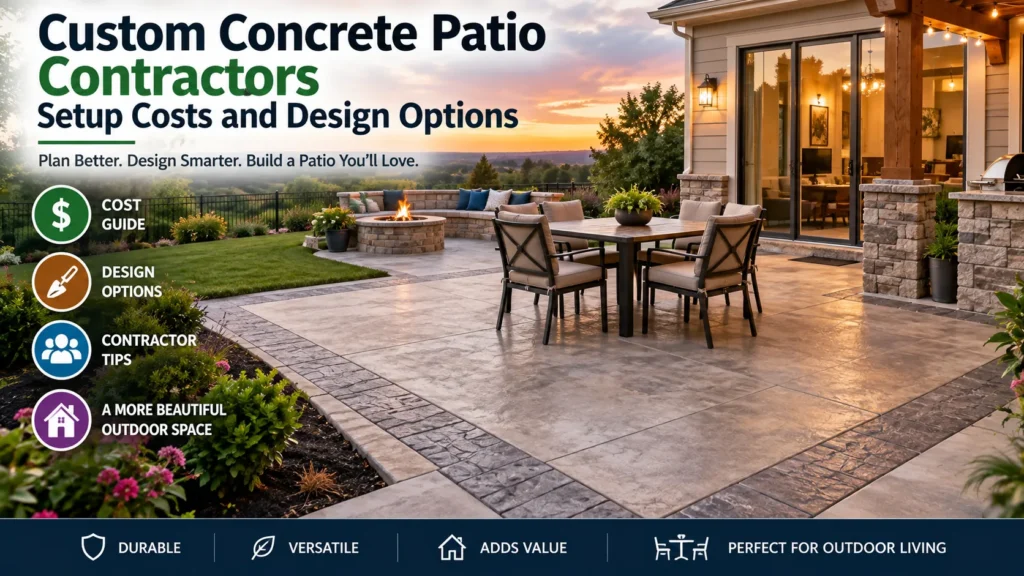
Image disclosure: Images are AI-generated illustrations, not photographs of FixingManual projects or hands-on product tests.
Custom concrete patio contractors can create a simple outdoor dining area or a decorative terrace with borders, colors, and a stone-like texture. When comparing custom concrete patio contractors, the right design starts with how you will use the space, what the site needs, and which work the installation price includes.
For a U.S. planning benchmark, HomeGuide lists plain concrete patios
at $4–$12 per square foot installed and decorative stained or stamped
patios at $8–$30 per square foot. A straightforward 20-by-20-foot patio
therefore calculates to $1,600–$4,800 for plain concrete, or
$3,200–$12,000 using the broader decorative range. These are guide-based
estimates, not guaranteed local bids. [1]
Here, “setup costs” means the work needed to build and finish the
patio. Furniture, a roof cover, outdoor appliances, and other additions
should be budgeted separately unless the written proposal includes
them.
Start With the Space You
Actually Need
Before requesting estimates from custom concrete patio contractors, mark the proposed outline on the lawn. Position your existing chairs or mark their footprints, then allow room to pull them out and walk around the table. Check the route from the back door to the yard.
Tell the contractor about future additions now. A hot tub, masonry
kitchen, or covered structure can introduce loading and foundation
requirements that a basic pedestrian patio may not satisfy. Do not
assume an ordinary slab will support every future feature.
Concrete Patio
Installation Cost by Size
The table applies the same published square-foot ranges to different
footprints. It shows how area affects the starting budget; it does not
include every possible site complication. [1]
| Patio footprint | Plain concrete at $4–$12 per sq ft | Decorative at $8–$30 per sq ft |
|---|---|---|
| 10 by 12 feet or 120 sq ft | $480–$1,440 | $960–$3,600 |
| 12 by 16 feet or 192 sq ft | $768–$2,304 | $1,536–$5,760 |
| 16 by 20 feet or 320 sq ft | $1,280–$3,840 | $2,560–$9,600 |
| 20 by 20 feet or 400 sq ft | $1,600–$4,800 | $3,200–$12,000 |
Small projects may cost more per square foot because mobilization and
minimum delivery charges are spread across less area. Difficult access,
demolition, drainage work, and local labor conditions can also push a
quote outside these calculations.
Ask contractors to price the same dimensions and finish. Comparing a
basic slab estimate against a stamped concrete patio cost that includes
several upgrades will not tell you which contractor offers better
value.
Design Options Worth
Comparing
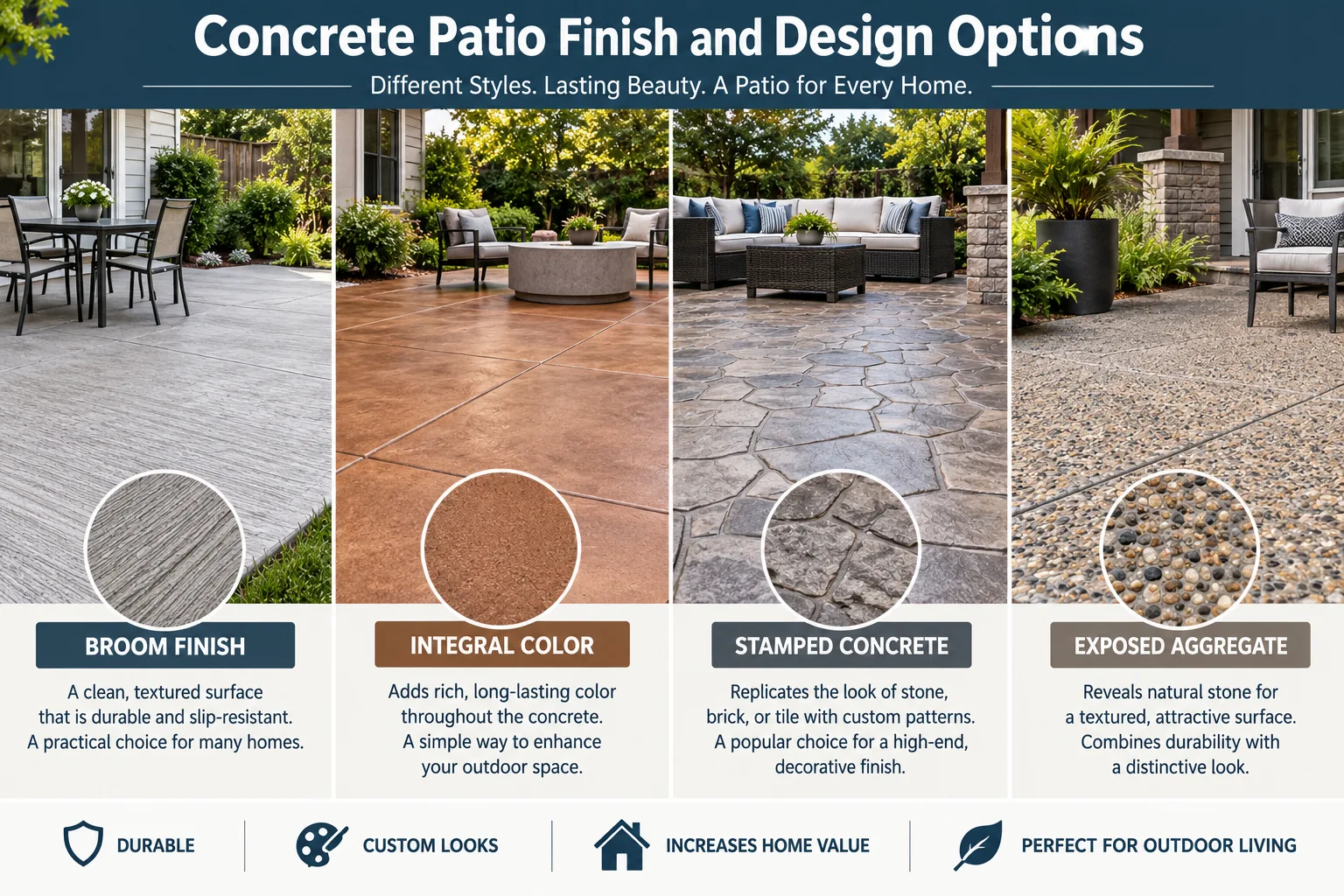
Broom Finished Concrete
A broom finish gives concrete a lightly textured appearance. It suits
a practical patio where furniture and planting provide most of the
visual interest. A simple shape and restrained finish can help keep
decorative labor under control.
Ask to see a finished example. The texture should suit the intended
use, including walking, chair movement, and cleaning. A plain patio can
still look intentional when its proportions and edges relate to the
house.
Colored Concrete
Color can soften the appearance of a large slab or coordinate it with
existing brick and siding. Ask whether the proposal uses integral color
in the mix, a surface-applied system, or another method. These are
different treatments with different installation and maintenance
requirements.
Review a physical sample rather than relying only on a screen.
Confirm the expected variation and how the final sealer will affect
appearance. Do not expect every part of a large outdoor surface to match
a tiny sample perfectly.
Stamped Concrete
Stamping adds a pattern resembling materials such as stone, brick, or
wood. It can suit a decorative terrace, but the pattern should match the
scale of the space. A busy design may overwhelm a small patio.
Concrete Network notes that stamped concrete can become slippery when
wet, particularly with some film-forming sealers. Discuss texture and
appropriate traction measures instead of choosing a glossy finish solely
from photographs. [2]
Ask stamped concrete contractors how they coordinate joint locations
with the pattern and what a future repair might look like. A patched
section may remain visible even when the original color and stamp are
available.
Exposed Aggregate and
Decorative Borders
Exposed aggregate creates a textured surface with visible stone. Have
the contractor explain the aggregate choice and show a sample you can
assess for comfort and appearance, particularly if people will use the
patio barefoot.
A contrasting border offers another approach: use a simpler central
field and reserve decorative work for the edge. Compare this option with
full-surface stamping. Detailed borders still involve labor, so request
actual pricing rather than assuming the upgrade is inexpensive.
What
Custom Concrete Patio Contractors Should Include
A complete installation proposal should describe more than concrete
placement. Ask for a defined scope covering:
Removal of existing materials and disposal, if needed.
Excavation, subgrade evaluation, and base preparation.
Patio dimensions, elevations, forms, and drainage
direction.Specified slab thickness, concrete mix, and reinforcement where
required.Joint layout, finishing, and the selected decorative
treatment.Curing, protection, sealing if specified, and cleanup.
Access arrangements and repair of disturbed landscaping.
Request explanations for unclear allowances. For example, if
unsuitable soil is discovered, how will additional excavation be
measured and approved? If the truck cannot reach the work area, is
pumping or other material handling already included?
Confirm who manages utility locating before excavation. The national
811 service directs homeowners and contractors to contact their state
system before digging; procedures and notice periods vary. Privately
owned lines may require separate locating arrangements. [3]
Drainage and
Slab Design Come Before Decoration
Direct Water Away From the
House
A patio should not create a collection point at the back door. Ask
the contractor to show the proposed elevations, drainage direction, and
where runoff will go.
The Building America Solution Center recommends that impervious
surfaces near the foundation slope away at a 2% grade, maintained for 10
feet or to the surface edge if closer. Use this as planning guidance;
the final layout must address your site, local requirements, and any
accessible-route constraints. [4]
On a difficult site, a drain or different layout may be necessary.
Raising the patio without checking thresholds, siding clearances, and
surrounding grades can create another problem while solving the
first.
Plan Joints and Support
Concrete can crack as it changes volume. NRMCA explains that
contraction joints help control where shrinkage-related cracks occur,
while isolation joints allow movement between adjoining elements. Joints
reduce risk; they do not guarantee a crack-free patio. [5]
Ask for the joint plan before approving an elaborate pattern. Also
request a slab and base specification suited to the soil, climate, and
intended use. Avoid choosing a contractor solely because one quote
promises a thicker slab without explaining the rest of the design.
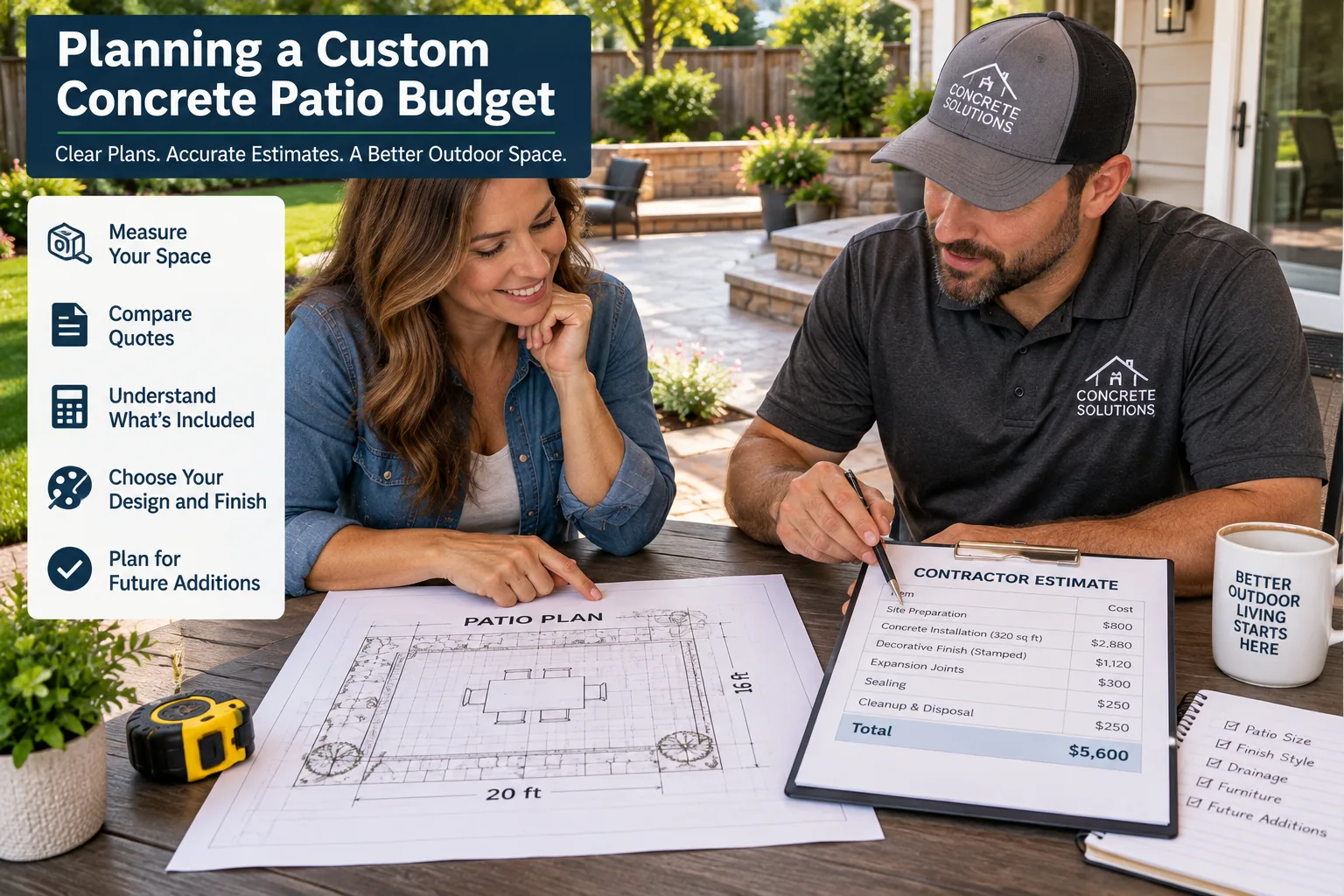
A Sample Custom Patio Budget
Consider a hypothetical 16-by-20-foot patio with a modest decorative
finish. The following figures are budgeting allowances, not a local
quote or a claim about typical individual charges.
| Sample budget item | Illustrative amount |
|---|---|
| 320 sq ft patio package at $15 per sq ft | $4,800 |
| Removal and disposal of an existing small slab | $700 |
| Additional drainage work | $600 |
| Restoration of disturbed lawn edges | $300 |
| Example project subtotal | $6,400 |
| Planning reserve at 15% | $960 |
| Example cash allowance | $7,360 |
This example assumes the patio package includes ordinary preparation,
placement, the agreed finish, curing, and specified sealer. The other
items are separate additions. If your contractor includes them in the
package, do not add them twice.
Permit charges, taxes, major soil correction, retaining structures,
and new utility connections are excluded. The reserve is money set aside
rather than an automatic contractor fee, and it does not cap unforeseen
costs.
How to Compare
Concrete Patio Contractors
Obtain written estimates from custom concrete patio contractors who build the type of patio you want. Ask for examples of completed work and, where possible, older projects that show how the finish has weathered.
Verify applicable licensing, insurance, and who will supervise the
job. Ask whether the named crew handles preparation and finishing or
whether work is subcontracted. Clarify responsibility for permits and
any HOA approval before setting a start date.
Review the warranty carefully. Ask how the contractor defines covered
cracking, drainage defects, color variation, and surface problems. A
clear explanation of realistic performance is more useful than a
sweeping promise that concrete will never crack.
When comparing custom concrete patio contractors, review payment milestones and require written approval for changes. The lowest bid may exclude site restoration or use a different decorative system. Request a revised scope when differences make proposals difficult to compare.
Installation Timing and
Aftercare
Ask custom concrete patio contractors for a schedule covering excavation, preparation, placement, finishing, and protection afterward. Rain, temperature, site access, and supplier availability can affect the sequence. A fast pour does not mean the patio is immediately ready for furniture or heavy equipment.
NRMCA describes curing as maintaining suitable moisture and
temperature so concrete can develop its intended properties. Its
guidance gives a typical curing period of three to seven days, depending
on the work. That period is not an automatic authorization for full
loading. [6]
Get written instructions for walking on the slab, placing furniture,
and introducing heavier items. The contractor should coordinate curing
and sealing products so one treatment does not interfere with the
next.
For ongoing care, remove debris and address spills with cleaning
products suitable for the finish. Ask when the sealer should be
inspected and what conditions indicate renewal. Follow the specific
product guidance instead of assuming every patio needs resealing on the
same calendar.
Ways to
Reduce Cost Without Compromising the Base
Keep the footprint purposeful and compare a simple rectangle with a
more complex outline. Consider a decorative border or one color before
choosing several patterns and accents. Price optional features
separately so you can decide what matters most.
Discuss access with custom concrete patio contractors before signing; moving a fence panel temporarily may be an option if permitted and practical. Include its removal and reinstatement in the quote. Plan lighting conduits or other future services before placement where appropriate, with the relevant trade involved.
Ask custom concrete patio contractors to preserve necessary drainage, preparation, joints, and curing. Reducing decorative complexity is a more sensible budget decision than omitting work the slab needs to perform properly.
Related homeowner guide: If the patio sits beside a grade change, compare drainage and structural needs in our retaining wall installation cost guide.
Ask for a Drainage and Access Walkthrough
Before signing, ask the installer to mark the slab edge, drainage direction, access route, joints, and connections to existing surfaces on the plan. Identify who restores the lawn and any removed fencing. Compare finish samples separately from the underlying slab work. If seating is planned, reserve usable space with our patio furniture guide; for an adjacent pool, coordinate the pool layout before pouring.
Frequently Asked Questions
Is Stamped Concrete Always More Expensive Than Plain Concrete
It generally involves additional decorative labor and materials, but
compare complete project quotes. Site preparation and access can make a
simple patio expensive too.
Can Contractors Pour Over My Existing Patio
Sometimes an overlay or another rehabilitation approach is possible,
but the existing surface needs assessment. Movement, drainage problems,
poor adhesion, and elevation limits may make replacement more
appropriate.
Will a Concrete Patio Increase My Home Value
It may improve how buyers view the outdoor space, but there is no
guaranteed return. Budget around your use of the patio and ask a local
real estate professional about resale relevance in your
neighborhood.
What Should I Choose for Easier Maintenance
Start with a straightforward layout and an outdoor finish suited to
your climate and cleaning preferences. Ask about traction, stain
visibility, repair appearance, and sealer care before selecting a
pattern.
Choose the Scope Before the
Finish
Custom concrete patio contractors should combine a useful layout with appropriate site preparation and a finish you can maintain. Give contractors the same dimensions and requirements, separate extras from the base installation, and confirm drainage and aftercare. Those decisions make the budget easier to compare and the completed patio easier to enjoy.
Sources
[1]
HomeGuide concrete patio cost guide
[2]
Concrete Network stamped concrete guide
[3] 811
guidance before digging
[4]
Building America Solution Center patio drainage guidance
Keep reading
Related Articles
Outdoor & Garden
How to Design a Low-Maintenance Inground Pool Budget Layout
Outdoor & Garden