
Roofing & Exterior
How to Choose Asphalt Shingles for Your Next Residential Project
FixingManual guide: Learn how to choose asphalt shingles by comparing style, wind and hail performance, warranties, climate needs, and contractor estimates.
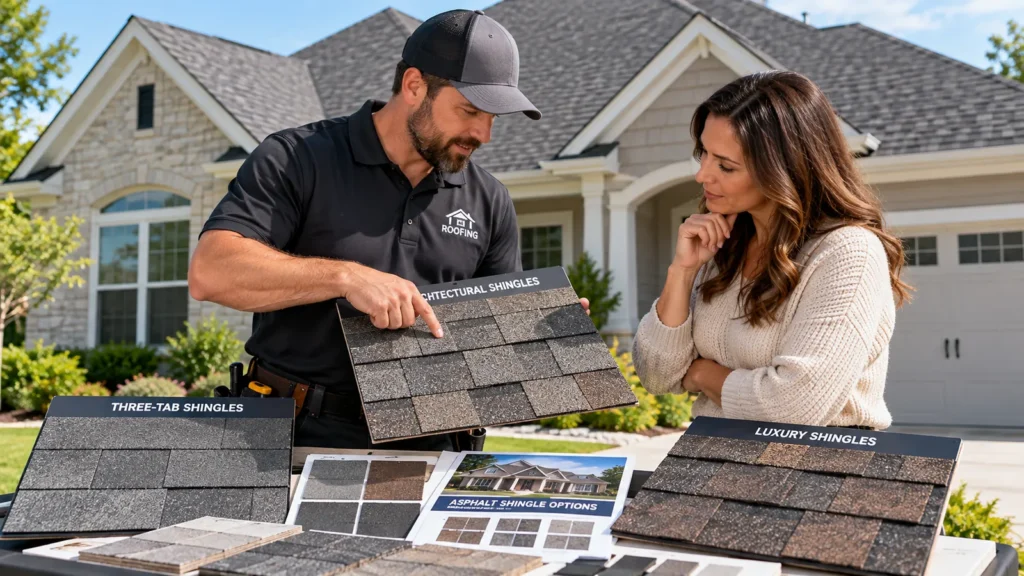
Image disclosure: Images are AI-generated illustrations, not photographs of FixingManual projects or hands-on product tests.
Learning how to choose asphalt shingles involves more than picking a color from a sample board. Product construction, local weather, roof shape, ventilation, installation details, and warranty terms all affect how a finished roof performs. The best asphalt shingles for a home are not automatically the thickest or most expensive option; they are the ones that fit the house, climate, budget, and complete roofing system.
Before requesting estimates, decide which performance risks matter most at the property. A home exposed to hail needs a different priority list than a shaded house with algae staining or a coastal roof facing repeated high winds. Use the steps below to compare products on the same basis and avoid paying for features that do not solve a real problem.
If you are deciding how to choose asphalt shingles, compare the shingle category, local weather risks, warranty terms, complete roof-system scope, and installer qualifications together. A practical approach to how to choose asphalt shingles is to use the same checklist for every contractor estimate so product features and omitted work are easier to compare.
How to Choose Asphalt Shingles by Category
Most residential estimates describe asphalt shingles as three-tab, architectural, or luxury. Those labels mainly describe construction and appearance, but they also influence price, weight, and the range of available performance features.
Three-Tab Shingles
Three-tab shingles have a flatter, more uniform pattern. They are usually the entry-level option and may suit a small rental, detached garage, or tightly controlled budget. Their simpler look and narrower product selection can be limiting, and many homeowners now choose architectural products when replacing a primary residence roof.
Architectural Shingles
Architectural shingles, also called dimensional or laminated shingles, use layered construction to create shadow lines and a thicker appearance. They are widely available, fit many house styles, and often offer broader wind, algae, and impact-resistant options. For many projects, this category provides a practical balance between installed cost and appearance.
Luxury or Designer Shingles
Luxury shingles are made to create a heavier slate-like or wood-shake appearance. They can add depth to prominent rooflines, but the upgrade should be evaluated with the entire project budget. Extra material weight, accessories, labor, and more complex installation details may matter. Ask the contractor to confirm that the deck and roof assembly are appropriate for the selected product.
| Shingle category | Best fit | Main trade-off |
|---|---|---|
| Three-tab | Basic projects and strict budgets | Fewer appearance and performance options |
| Architectural | Most primary residences | Costs more than entry-level shingles |
| Luxury or designer | High-visibility roofs and premium designs | Higher material and installation cost |
Match Asphalt Shingles to Local Weather
When deciding how to choose asphalt shingles for local weather, a brochure may list several ratings, but the useful rating is the one connected to a realistic local hazard. Ask the roofer which code requirements apply at the address and which manufacturer installation method is needed to achieve the stated rating.
Wind Exposure
Do not compare wind numbers without reading the conditions behind them. Roof height, slope, edge zones, deck condition, fastener location, starter strips, and adhesive sealing all influence wind performance. Homes near open fields, coastlines, or hurricane-prone areas may benefit from enhanced fastening and roof-deck protection, not just a higher label on the shingle bundle.
The IBHS FORTIFIED program emphasizes a roof-system approach to severe-weather resistance. Shingles are only the visible layer. A sealed roof deck, strong edge details, correct flashing, and verified installation can be as important as the selected product.
Hail and Impact-Resistant Roof Shingles
In hail-prone regions, ask for the exact impact-resistance designation and whether the product appears on an insurer or research-based rating list. Products can perform differently even when they share a familiar laboratory classification. Confirm whether an impact-resistant option could qualify for an insurance discount, but do not assume a discount or claim outcome until the carrier confirms it in writing.
Heat, Sun, and Algae
Dark roofs can become hot in strong sun, although overall attic performance also depends on insulation, air sealing, and ventilation. If energy performance matters, compare solar-reflectance information for specific colors rather than assuming every light-colored shingle performs the same way.
Warm, humid, or shaded locations may also develop dark algae streaks. Algae-resistant shingles use protective granules or related technology to slow staining. Read how long that protection is covered and what the warranty excludes. A stain-resistance claim is not the same as protection against moss, trapped debris, or moisture caused by poor drainage.
Check Fire Classification and Building Requirements
Ask the estimator to identify the fire classification of the complete roof covering and confirm compliance with local code. A product label should not be treated as permission to ignore required underlayment, deck preparation, flashing, or installation instructions. Requirements can change with location, roof slope, wildfire exposure, and the existing assembly.
Choose a Color with the Whole Exterior in Mind
Color is also part of how to choose asphalt shingles because the roof is a large visual surface and a small hand sample can be misleading. View full-size sample boards outdoors and, when possible, look at completed roofs using the same product and color. Compare the sample in morning light, direct afternoon sun, and shade.
For a busy brick or stone exterior, a quieter roof blend often looks more balanced. A simple siding color can support more variation in the shingles. Also consider permanent elements such as masonry, gutters, fascia, and neighboring roofs. Trendy colors can work, but a roof normally stays in place much longer than paint.
Compare the Asphalt Shingle Warranty Carefully
When learning how to choose asphalt shingles, do not rely on a “lifetime” label alone. It does not mean every problem is covered for the life of the house. Read the actual warranty and compare the non-prorated period, transfer rules, labor coverage, tear-off or disposal coverage, wind conditions, algae terms, required accessories, and exclusions.
- Who registers the manufacturer warranty, and when will you receive confirmation?
- Does enhanced coverage require a certified contractor or a full set of branded components?
- Are workmanship problems covered by the manufacturer, the roofer, or a separate labor warranty?
- What maintenance, ventilation, or documentation requirements could affect a claim?
- Are consequential interior damages excluded?
The contractor’s workmanship warranty deserves separate attention. A premium shingle installed poorly can fail before a midrange product installed correctly.
Price the Complete Asphalt Shingle Roofing System
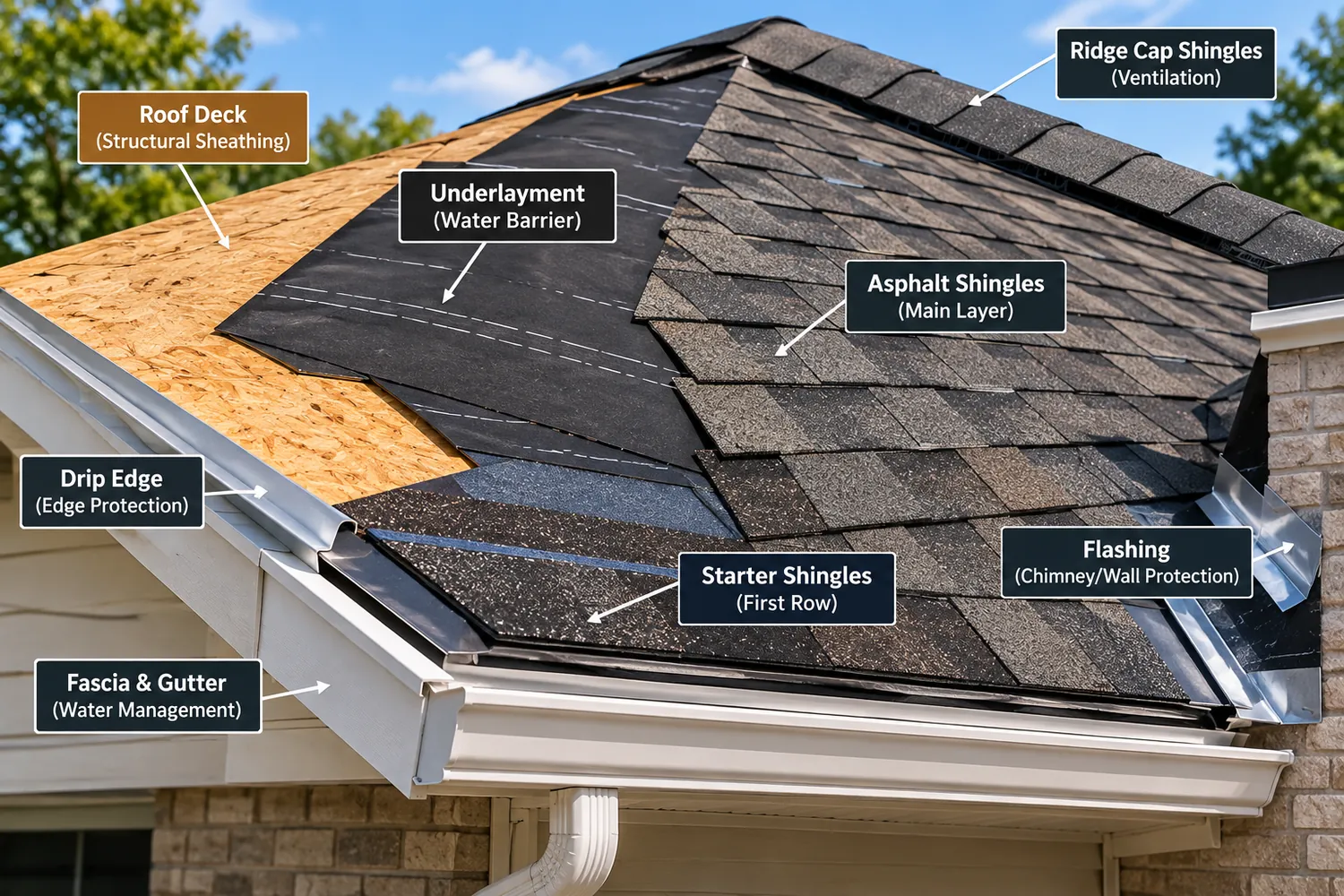
A complete estimate is essential when deciding how to choose asphalt shingles. Comparing only the shingle price can hide major differences between estimates. Request an itemized scope that identifies tear-off layers, deck replacement allowances, underlayment, leak barriers, starter shingles, flashing, ventilation, ridge caps, disposal, permits, and cleanup. Also ask how unexpected rotten decking will be priced.
| Estimate item | What the proposal should state |
|---|---|
| Shingle product | Manufacturer, line, color, and rating |
| Deck preparation | Inspection method and replacement price |
| Water protection | Underlayment and leak-barrier locations |
| Metal details | Drip edge, wall flashing, valleys, and penetrations |
| Ventilation | Existing condition and proposed changes |
| Closeout | Cleanup, magnet sweep, warranty registration, and photos |
Three estimates are useful only when the scopes match. A lower bid may omit flashing replacement or price deck repairs later. The Federal Trade Commission recommends checking contractor credentials and insurance, obtaining written estimates, and avoiding full payment upfront.
Evaluate the Residential Roofing Contractor as Carefully as the Shingle
Ask for proof of current liability insurance, workers’ compensation coverage where required, and any state or local license. Verify the information with the issuing organization instead of relying only on a logo. Review recent projects with a similar roof shape and ask how the crew protects landscaping, siding, driveways, and attic spaces.
A strong proposal explains ventilation and flashing instead of promising that new shingles will solve every roof problem. It also names the supervisor, project schedule, payment milestones, change-order process, and cleanup standard. Be cautious when a salesperson pressures you to sign immediately, asks you to endorse an insurance check, or offers to hide the deductible.
If you are comparing a replacement with repair after recent weather damage, review our emergency roof repair cost guide. If the project started because of water intrusion, our roof leak detection and repair guide explains what to check before moisture spreads.
Make a Like-for-Like Shingle Comparison
Ask each roofer to list the exact shingle product, underlayment, flashing, ventilation work, tear-off, disposal, and warranty registration. Put alternate materials on separate lines. Request the applicable installation requirements for your exposure rather than comparing only brochure ratings. If the existing roof leaks, distinguish the replacement proposal from any temporary storm protection that is needed first.
Frequently Asked Questions
Are architectural shingles worth the upgrade?
They are often a sensible choice for a primary residence because they provide more dimensional appearance and a wider range of performance options. The value depends on the installed system, local climate, and price difference in comparable bids.
Should I choose the highest wind rating available?
Not automatically. Choose a product and installation method that meet local code and realistic site exposure. Correct fastening, edge details, starter strips, and deck preparation are necessary for the rating to have practical value.
Can new shingles be installed over an old roof?
Some jurisdictions and manufacturers permit an overlay under limited conditions, but it can hide deck damage and change warranty or performance considerations. Ask for a written comparison between overlay and full tear-off, then confirm code and manufacturer requirements.
Make the Final Decision from Written Details
The right choice combines a suitable shingle with a complete, well-documented installation. When deciding how to choose asphalt shingles, compare verified performance, system components, warranty language, contractor qualifications, and the exact scope of work. When two products appear similar, the clearer proposal and stronger installer may provide more value than a small difference in brochure features.
Sources
Keep reading
Related Articles
Roofing & Exterior
Detect and Fix Roof Leaks Before Mold Spreads: 2026 Guide
Roofing & Exterior