
Interiors & Remodeling
Crawl Space Encapsulation Cost with a Dehumidifier
Compare crawl space encapsulation and dehumidifier costs, liner coverage, drainage repairs, equipment sizing, maintenance, and exclusions in an installed quote.
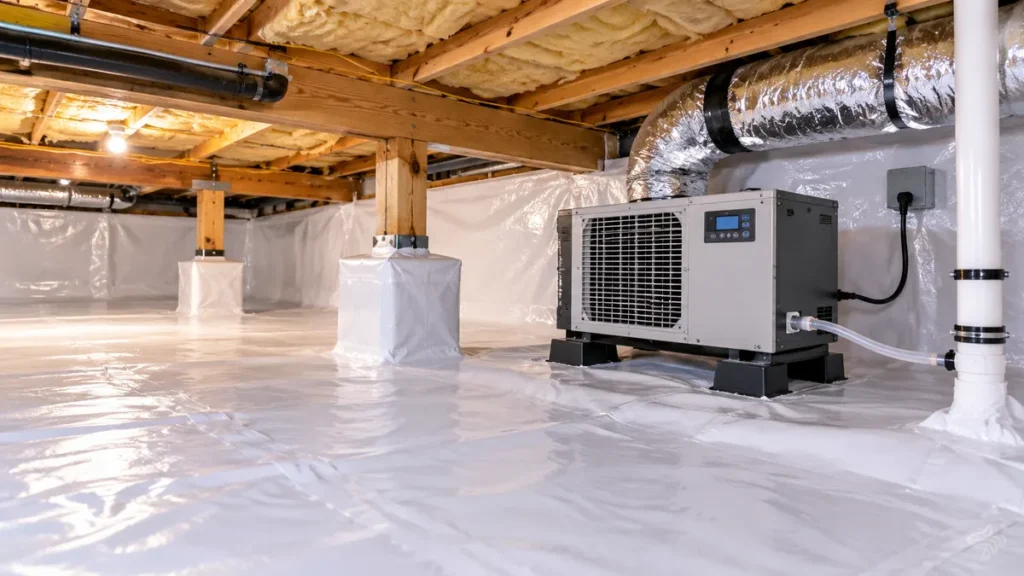
Crawl space encapsulation with dehumidifier cost includes the sealed enclosure and humidity-control equipment. Ongoing operation and maintenance need a separate budget. HomeGuide's US encapsulation guide lists $3,000 to $15,000 overall, or approximately $3 to $10 per square foot. Its dedicated crawl space dehumidifier guide lists $1,000 to $3,000 for the unit and professional installation labor. [1], [2]
These are published US planning references, not a local quote. They are useful only when you check the inclusions. A complete sealed crawl space estimate may already include a dehumidifier. Adding its price again would inflate your budget. Conversely, a low vapor barrier installation price may cover loose ground sheeting without wall sealing or humidity-control equipment.
Ask the contractor to describe the final enclosure and the water conditions it is designed to handle. Encapsulation should follow an assessment of drainage and damaged materials, rather than simply covering a damp area with plastic.
Crawl Space Encapsulation Cost Estimator
Enter the approximate crawl-space floor area and a separate dehumidifier allowance to create a planning range. The encapsulation portion uses the published $3–$10 per-square-foot reference. The dehumidifier field is separate so you can remove it when a contractor’s package already includes the equipment.
Estimated planning range: $5,600–$14,000
Formula: area × $3–$10 + separate dehumidifier allowance. This excludes drainage, sump work, damaged-wood repair, insulation, electrical changes, difficult access, and cleanup. Do not add the dehumidifier allowance if it is already included in the contractor’s encapsulation price.
The result is a budgeting aid, not a quote or a recommendation that your crawl space needs encapsulation. Confirm the measured area, full liner coverage, equipment scope, drainage, and restoration before comparing totals.
Separate ground moisture from standing water
A ground liner limits moisture movement from soil. A dehumidifier removes moisture from air. Neither is a substitute for addressing a plumbing leak or collecting recurring liquid water beneath the house.
DOE's Building America guidance says to resolve bulk-water drainage and moisture problems before converting a vented crawl space into a sealed, insulated space. Its assessment considers site drainage, gutters, sump arrangements, and a continuous ground barrier. [3]
Drainage and preparation can change crawl space encapsulation with dehumidifier cost before liner installation begins. A crawl space with acceptable drainage and sound framing is a different project from one containing standing water, debris, or damaged floor supports. Request a separate description and allowance for work needed before encapsulation can begin.
If you notice sagging floors or significant wood deterioration, ask who evaluates the structural condition. Installing a liner over the ground does not repair weak joists or establish that the house is safely supported.
What should a sealed crawl space estimate include
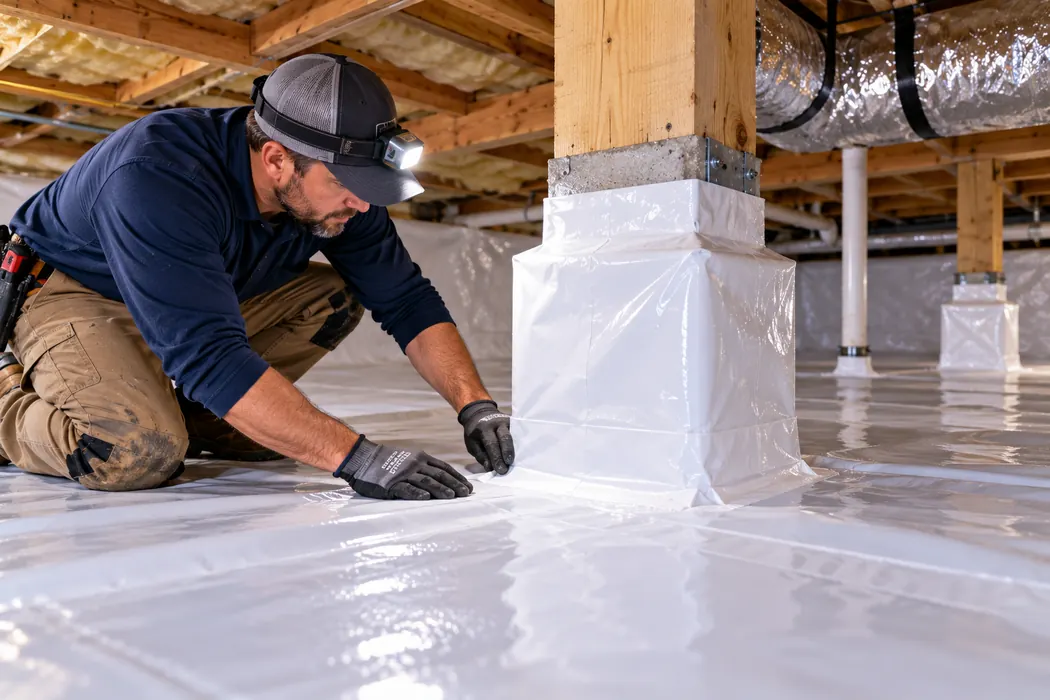
Ask for floor area and perimeter measurements, the proposed liner specification, and the locations to be sealed. Coverage around support piers, wall transitions, and penetrations matters because those areas can remain open when a quote focuses only on floor coverage.
Have the installer explain how the liner will be fastened and how seams will be joined. A thicker product may improve durability, but thickness alone does not describe installation quality. Service paths and equipment locations can also affect material choices.
The proposal should say what happens to existing vents and the access door. Have the contractor verify that the planned enclosure complies with local requirements, including any combustion-air needs for appliances. Closing vents without evaluating the equipment under the house is not a complete design.
| Budget item | What the contractor should specify |
|---|---|
| Preparation | Debris removal and repairs before covering the ground |
| Liner and sealing | Coverage material seams and wall attachment |
| Insulation | Location and specification if included |
| Dehumidifier | Model installation condensate route and controls |
| Drainage | Required collector sump and discharge work |
How size affects crawl space encapsulation with dehumidifier cost
A contractor may use the ground area to build a rough estimate, then adjust for access and existing conditions. Applying the published $3 to $10 reference to 1,200 square feet gives $3,600 to $12,000. This is an illustrative calculation for the encapsulation scope, not a complete bid with every possible repair included.
Ask whether the rate covers wall surfaces as well as the ground. A crawl space with tall walls or many piers requires different detailing from an open, shallow footprint of the same size. Low clearance can increase the time required to move materials and seal transitions.
When comparing crawl space encapsulation with dehumidifier cost, be careful with overlapping allowances. If drainage, insulation, and a dehumidifier are already bundled into a quoted total, compare that total directly with the competing package. Do not add separate national averages on top of included services.
Choose the dehumidifier for actual conditions
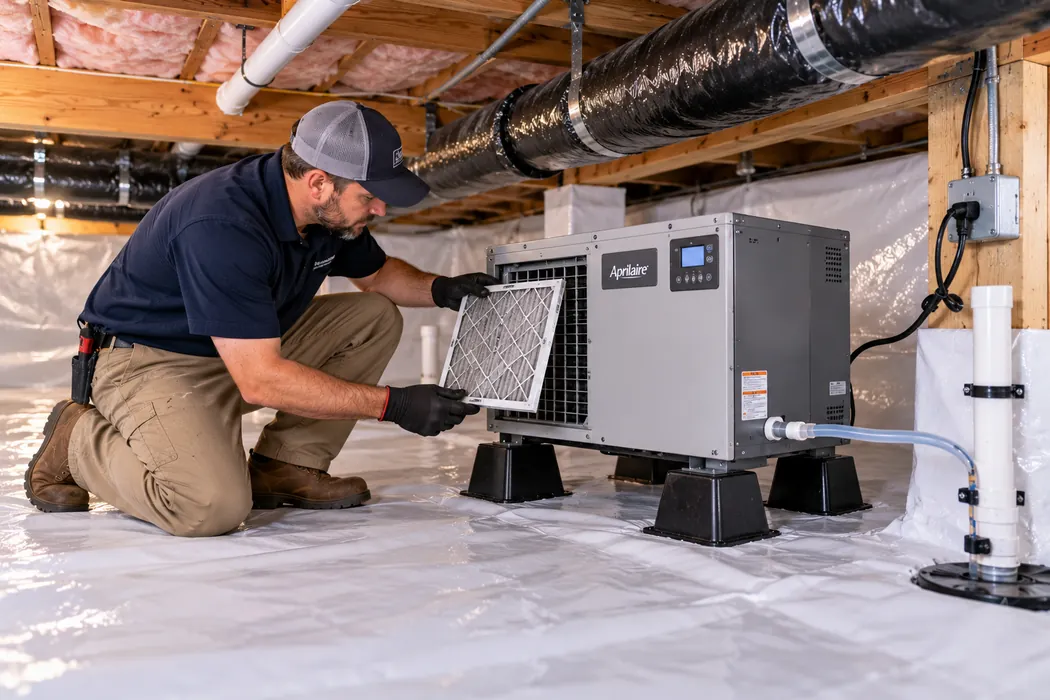
The equipment needs to fit through the access opening, operate in the crawl space's conditions, and allow service after installation. Ask where the technician will reach the filter and how air will circulate through separated areas.
AprilAire notes that its E070 model's maximum area rating concerns a crawl space, not an entire home, and that regional humidity influences selection. Manufacturer area claims should therefore be interpreted for the intended application. [4]
Request a written explanation of the selected model, its rated moisture removal, and its operating limits. Crawl space dimensions help, but air leakage, moisture load, and layout also belong in the sizing discussion. A unit that looks powerful in a catalog may be poorly located behind a blocked passage.
Condensate drainage belongs in the crawl space encapsulation with dehumidifier cost estimate. Find out whether gravity drainage is practical or whether a condensate pump is required. The estimate should include the route and an approved destination, along with any required electrical work.
Account for operating and maintenance costs
Electricity, filter care, and any replacement parts add to long-term ownership costs after the installation bill is paid. Ask whether the selected filter is washable or replaceable and follow its care instructions. Ask the contractor how to read the humidity display, what setting it recommends, and which conditions should prompt a service call. Do not expect a fixed energy-saving percentage for every house.
Inspect the liner after plumbing, HVAC, or pest-control visits. A service technician moving through a tight crawl space can disturb a seam or damage a section. Know which repairs you can arrange and which work affects the installation warranty.
DOE recommends monitoring conditions after a crawl space retrofit. Keep humidity observations and report recurring standing water or unexpected wood moisture to the installer. An enclosure should be assessed through changing seasons rather than judged only by how dry it looks on installation day. [3]
Compare contractors without losing essential details
Give each crawl space encapsulation contractor the same photos and history. Mention seasonal water, odors, recent plumbing repairs, and any prior termite treatment. Ask how the proposed work preserves inspection access required by local rules or a pest-control agreement.
Compare the full scope before looking at discounts. A liner-only offer cannot be evaluated as though it includes drainage, wall sealing, insulation, and equipment. Require the model number and included service obligations in the contract.
When reviewing crawl space encapsulation with dehumidifier cost, check warranty exclusions for flooding, punctures, equipment failure, and maintenance. The liner installation warranty may differ from the dehumidifier manufacturer’s coverage. Ask whether labor is covered for equipment replacement and whether annual visits are optional or required.
A Vapor Barrier Is Not the Whole Encapsulation Scope
Ground coverage is only one part of a sealed crawl space. A complete proposal should identify floor coverage, wall transitions, support piers, seams, penetrations, vents, access doors, and any exposed foundation surfaces that are included.
DOE guidance recommends full or near-full ground coverage, sealed seams, and extension up walls, columns, and footings. It also warns that the vapor retarder must not interfere with established drainage patterns. DOE vapor-retarder checklist
Fix Bulk Water Before Sealing the Crawl Space
A dehumidifier removes moisture from air; it does not stop groundwater, plumbing leaks, or surface runoff. Ask the contractor to identify standing water, wet soil, leaks, sump conditions, grading, gutters, and downspout discharge before the liner is installed.
Drainage, sump, and plumbing repairs should appear as separate line items. Sealing a wet space without correcting the water source can trap a problem beneath the enclosure and make later access more difficult.
Size the Dehumidifier and Plan Its Drain
Do not choose equipment by pint rating alone. The area, height, divided sections, air leakage, moisture load, temperature, and enclosure quality affect performance. Ask for the model number, rated conditions, intended coverage, control location, and filter access.
The quote should show how condensate leaves the crawl space. Gravity drainage may work in some layouts; others need a pump or an approved connection. Include the drain route, pump, electrical work, and service access in the price.
Closing Vents Requires a Code and Appliance Check
Encapsulation often includes closing foundation vents, but the final design must follow local requirements and account for combustion appliances, gas equipment, access, and required air pathways. Do not close vents yourself because a liner has been installed.
Ask who verifies permits, inspections, appliance requirements, and the selected moisture-control method. A dehumidifier is one possible drying strategy; a code-compliant sealed crawl space may use another approved approach depending on local rules.
Measure Humidity and Protect the Framing
Encapsulation should be evaluated by measured conditions, not only by a clean-looking liner. Ask where the humidity sensor is placed, what set point is used, how wood moisture is checked, and what happens if the equipment runs continuously.
Plan for filter changes, drain inspection, liner repairs, pest-control visits, and access to the unit. A warranty may exclude punctures, flooding, neglected maintenance, electrical faults, or damage caused by another contractor.
Separate Insulation, Mold, and Structural Repairs
Old insulation removal, microbial treatment, termite work, rotten joist repair, and crawl-space cleanup are not automatically included in encapsulation. Ask for each condition to be documented and priced separately before it is covered.
A sealed liner can improve moisture control, but it does not restore damaged wood or certify that the floor system is safe. Structural and environmental work should be completed in the correct sequence by appropriately qualified professionals.
Choose Between a Ground Barrier and Full Encapsulation
A ground vapor retarder may be enough when the crawl space is already well-drained, walls and vents do not require enclosure, and measured humidity remains controlled. Full encapsulation may be more appropriate when outside humid air, wall moisture, exposed soil, or recurring humidity makes a continuous closed system useful.
Ask the contractor to explain why the proposed scope fits the measured conditions. The expensive package is not automatically the correct package, and a low liner-only quote may omit the work that controls humidity.
Seven checks before comparing contractor totals
To compare crawl space encapsulation with dehumidifier cost fairly, request the same basic information from every bidder. A clear written scope helps you distinguish required repairs from optional upgrades:
- What moisture or drainage problems must be addressed before covering the ground?
- Which ground, wall, pier, seam, and access-door areas are included?
- What liner and insulation specifications does the proposal use?
- Which dehumidifier model is included, and why does it fit the conditions?
- Who provides the condensate route, electrical work, and any required pump?
- How will appliance needs and pest-inspection access be checked?
- Which maintenance visits, warranty services, and follow-up checks are included?
Keep photographs, inspection findings, and the contractor’s exclusions alongside the estimate. Ask which amounts are fixed and which are allowances pending further inspection. If access is restricted or damaged material is concealed, clarify when those conditions can be assessed and how extra work will be approved. This is more useful than assuming the lowest total covers the same work as another proposal.
If water damage already exists, our water-damage restoration guide explains the separate recovery scope. Where a qualified contractor recommends sump backup as part of the drainage plan, the battery backup sump pump cost guide covers capacity and runtime questions. Pump equipment and a dehumidifier perform different jobs; neither should be added without explaining its purpose.
At handoff, ask where the humidity reading is taken, how to recognize an equipment alert, and who to contact about a blocked drain or damaged liner. Keep the model number, manuals, photographs, and service records together. Record the final crawl space encapsulation with dehumidifier cost against the completed scope, including any approved changes.
Frequently Asked Questions
How much does crawl space encapsulation with a dehumidifier cost?
Published planning references often place encapsulation around $3–$10 per square foot, while a crawl-space dehumidifier and installation may add roughly $1,000–$3,000. Drainage, insulation, cleanup, access, and structural repairs can increase the total.
Is encapsulation the same as laying a vapor barrier?
Ground sheeting can be one component of encapsulation. A sealed project also addresses transitions, openings, and a suitable moisture-control strategy. Ask what the contractor means by each term.
Is a dehumidifier always required?
The appropriate moisture-control method depends on the design, local requirements, and conditions under the house. Have the contractor explain its proposed approach and sizing.
Can a dehumidifier replace a vapor barrier?
No. A dehumidifier controls airborne moisture; it does not stop soil vapor or liquid water. The systems should be designed together.
Should I close crawl-space vents?
Do not close them without checking the complete sealed-crawl-space design, local requirements, and any combustion-air needs for appliances under or beside the house.
Can encapsulation repair mold or rotten framing?
It may help control future moisture when designed correctly, but it does not remove existing contamination or restore damaged wood. Those conditions need separate assessment and repair.
How should a crawl-space dehumidifier drain?
The contractor should identify a reliable gravity drain, pump, or other approved destination. The quote should include the drain route, pump if needed, electrical work, and service access.
How can I reduce the budget sensibly?
Start with inspection and water-source correction. Compare equivalent scopes and separate optional upgrades from required repairs rather than choosing a liner-only quote by price.
What maintenance does an encapsulated crawl space need?
Plan for filter changes, drain inspection, humidity monitoring, liner inspection, pest-control access, and equipment service according to the product instructions.
What should be included in the warranty?
Check separate coverage for liner installation, seams, equipment, labor, punctures, flooding, maintenance, drain failure, and damage caused by later contractors.
Sources and further reading
[1] HomeGuide crawl space encapsulation cost guide updated January 2026
[2] HomeGuide crawl space dehumidifier cost guide
[3] DOE Building America water management of existing crawlspace floors
[4] AprilAire dehumidifier application and sizing questions
[5] U.S. Department of Energy vapor-retarder installation checklist
[6] ENERGY STAR guidance on designing closed crawl spaces
[7] DOE Building Foundations handbook: closed crawl-space moisture control
Keep reading
Related Articles
Interiors & Remodeling
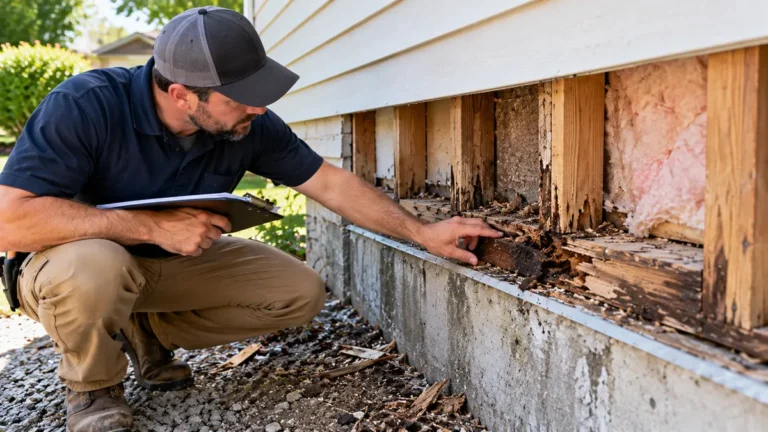
Sill Plate Replacement Cost When Rot Is Found Under Exterior Walls
Interiors & Remodeling