
Interiors & Remodeling
Best Closet Organizers for Small Spaces: 10 Smart Options for 2026
FixingManual guide: Compare 10 practical closet organizers for small spaces, from modular systems and shoe storage to bins, shelves, and renter-friendly options.
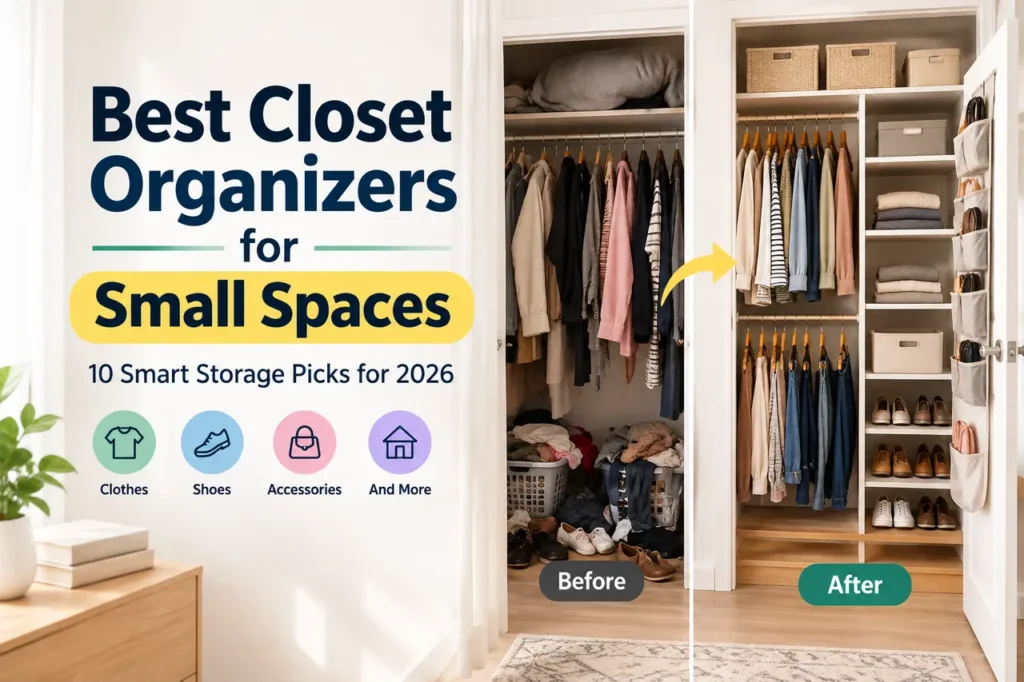
Image disclosure: Images are AI-generated illustrations, not photographs of FixingManual projects or hands-on product tests.
The best closet organizers for small spaces make awkward areas easier to use without changing the room itself. A small closet may have enough capacity for everyday clothing, but one long hanging rod, a high shelf, and an open floor leave shoes, folded clothes, and accessories competing for the same few areas.
The best fix depends on the bottleneck. A second hanging rod helps with shirts and pants, while shelf dividers are better for folded sweaters. Door organizers suit lightweight items, and labeled bins keep seasonal clothing out of the way. This guide compares organizer types rather than specific products, so you can choose a setup that fits your closet, wardrobe, and rental rules.
Editor’s note: This Fixing Manual guide compares organizer types, not products tested by us. Images show typical layouts; always follow the product instructions.
Browse more practical ideas in Home Organization.
1. Adjustable Modular Closet System
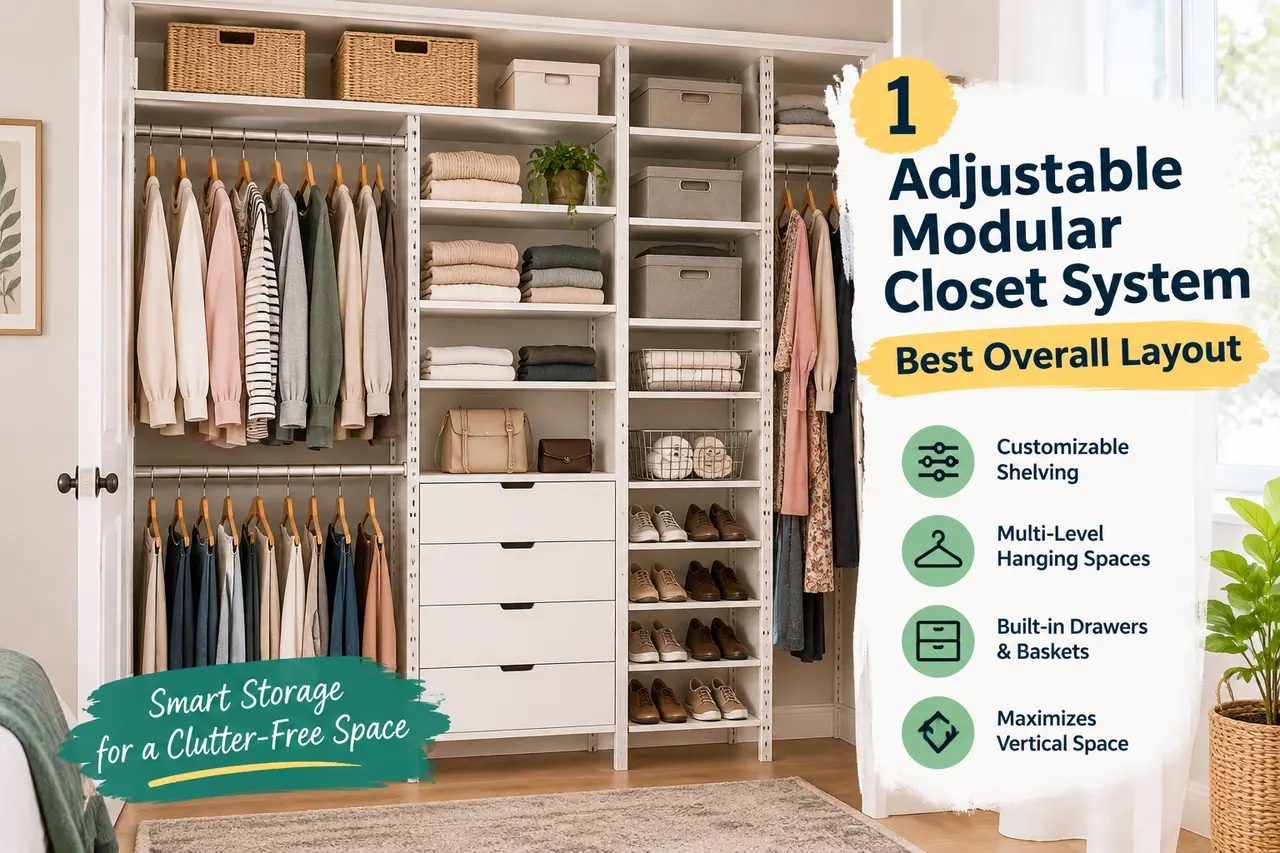
A modular system is the most flexible option when one rod and one shelf no longer match your wardrobe. It can combine short and long hanging sections with shelves, drawers, shoe storage, and baskets in one coordinated layout.
Start by listing what you own before choosing components. If most items are shirts and folded pants, use more double-hang space. If you store long dresses or coats, reserve a full-height section. Adjustable parts make later changes easier, but the system must fit the wall, baseboard, door opening, and any existing trim.
Before you buy
Wall-mounted systems need secure installation. Follow the manufacturer’s hardware, stud, and load instructions, and do not assume every wall can use the same fastener.
2. Stackable Storage Bins
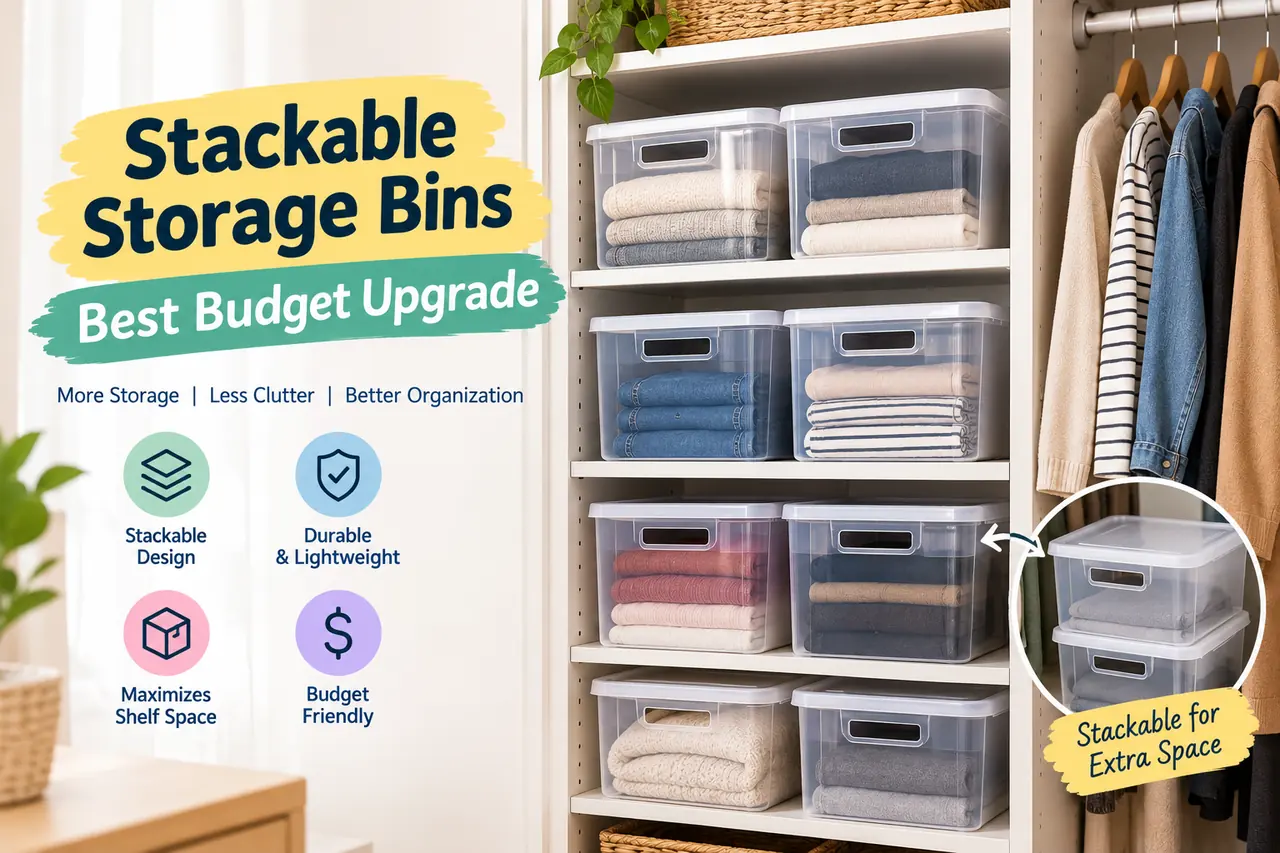
Stackable bins give loose items a defined home without changing the closet structure. They work well for linens, handbags, workout clothing, and accessories that are difficult to keep in neat piles.
Clear bins make contents easy to identify, while fabric bins hide visual clutter. Measure the shelf depth and the space above it before buying. A bin that extends beyond the shelf can interfere with doors, and a stack that is too high makes frequently used items inconvenient to reach.
Before you buy
Use labels on opaque bins. Keep the heaviest containers low and avoid unstable stacks.
3. Over-the-Door Organizer
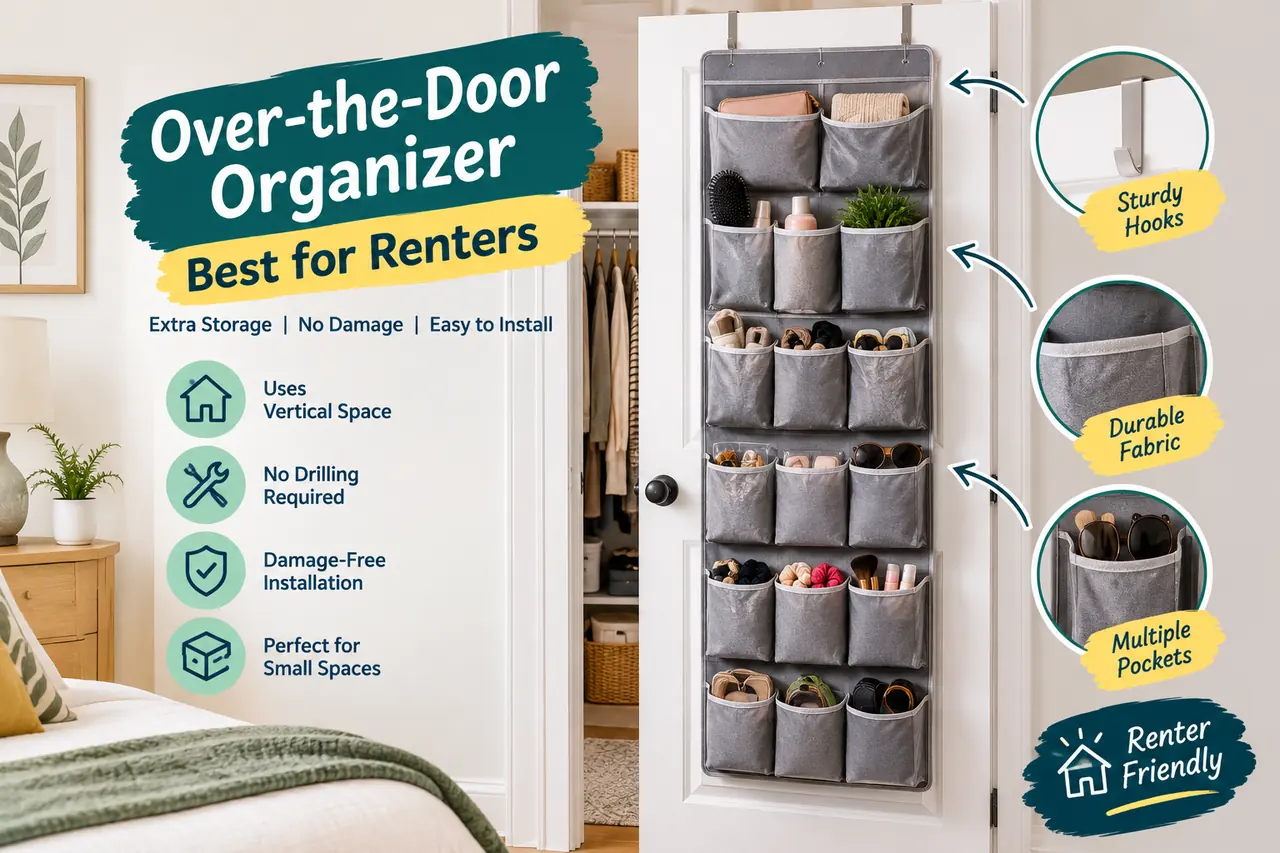
An over-the-door organizer can hold shoes, scarves, cleaning supplies, or grooming items without taking up shelf or floor space. Many designs hang from brackets, so they may not require holes.
Check the door thickness, the gap above the door, and the organizer depth. The door still needs to close without rubbing the frame. Added weight also affects hinges, so follow the stated load limit and use the organizer for lightweight items.
Before you buy
A bracket can still mark paint or trim, and some doors have too little top clearance. Test the fit before loading it.
4. Vertical Shoe Organizer
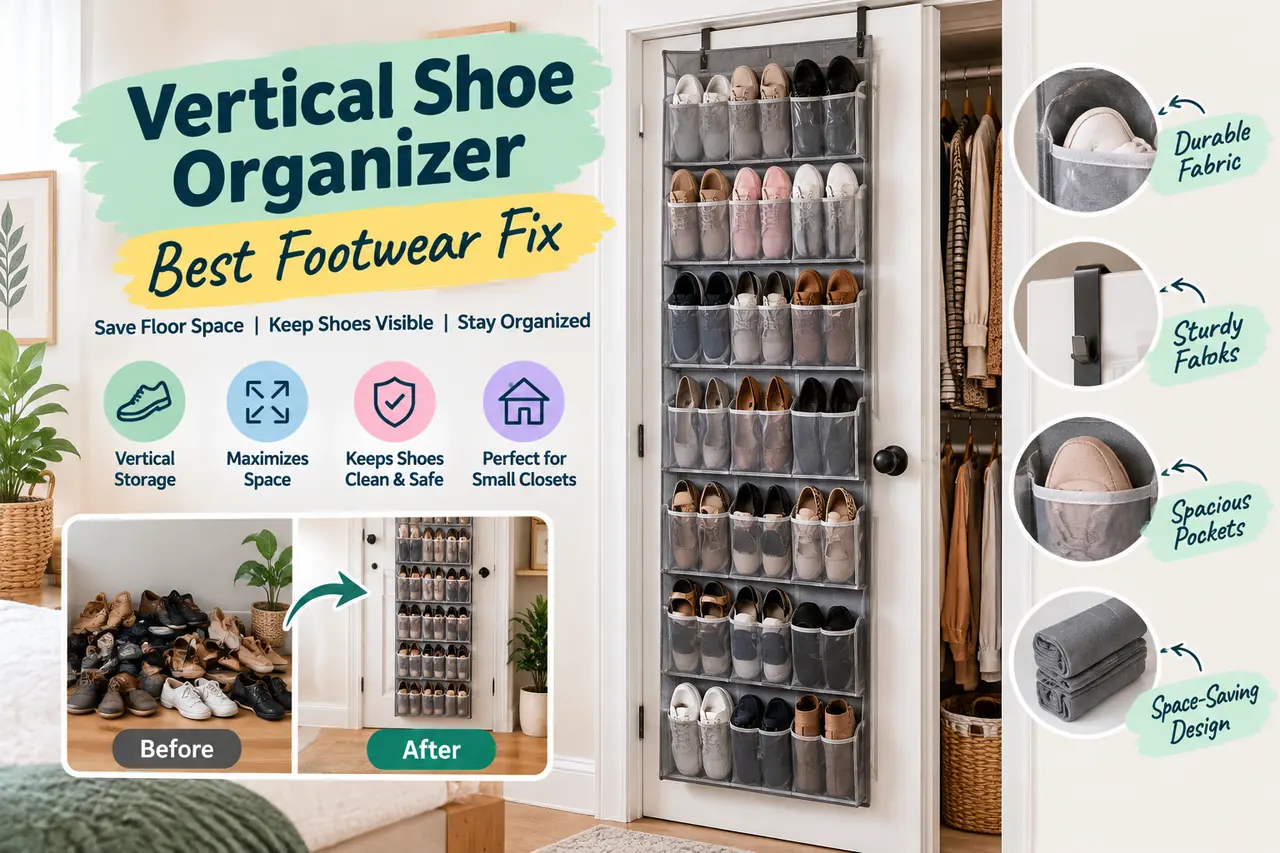
A vertical shoe shelf, hanging column, or narrow cabinet stores footwear upward instead of across the floor. Open shelves provide quick access, while enclosed compartments create a cleaner appearance.
Measure the largest shoes you plan to store; boots and wide athletic shoes may not fit standard cubbies. Leave enough room for the closet door and nearby drawers to open. Tall freestanding units should be secured when the instructions call for anchoring.
Before you buy
Do not overload fabric pockets or narrow towers. Follow the product’s stability and anti-tip directions.
5. Double Hanging Rod
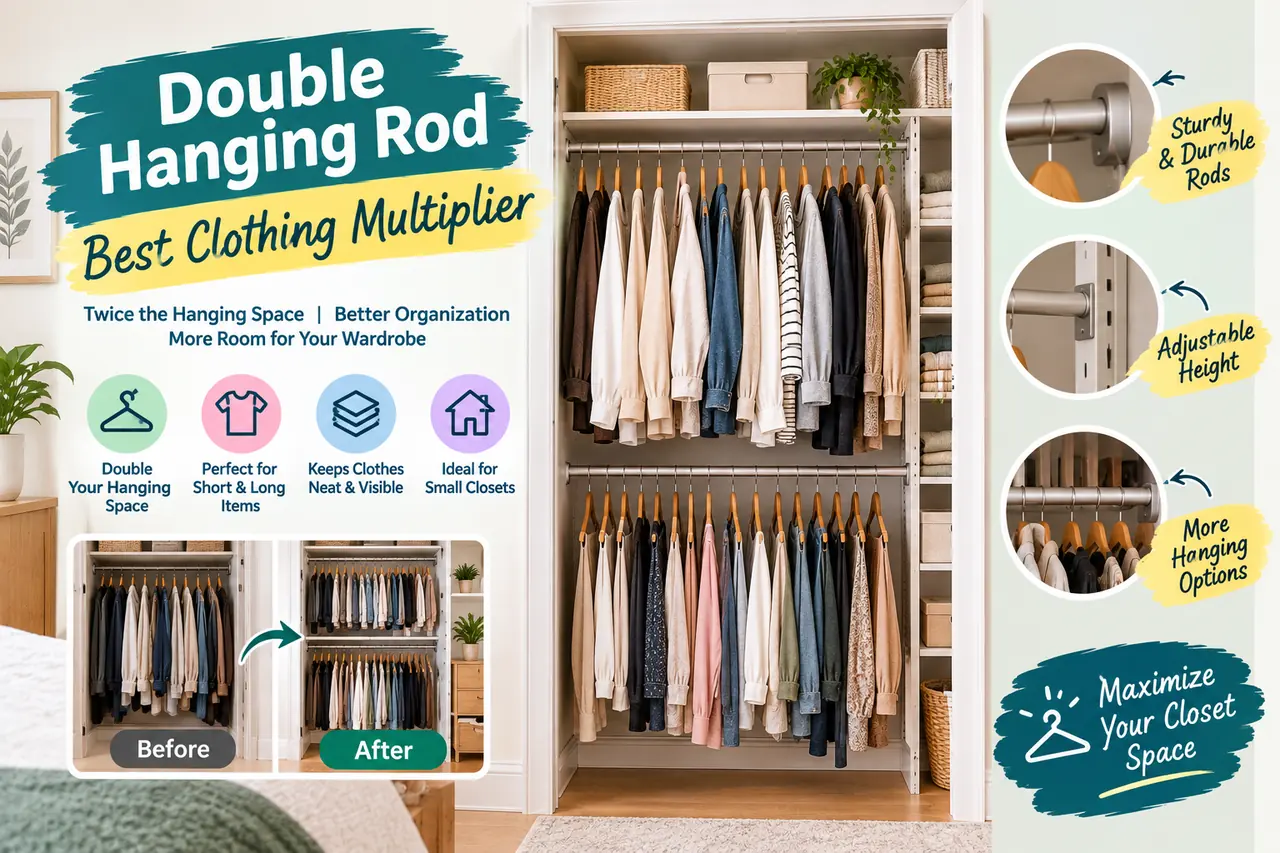
A second hanging rod uses the open area below shirts, blouses, skirts, and folded trousers. It is one of the simplest ways to add useful hanging space when most garments do not need a full-length drop.
The added rod does not automatically double capacity, because the upper rod and its supports carry the combined load. Keep one full-height section for dresses and coats, and confirm the original rod is straight and securely mounted before adding more weight.
Before you buy
Repair a bent or loose primary rod first. Follow the load rating for both rods and their mounting hardware.
6. Shelf Divider or Shelf Riser
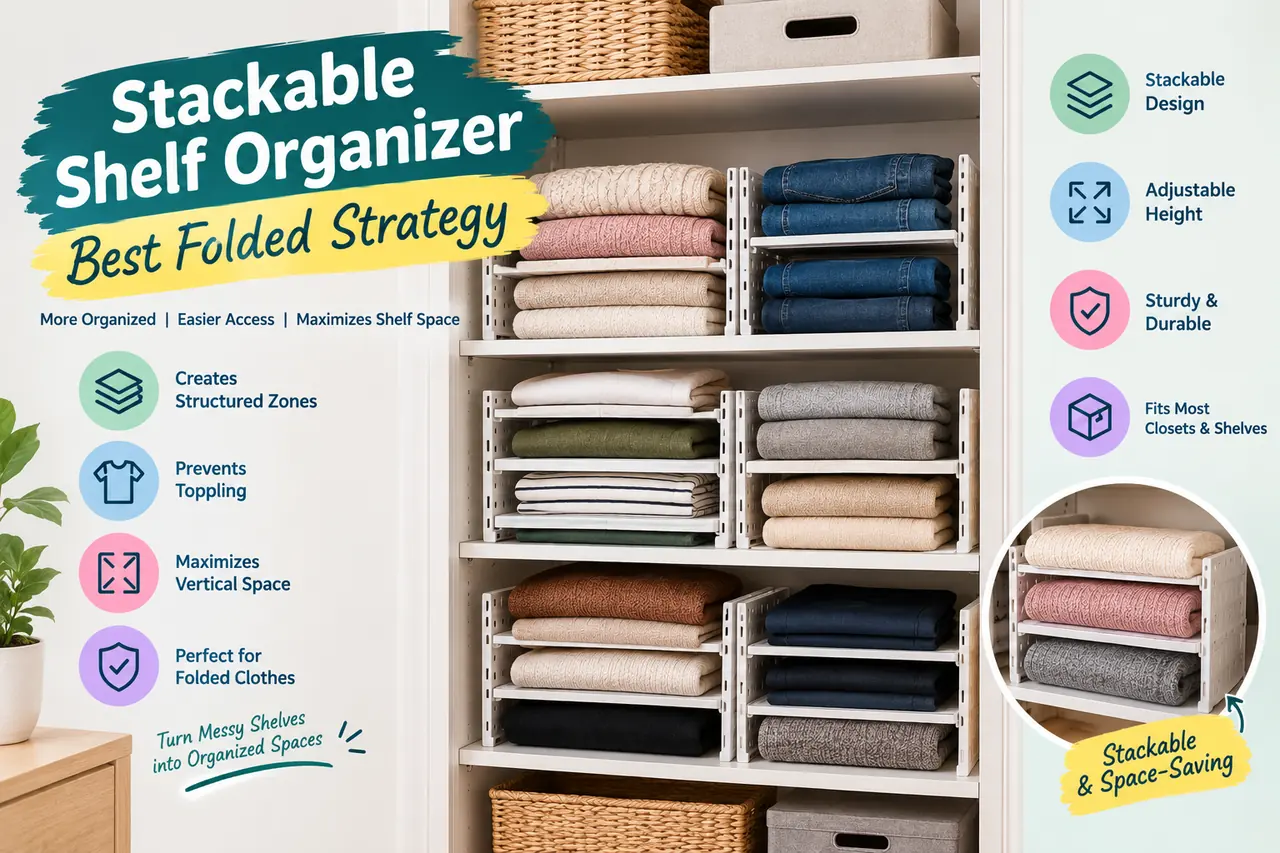
Shelf dividers keep adjacent piles from leaning into one another. Shelf risers solve a different problem by creating an extra horizontal level for short stacks or small bins. Choose the type that matches the way your shelf becomes disorganized.
Measure shelf thickness, depth, and vertical clearance. Clip-on dividers need a compatible shelf edge, while stackable risers need a stable, flat surface. Keep stacks low enough that you can remove one item without disturbing the rest.
Before you buy
Lightweight dividers can flex under bulky knits. Check material and load guidance before stacking heavy items.
7. Hanging Pocket Organizer
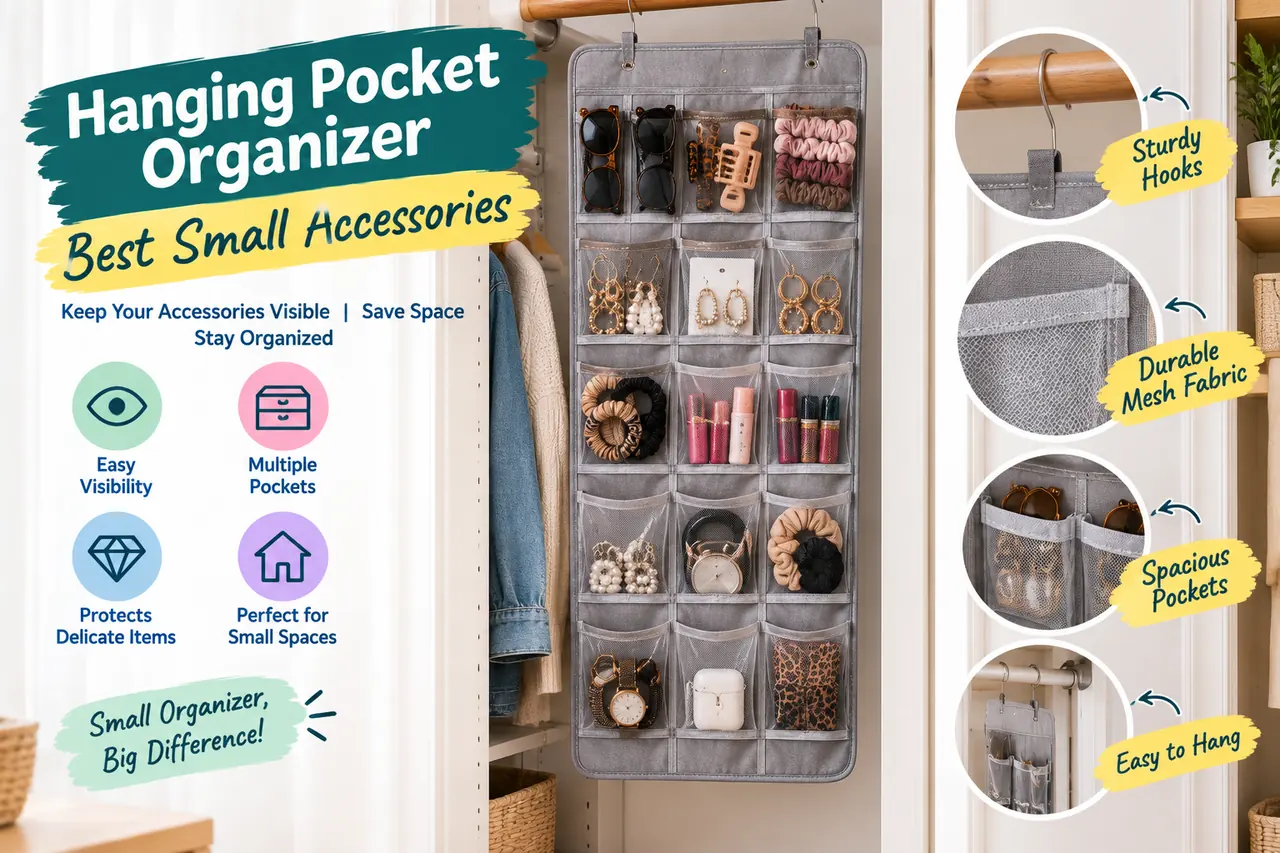
Hanging pockets give belts, scarves, hats, jewelry cases, and other small accessories a visible home. Clear or mesh fronts reduce searching, and the unit uses only a narrow section of the closet rod.
Pocket dimensions matter more than the overall organizer size. Bulky items can stretch the fabric and make the organizer press against nearby clothes, so reserve it for light accessories and distribute the weight evenly.
Before you buy
Avoid heavy tools, large bottles, or overfilled pockets unless the organizer is specifically rated for them.
8. Lidded Storage Bins
Best for off-season storage
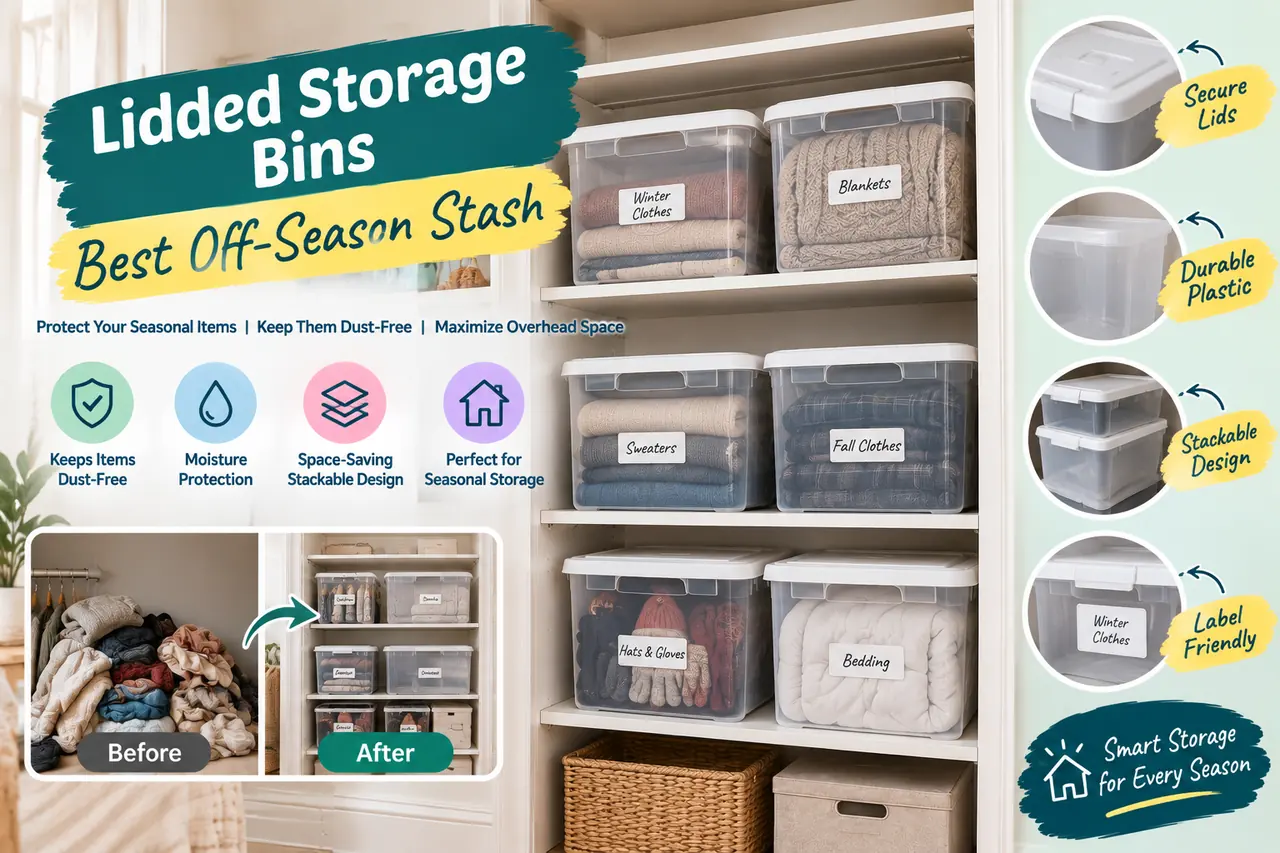
Lidded bins are useful for seasonal clothing, spare linens, and items you only need occasionally. A lid reduces dust and makes stacking easier, but an ordinary plastic bin is not automatically airtight or moisture-proof.
Wash and fully dry textiles before packing them. Add a clear label to the front, and store heavy bins on lower shelves where they can be lifted safely. Lightweight seasonal items can go higher if the shelf is rated for the load.
Before you buy
Avoid placing heavy totes overhead. Use only products designed for the storage conditions in your home.
9. Slim Rolling Storage Cart
Best for a narrow gap
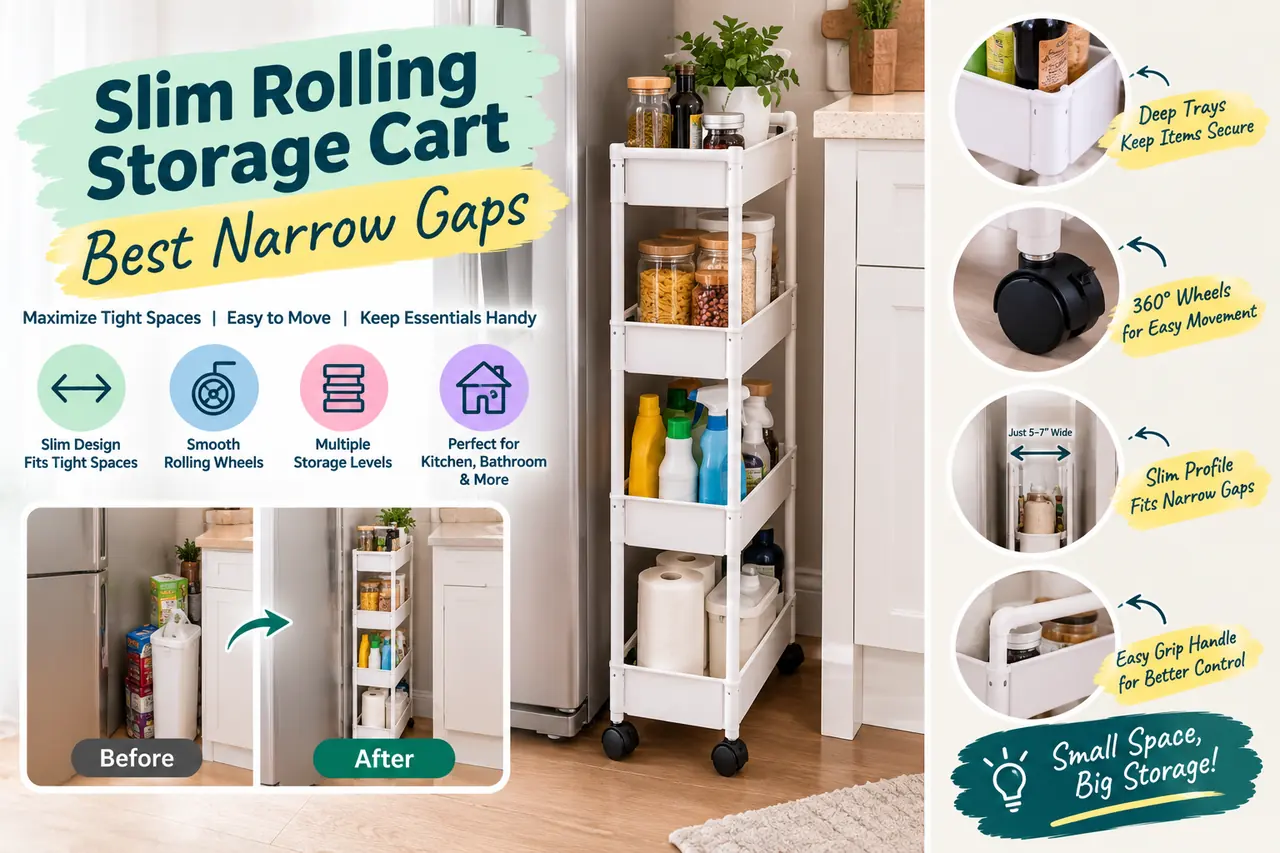
A slim rolling cart can turn the gap beside a wall, shelf unit, or dresser into pull-out storage. It suits light accessories, folded towels, or grooming supplies that benefit from easy access.
Measure the entire travel path, not just the gap. Handles, wheels, trim, and door frames can prevent a cart from rolling out. Choose smooth casters and keep heavier items on the lowest tier to improve stability.
Before you buy
A tall, narrow cart can tip if it is top-heavy or pulled quickly. Use it on a level surface and follow the load limit.
10. Freestanding Adjustable Shelves
Best flexible floor-based option
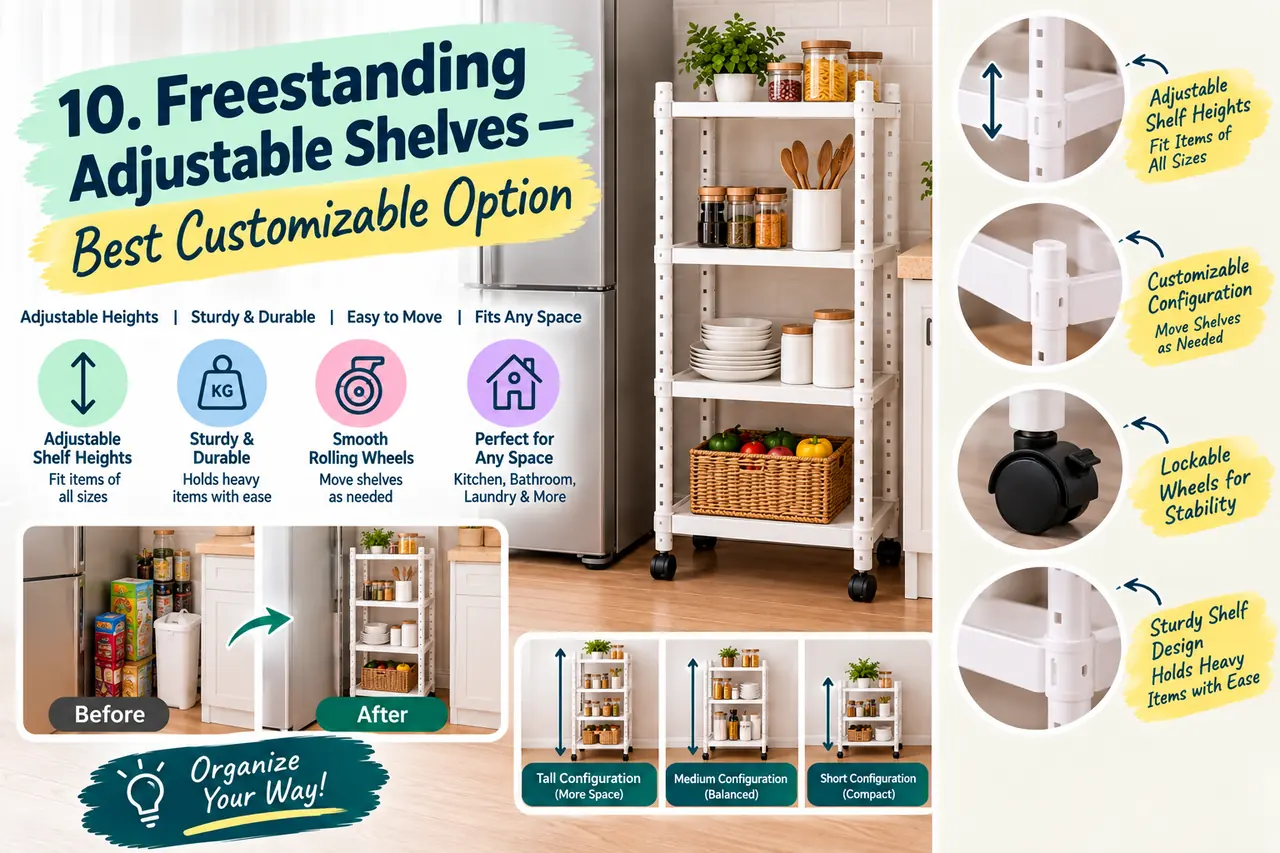
Freestanding shelves add structure without redesigning the entire closet. Adjustable levels can accommodate folded clothing, shoes, and bins, and the unit can often move to another room later.
The trade-off is floor space. Confirm the unit will not block hanging clothes or the door. Place heavier items low, keep the base level, and follow the manufacturer’s anti-tip instructions. Furniture with shelves, doors, or drawers may require wall anchoring even when it is marketed as freestanding.
Before you buy
The U.S. Consumer Product Safety Commission advises anchoring furniture with shelves, doors, and drawers to reduce tip-over risk.
How to Choose the Best Closet Organizers for Small Spaces
Choose the organizer after you identify the storage problem. If a rod is bent or loose, repair or replace it before adding a second tier. If folded clothing falls over, use dividers or risers. If shoes cover the floor, move them into vertical storage. Small accessories need shallow, visible compartments, while seasonal textiles belong in clean, dry, labeled containers.
Measure These Six Areas
| Measurement | What to record |
|---|---|
| Inside width | Measure wall to wall at the narrowest usable point. |
| Usable depth | Measure from the back wall to the closed door or sliding-door track. |
| Available height | Measure floor to ceiling and floor to the underside of existing shelves. |
| Door opening | Measure the actual clear opening, not the full frame width. |
| Shelf dimensions | Record shelf depth, thickness, and vertical clearance. |
| Hanging drop | Measure from the rod to the shelf or floor below. |
Freestanding vs. Wall-Mounted Organizers
| Feature | Freestanding organizer | Wall-mounted organizer |
|---|---|---|
| Installation | Usually simpler, but assembly is still required | Requires accurate layout and suitable fasteners |
| Portability | Generally easier to move | Usually intended to remain in place |
| Floor space | Uses part of the closet floor | Can keep more floor area open |
| Load capacity | Depends on frame, shelves, and stability | Depends on system, wall, hardware, and installation |
| Rental suitability | Often suitable, but anchoring may still be required | Usually needs landlord approval when holes are required |
Safety note: The U.S. Consumer Product Safety Commission advises anchoring furniture with shelves, doors, and drawers to reduce tip-over risk. Review the product instructions and the guidance at AnchorIt.gov.
A Practical Small-Closet Setup
1. Empty and clean the closet
Removing everything reveals the real usable dimensions and makes damaged rods or shelves easier to spot.
2. Sort by use
Separate daily items, occasional items, seasonal pieces, donations, and anything that belongs elsewhere.
3. Measure the space
Record width, depth, height, shelf thickness, door clearance, and hanging drop.
4. Identify the bottleneck
Decide whether the main problem is hanging space, folded clothing, shoes, accessories, or seasonal storage.
5. Choose one primary system
Start with the organizer that solves the biggest problem, then add small accessories only where needed.
6. Place daily items within reach
Keep frequently worn clothing and shoes between waist and eye level when possible.
7. Store seasonal items safely
Use clean, dry, labeled containers and place heavy items low.
8. Leave working room
A closet is easier to maintain when hangers can slide and bins can be removed without unloading the whole shelf.
Common Mistakes to Avoid
- Buying organizers before measuring shelf depth, door clearance, and the path into the closet.
- Using bins that are deeper than the shelf or too heavy to lift safely.
- Trying to organize items that should first be donated, repaired, or moved elsewhere.
- Blocking sliding doors, drawers, air vents, electrical panels, or access to utilities.
- Exceeding the load rating of rods, shelves, hooks, doors, or fasteners.
- Assuming a freestanding unit never needs anti-tip anchoring.
Test One Storage Zone Before Buying a Full System
List what is not fitting, measure the space that could solve that bottleneck, and test the proposed arrangement with the door open and closed. Keep heavy items within manageable reach and check the product’s load and anchoring instructions. Avoid buying matching bins before confirming their contents and dimensions. For a cabinet with plumbing obstructions, use the separate fit checks in our under-sink organizer guide.
Frequently Asked Questions
Which are the best closet organizers for small spaces?
For most mixed wardrobes, an adjustable modular system gives the most control. If the budget is limited, start with one targeted fix such as a double rod for short garments or vertical shoe storage for a crowded floor.
How can renters organize a closet without drilling?
Over-the-door organizers, compatible clip-on dividers, bins, and some freestanding units may work without drilling. Check the lease and product instructions because some freestanding furniture still requires anti-tip anchoring.
Are clear or fabric bins better?
Clear bins make contents easy to see. Fabric bins create a softer appearance and hide clutter, but they need labels. The better choice depends on access, shelf size, and what you store.
Should heavy storage bins go on the top shelf?
No. Heavy bins are safer and easier to handle on lower shelves. Reserve high shelves for lightweight items that are used infrequently, and stay within the shelf load rating.
Keep reading
Related Articles

Interiors & Remodeling
Professional Toxic Mold Remediation Cost Breakdown per Square Foot

Interiors & Remodeling