
Home Systems & Energy
How to Safely Unclog a Blocked Kitchen Drain Without Harsh Chemicals
FixingManual guide: Learn to unclog a kitchen drain without harsh chemicals using safe steps, sink plunging, P-trap cleaning, and a hand auger. Know when to call a plumber.
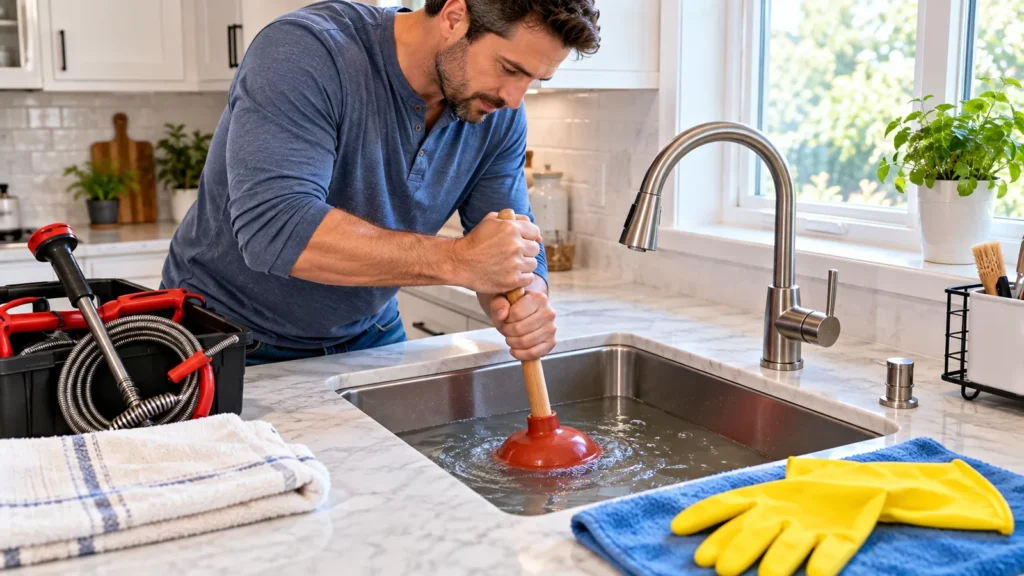
Image disclosure: Images are AI-generated illustrations, not photographs of FixingManual projects or hands-on product tests.
A blocked kitchen sink does not automatically call for corrosive drain opener. You can often unclog a kitchen drain without harsh chemicals by removing debris, plunging carefully, cleaning an accessible P-trap, or using a small hand auger. Grease, food residue, soap film, and strainer debris cause many clogs. Start gently, protect the garbage disposal, and stop before a simple clog becomes pipe damage or an unsafe cleanup.
This guide explains what a homeowner can try, which shortcuts to avoid, and when to call a licensed plumber. Plumbing layouts vary, so follow appliance instructions and local requirements.
First, Identify the Type of Kitchen Drain Clog
Run a small amount of water and watch what happens. A single slow basin usually points to debris near that drain, its disposal, or the P-trap. If both bowls back up, the restriction may be in the shared trap or branch line. When several fixtures drain slowly, a toilet gurgles, or wastewater appears elsewhere, stop using water. Those symptoms can indicate a larger branch or sewer-line problem.
Check whether the garbage disposal hums, is silent, or drains normally. Turn it off before any hands or tools approach the opening. Never reach into a disposal, even when it appears inactive. Its circuit should be switched off at the breaker before work near the grinding chamber; use the manufacturer’s approved wrench or service steps only.
Stop Immediately for These Warning Signs
- Sewage odor or contaminated water entering the sink
- Water near electrical outlets, wiring, or the disposal connection
- A leaking, cracked, or badly corroded pipe under the cabinet
- A clog that returned soon after professional cleaning
- Multiple slow drains or water backing up through another fixture
- Chemical drain cleaner already sitting in the sink or trap
If a chemical cleaner has already been used, tell the plumber exactly which product and how much. Do not add another substance or plunge aggressively, because splashing can cause burns.
Tools to Unclog a Kitchen Drain Without Harsh Chemicals Safely
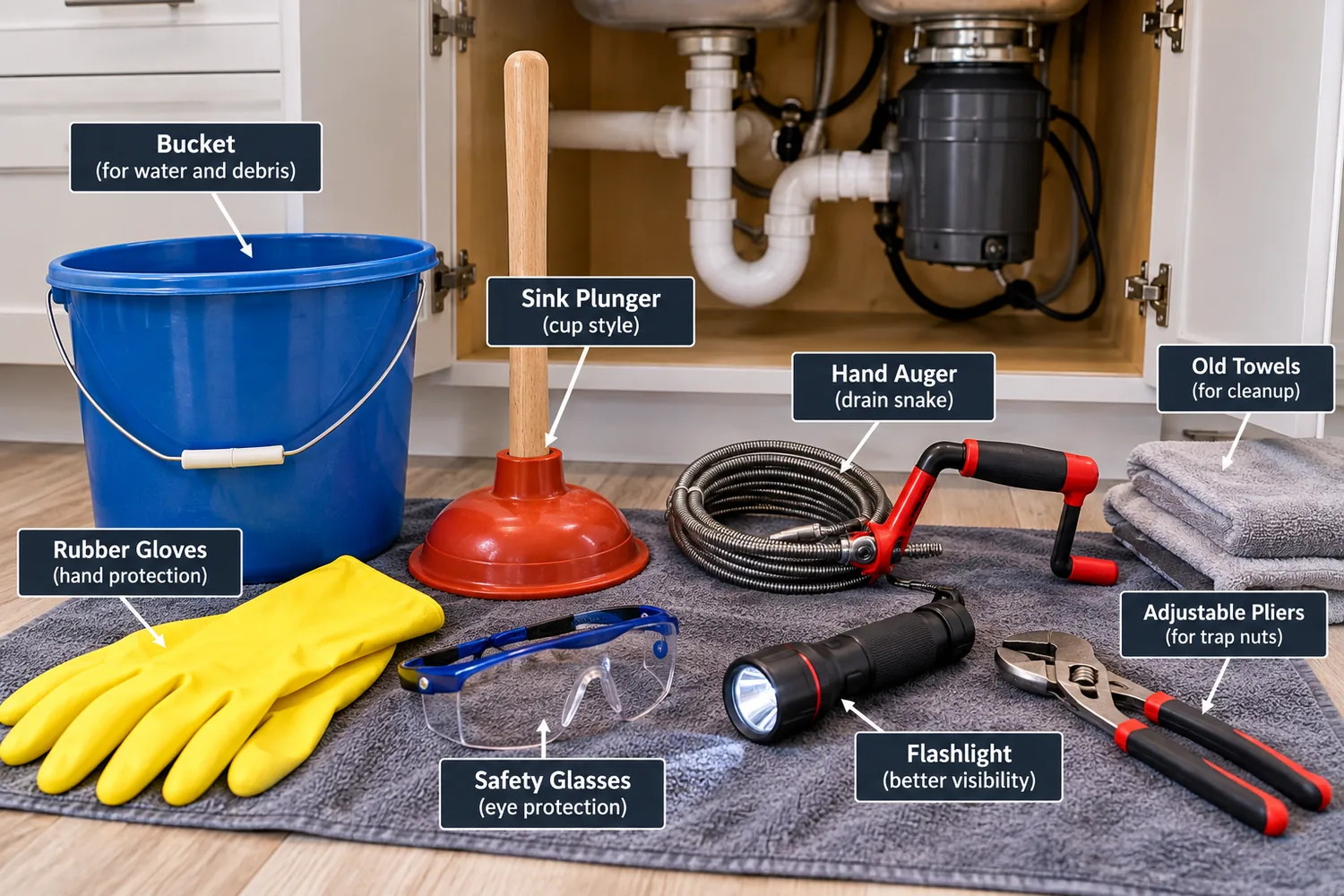
Useful supplies include rubber gloves, eye protection, a bucket, old towels, a flashlight, a cup-style sink plunger, and a small kitchen drain snake (hand auger) designed for drains. Adjustable pliers may help with a slip-joint trap, but plastic nuts should be loosened carefully by hand when possible. Keep children and pets away from the cabinet.
Remove standing water with a cup. This reduces the mess if the trap is opened. Place the bucket and towels below all slip joints before loosening anything.
Five Safe Methods to Unclog a Kitchen Drain Without Harsh Chemicals
1. Clean the Strainer and Visible Debris
Lift out the basket strainer and remove accessible food, labels, or fibrous material with a tool—not bare fingers. Clean the strainer with dish soap and warm water. If the sink has a removable stopper assembly, follow its instructions. A surprising amount of buildup can collect just below the opening.
Do not pour cooking fat down the drain. Wipe greasy pans with a paper towel before washing, and collect cooled oil in a container for disposal under local guidance.
2. Use Warm Water and Dish Soap for a Mild Grease Slowdown
One gentle way to unclog a kitchen drain without harsh chemicals when greasy residue slows the water is to add a small amount of grease-cutting dish soap, wait several minutes, and flush with hot tap water. Avoid pouring a kettle of boiling water into the sink. Extreme heat can stress some plastic piping, seals, sinks, or disposal components. This method may loosen light film, but it will not remove a solid obstruction.
3. Plunge the Drain Correctly
To unclog a kitchen drain without harsh chemicals using a cup plunger, seal the second basin with a stopper or wet cloth. Add enough water to cover the rim of a cup plunger, center it over the drain, and use firm, controlled strokes. Maintain the seal rather than splashing. After 15 to 20 strokes, lift the plunger and test with a small flow of water. Repeat once if drainage improves.
A toilet flange plunger is not ideal for a flat sink opening. Never plunge after adding a caustic or acidic drain product.
4. Remove and Clean an Accessible P-Trap
To unclog a kitchen drain without harsh chemicals when the obstruction is inside the trap, first check that the piping uses accessible slip-joint nuts. If so, place the bucket underneath, photograph the assembly, and loosen the nuts. Expect dirty water. Remove the trap, clear debris, wash it in another basin or outdoors, and inspect the washers. Reassemble in the same orientation, hand-tighten, then make only a modest additional adjustment if needed.
Run water slowly while checking every joint with a dry paper towel. If the piping is glued, corroded, hard to reach, or connected in a way you do not understand, leave it intact and call a plumber.
5. Try a Hand Auger in the Branch Drain
With the trap removed, feed a small hand auger gently into the wall-side drain. Rotate while advancing, withdraw debris, and avoid forcing the cable. Aggressive use can scratch, separate, or puncture weak piping. Never run a powered sewer machine without training. Reassemble the trap and leak-test the joints before normal use.
| Method | Best for | When to stop |
|---|---|---|
| Strainer cleaning | Debris near the opening | Obstruction is beyond reach |
| Sink plunger | Soft, local clog | No improvement after controlled attempts |
| P-trap cleaning | Buildup inside an accessible trap | Corroded, glued, or unfamiliar piping |
| Hand auger | Short branch-line restriction | Cable will not advance or repeatedly catches |
Do Baking Soda and Vinegar Unclog a Kitchen Sink?
The familiar mixture creates fizz, but the reaction does not reliably dissolve dense grease, compacted food, or a hard obstruction. To unclog a kitchen drain without harsh chemicals, physical removal is usually more effective than relying on a foaming reaction. It may freshen a lightly soiled drain, yet the foam is not a substitute for removing debris. Repeatedly adding powders can also leave material in a drain that is barely moving. Poison Control explains why this reaction is unlikely to clear a tough clog.
An enzyme drain cleaner or microbial drain-maintenance product is another option for gradual organic buildup. Choose a product labeled for the pipe and disposal type, follow the directions, and understand that it is maintenance—not an instant fix for a fully blocked line. Look for safer-product information through the EPA Safer Choice program, and never combine an enzyme product with bleach or another cleaner.
Why Harsh Chemical Drain Openers Can Create More Trouble
Caustic and acidic openers can burn skin and eyes, release fumes, splash during plunging, and remain in standing water. They may generate heat and harm some old pipes, finishes, seals, or disposals. Mixing drain opener with bleach, ammonia, acids, or another cleaner can release dangerous gases or cause a violent reaction.
If a label directs you to use ventilation or protective equipment, take those directions seriously. Store household chemicals in their original containers. For an exposure, contact Poison Control in the United States at 1-800-222-1222 or use its online help; call 911 for trouble breathing, collapse, seizure, or another immediate emergency.
When to Hire a Drain Cleaning Service
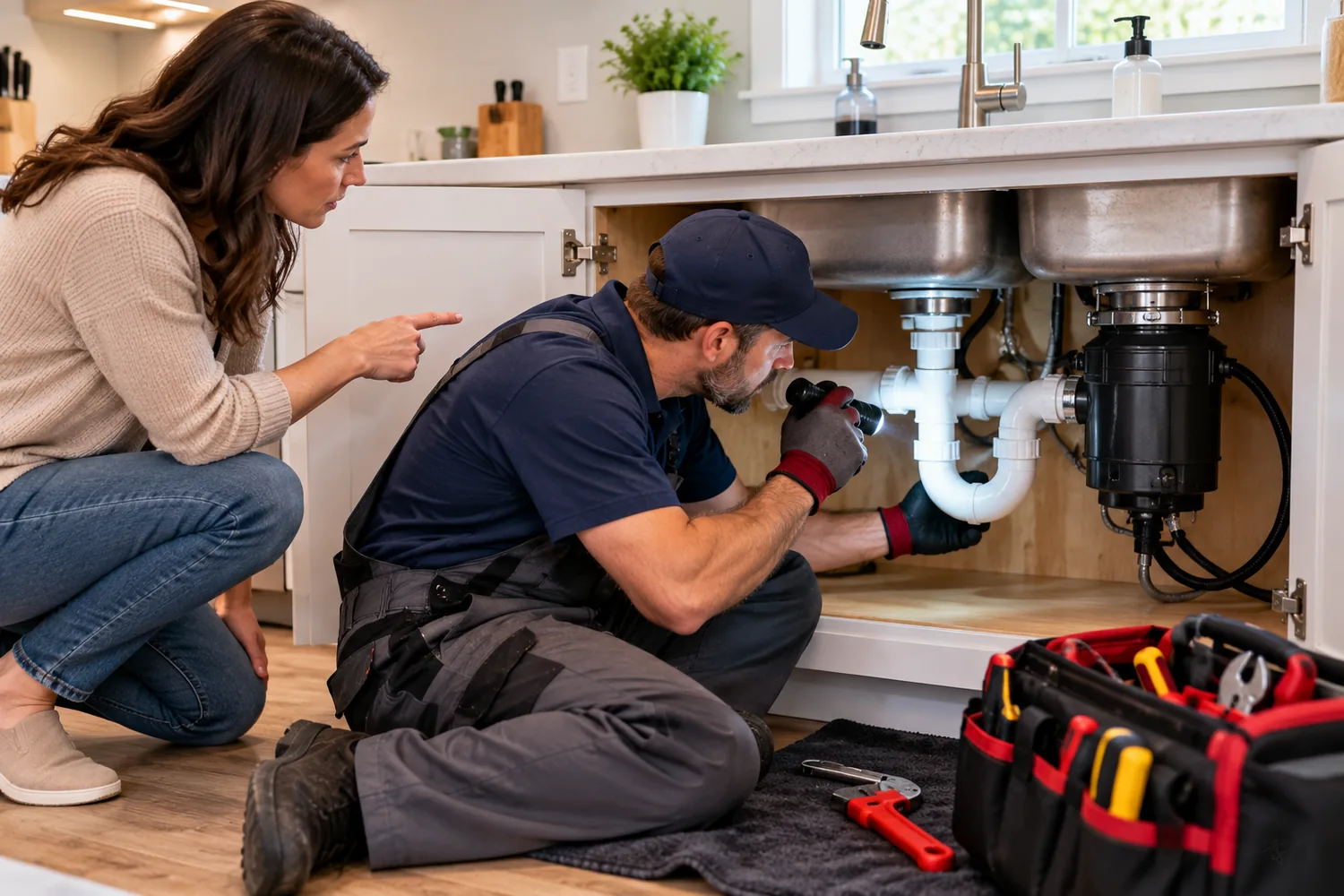
Knowing when to stop is part of learning to unclog a kitchen drain without harsh chemicals. Call a licensed plumbing company when the clog affects multiple fixtures, the sink backs up repeatedly, an auger cannot pass, pipes leak, or the home has aging or damaged drain lines. A professional may use a correctly sized cable machine, locate the restriction, or recommend a sewer camera inspection when there is evidence of a recurring line problem. Camera work should have a clear purpose; it is not necessary for every minor sink clog.
Ask whether the visit includes a diagnostic fee, drain cleaning, camera inspection, after-hours charges, and a written warranty. Request the total authorization limit before work begins. A low advertised price may cover only a simple access point, while difficult access, damaged piping, or main-line work costs more. See our emergency plumbing cost guide for after-hours service questions, or the main sewer line replacement guide when inspection reveals a major pipe issue. The FTC recommends checking contractor credentials and comparing written estimates.
Prevent the Next Kitchen Sink Blockage
- Scrape plates into the trash or compost before rinsing.
- Keep coffee grounds, flour, eggshells, fibrous peels, and starchy scraps out of the disposal.
- Collect grease and cooking oil instead of washing them away.
- Run adequate cold water when operating a disposal, following its manual.
- Clean the basket strainer regularly.
- Address a slow drain early rather than waiting for a complete backup.
Check the Result Before Putting Storage Back
After an accessible trap has been reassembled according to its fitting instructions, check the connections while water drains and again after the area has dried. Keep the cabinet clear until you are satisfied there is no visible leak. If flow remains poor, stop escalating force and describe the symptoms to a plumber. When replacing storage, choose under-sink organizers that leave the trap and shutoff valves accessible.
Frequently Asked Questions
Can I use a plunger on a sink with a garbage disposal?
Usually, yes, if the disposal is off, the opposite basin is sealed, and no chemical cleaner is present. Do not reach into the disposal. If the unit is jammed or leaking, follow its manual or call a professional.
Is boiling water safe for kitchen drains?
Hot tap water is the safer general choice. Boiling water may stress certain plastic pipes, seals, sink materials, or disposal parts and can cause a scalding injury.
How do I know the clog is in the main sewer line?
One kitchen sink alone is more likely a local issue. Several slow fixtures, lower-level backups, toilet gurgling, or wastewater appearing in another drain justify prompt professional assessment.
The Bottom Line
The safest way to unclog a kitchen drain without harsh chemicals is a measured progression: remove visible debris, try a controlled plunge, clean an accessible trap, and use a small hand auger only when the piping is suitable. Skip chemical mixtures and stop when symptoms extend beyond one fixture. Timely plumbing diagnosis can prevent water damage or a pipe harmed by forceful DIY work.
Sources
Keep reading
Related Articles

Home Systems & Energy
Aluminum Wiring Pigtail Repair Cost for an Older Home

Home Systems & Energy