
Roofing & Exterior
Siding Damage Repair Cost: Patching Prices and Repair Guide
FixingManual guide: Siding damage repair cost guide from Fixing Manual: compare patching prices, material costs, hidden damage, repair options, and when to call a contractor.

Image disclosure: Images are AI-generated illustrations, not photographs of FixingManual projects or hands-on product tests.
Siding damage repair cost depends on the material, the size of the damaged area, how high the repair is, and whether moisture has reached the wall behind the siding. A small puncture or crack may only need a localized patch, while soft sheathing, widespread rot, or several damaged panels can turn a simple repair into a larger exterior project.
This Fixing Manual guide explains how to inspect siding damage, what common patching and section-replacement costs can look like, when a localized repair may be reasonable, and when it is safer to call an exterior contractor. Comparing the siding damage repair cost early can also help you decide whether a patch or a larger section replacement makes more sense.
Siding Damage Repair Cost: Warning Signs to Check First
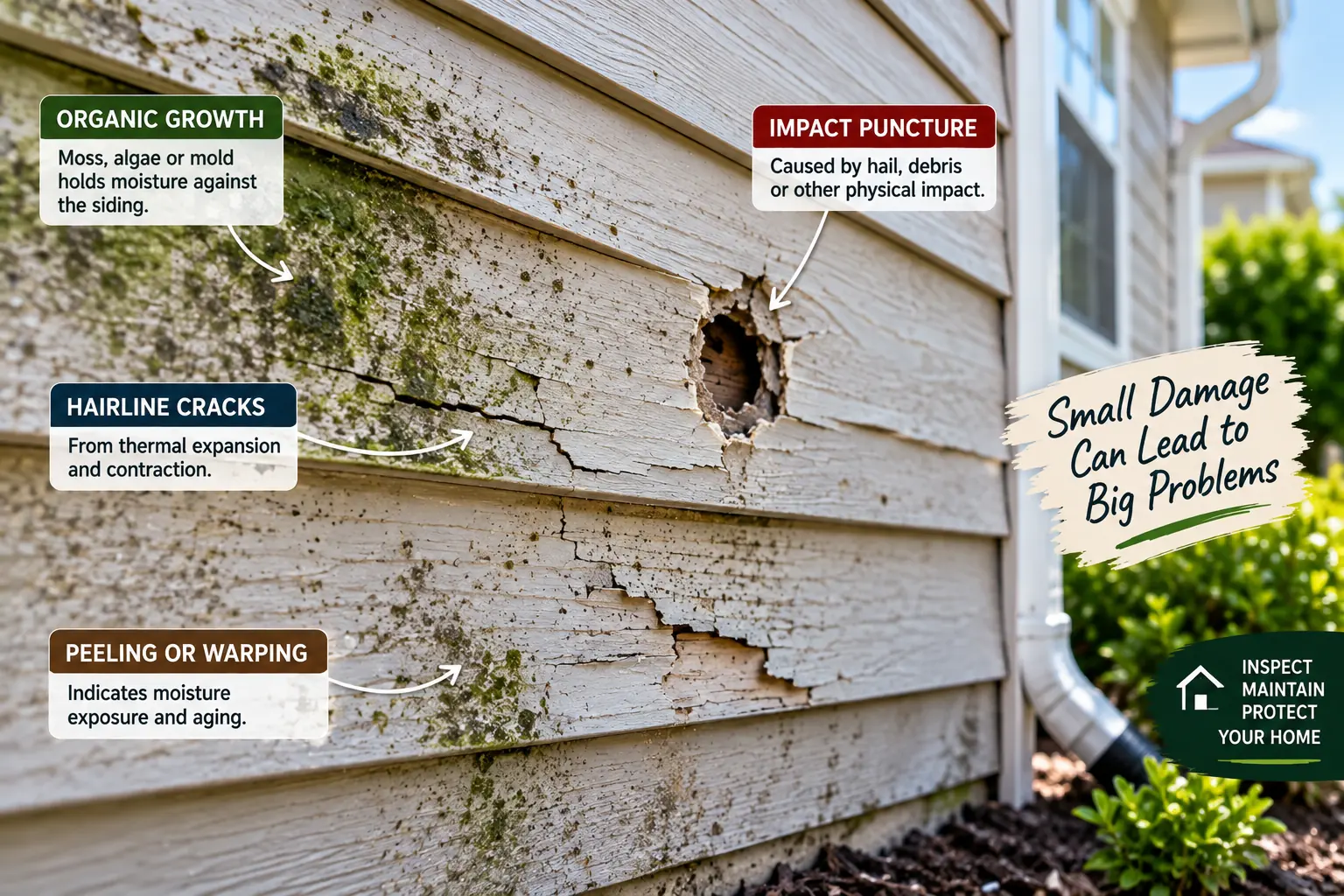
Before you buy patching material or request estimates, walk around the entire exterior. Damage that looks isolated from the driveway can sometimes be part of a larger moisture or fastening problem. Catching these issues early can keep the siding damage repair cost closer to a localized repair instead of a larger wall replacement.
- Impact punctures: Hail, flying lawn debris, and other physical impacts can crack, chip, or puncture vinyl and composite siding.
- Hairline or stress cracks: Repeated expansion and contraction can contribute to splitting, buckling, or warping when panels cannot move as intended.
- Moss, algae, or mold growth: Organic growth on shaded walls can hold moisture against joints and damaged surfaces.
- Soft areas around damaged panels: Unexpected flexing or softness can point to deterioration behind the visible siding.
Siding Damage Repair Cost by Material
The table uses HomeGuide’s siding-repair guide, dated February 9, 2026. Its figures describe approximately 100 square feet of repair, not a universal minimum or a single-panel price. A small job can have a minimum visit charge, and a damaged wall can require work behind the siding. Measure the area and compare the same scope.
| Material | Published repair example for 100 sq. ft. | Important distinction |
|---|---|---|
| Vinyl | $200–$400 | A single-hole patch is a different scope |
| Fiber cement | $450–$1,200 | Confirm product, access, and dust-control method |
| Wood | $400–$1,300 | Hidden moisture or sheathing work is separate |
| Stucco | $800–$5,000 | Identify the assembly and moisture cause |
The important question is not only “How much is the patch?” but also “What is behind the damaged area?” If water has reached the sheathing, house wrap, insulation, or framing, the repair scope can increase quickly. For a fair comparison, the siding damage repair cost should separate visible surface work from hidden wall repairs.
When a Localized Siding Patch May Make Sense
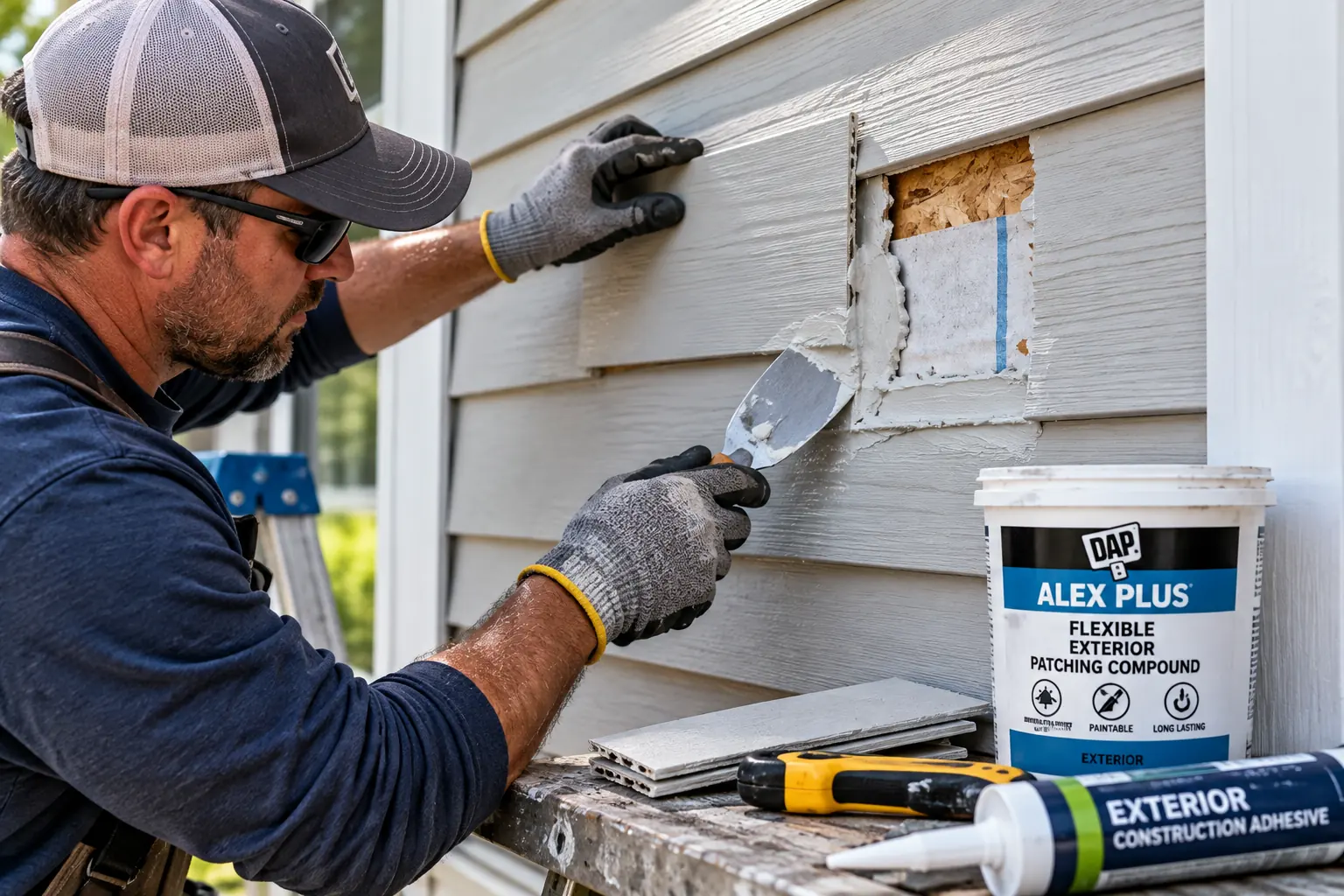
A localized patch can be reasonable when the defect is small, the surrounding siding is stable, and there is no evidence that the weather barrier or wall sheathing has been compromised. In that situation, the siding damage repair cost is usually easier to control because the work stays focused on a small area. The repair should stop water entry and restore the surface without creating a new trap for moisture.
Vinyl puncture patching
For a small vinyl puncture, a matching scrap piece can sometimes be used as a cover patch. The damaged surface should be cleaned first, the patch should extend beyond the hole, and the adhesive must be compatible with exterior vinyl. Follow the adhesive manufacturer’s cure time rather than relying on a generic timetable.
Fiber cement and wood-composite repairs
Minor cracks can sometimes be cleaned, filled with a compatible exterior repair compound, leveled, primed, and painted. The repair product should be approved for the specific siding material. If the board is soft, crumbling, deeply cracked, or loose, replacement is usually a better question to discuss with a contractor than simply covering the defect.
What Can Increase Siding Damage Repair Cost?
Color matching on older siding
Sun exposure can fade an exterior over time. A new vinyl or painted replacement section may be noticeably brighter than the surrounding wall. In some cases, homeowners choose to replace a larger section or repaint the elevation so the repair does not stand out. Color-matching work can therefore add to the siding damage repair cost even when the physical defect is small.
Hidden moisture damage
Once damaged siding is removed, a contractor may find deteriorated OSB sheathing, damaged house wrap, damp insulation, or rot. Hidden moisture is one of the main reasons siding repair costs can rise after the exterior surface is opened. Those problems have to be addressed before the wall is closed again, which can add both labor and material cost.
Second-story and difficult access
Repairs above ground level can require scaffolding, lifts, fall-protection equipment, and extra setup time. Ask the contractor to price access equipment and setup separately; there is no verified universal percentage premium for work above ground level.
Siding Patching Cost vs. Section Replacement
A patch is generally easiest to justify when the damage is small and the surrounding material is sound. Section replacement becomes more practical when damage spans multiple boards or panels, the material is badly warped, moisture has reached the wall assembly, or a patch would be difficult to seal reliably. In those cases, the siding damage repair cost may be higher initially, but a larger repair can address problems that a cosmetic patch would leave behind.
If the siding is structurally sound but the finish is failing across a much larger area, compare repair costs with repainting. Our guide to signs your house needs exterior painting explains when widespread peeling, fading, or surface breakdown may point to a coating problem rather than a localized siding defect.
How to Keep Siding Damage Repair Cost From Rising
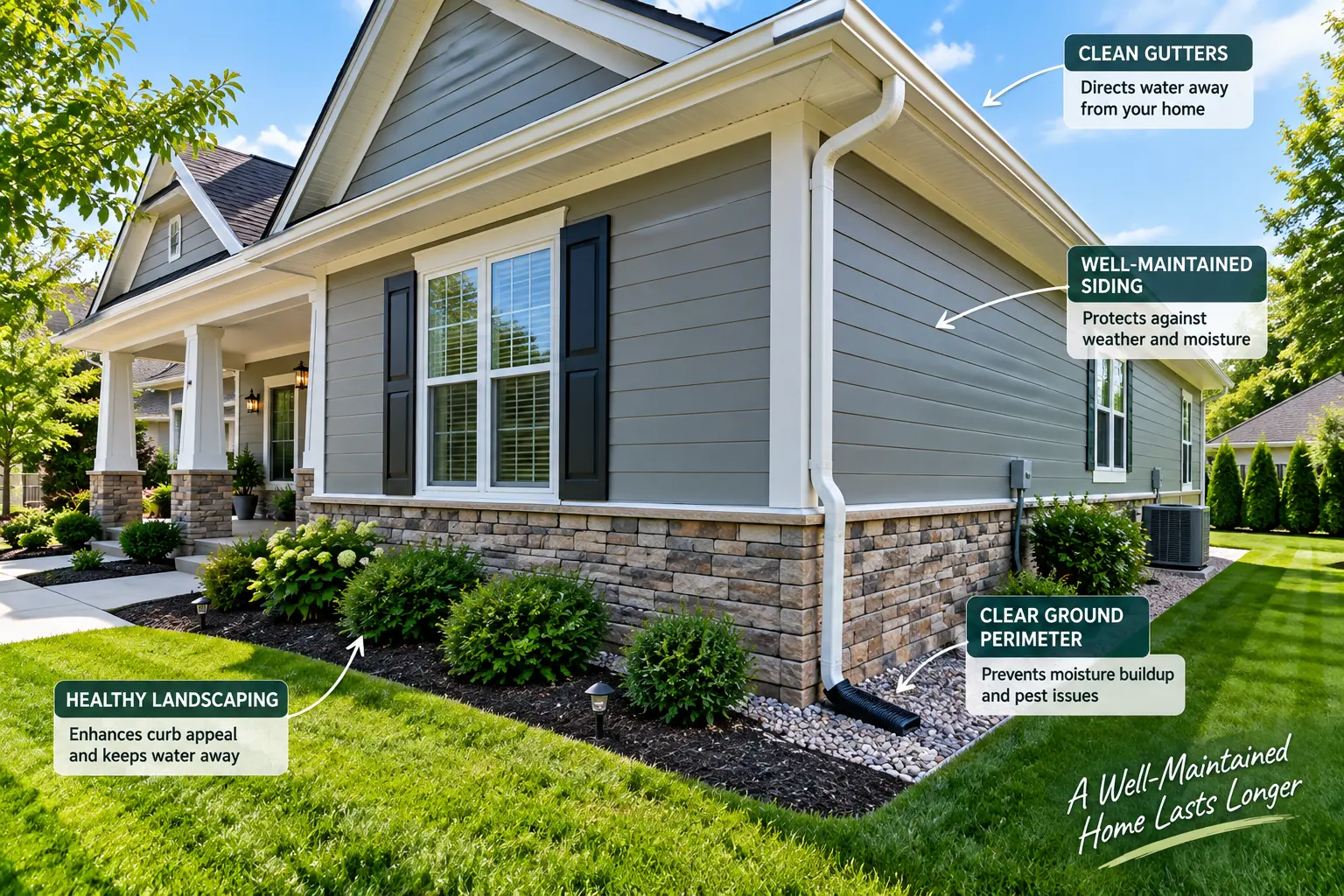
- Redirect sprinklers: Keep regular spray from hitting siding and trim.
- Maintain ground clearance: The source recommends keeping about six inches between soil or mulch and the lowest siding edge.
- Trim nearby landscaping: Keep branches, heavy shrubs, and vines from rubbing against the wall.
- Keep gutters working: Clean and inspect gutters so water is carried away instead of spilling behind siding and trim.
- Recheck repaired areas: After heavy rain or storms, look for new movement, staining, soft spots, or failed sealant around the repair.
When to Call a Siding Contractor
Professional help is a better choice when damage affects several adjacent panel runs, the wall feels soft, framing or sheathing rot is visible, or the repair requires working high above the ground. When comparing estimates, ask each contractor to separate the siding patching cost from any sheathing, weather-barrier, access, painting, or disposal charges. If the home may have older asbestos-containing cement siding, do not cut, sand, or disturb it yourself; have the material assessed by an appropriately qualified professional. The U.S. Environmental Protection Agency’s asbestos guidance explains why suspected asbestos-containing materials should be handled carefully.
For larger exterior problems, ask for an itemized estimate that separates siding material, labor, access equipment, sheathing or weather-barrier repairs, disposal, priming, and painting. A clearly itemized siding damage repair cost makes contractor quotes much easier to compare. That makes it easier to compare bids and understand why one estimate is higher than another.
Compare the Restored Wall, Not Just the Patch
Request a quote that identifies the replacement area, matching limitations, access equipment, moisture investigation, and any sheathing or flashing work excluded from the price. Ask how unexpected damage will be photographed and approved. Keep repainting separate until the repair and drying requirements are resolved. Our exterior painting warning-sign guide helps distinguish coating failure from damage that needs repair first.
Frequently Asked Questions
How Much Does a Small Siding Patch Cost?
HomeGuide reports an overall repair range of about $200–$1,100, while its material examples differ by scope and area. Get a local itemized price for the actual defect; a tiny puncture and a 100-square-foot replacement should not share one assumed rate.
Can Damaged Siding Be Patched Instead of Replaced?
Sometimes. A small, stable defect with no hidden wall damage may be suitable for a localized repair. Wider cracks, rot, softness, or several damaged panels usually deserve a professional replacement assessment.
Why Does a Siding Repair Quote Increase After Work Starts?
Removing damaged material can uncover wet sheathing, failed house wrap, insulation damage, or rot that was not visible from the outside. Access equipment and color-matching work can also increase the final scope.
What Is the Best Way to Keep Siding Repairs From Coming Back?
Fix the cause as well as the visible damage. Keep water away from the wall, maintain gutters, trim vegetation, preserve ground clearance, and recheck repaired areas after severe weather.
Final Takeaway
Siding damage repair cost stays easiest to control when problems are caught early. Clear estimates also make it easier to compare siding patching cost and broader siding repair costs without confusing surface work with hidden wall repairs. A small crack, puncture, or failed surface can often be handled without replacing a large wall section, but only when the material behind it is still dry and sound. Inspect first, repair the source of moisture or impact, and use a professional when damage extends beyond the visible surface.
Keep reading
Related Articles
Roofing & Exterior
How to Choose Asphalt Shingles for Your Next Residential Project

Roofing & Exterior