
Home Systems & Energy
What Is the Average Main Sewer Line Replacement Price?
FixingManual guide: Average main sewer line replacement cost is about $6,000. Fixing Manual compares 2026 U.S. costs per foot, methods, permits, and quote factors.
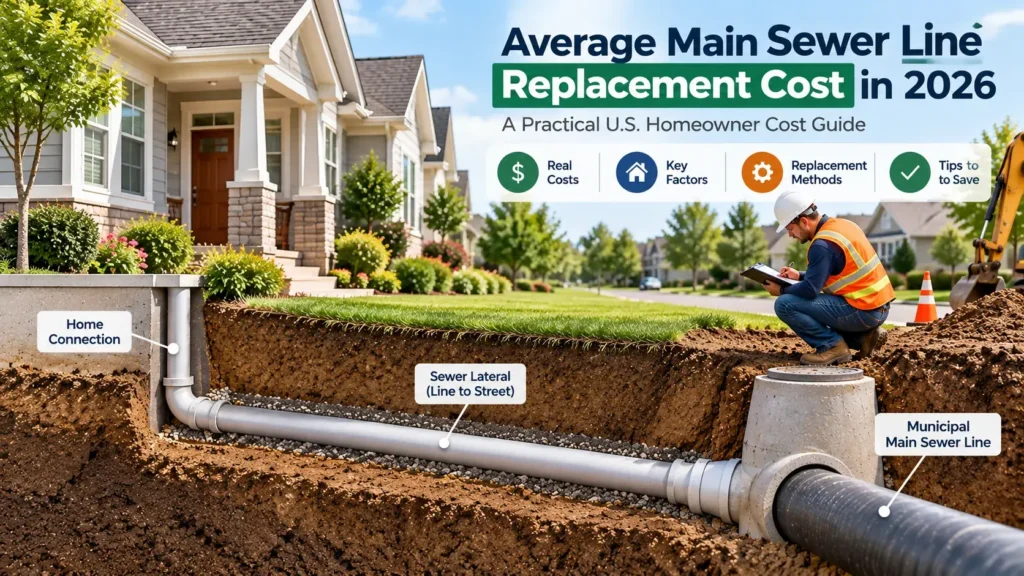
Image disclosure: Images are AI-generated illustrations, not photographs of FixingManual projects or hands-on product tests.
Average main sewer line replacement cost is not determined by the price of the pipe alone. The new PVC or HDPE pipe may be only a small part of the bill. Much of the cost comes from locating the failure, excavating safely, working around utilities, installing the correct slope, passing inspections, and restoring the yard or hardscape afterward.
That is why two homeowners replacing the same number of feet can receive very different estimates. This guide explains realistic national price ranges, the decisions that change the total, and how to compare contractor quotes without focusing on the lowest number alone.
Average Main Sewer Line Replacement Cost at a Glance
| Cost category | Typical U.S. price |
|---|---|
| Typical national average | $6,000 |
| Common total range | $2,000–$10,000 |
| Replacement cost per linear foot | $50–$250 |
| 40-foot residential line | $2,000–$10,000 |
| Complex or extensive project | $15,000–$20,000+ |
These figures are planning ranges, not fixed contractor rates. Labor markets, soil conditions, local code requirements, and the location of the damaged pipe can move the price substantially. HomeGuide’s 2026 cost guide reports the same broad $50–$250 per linear foot range and $2,000–$10,000 average range for a 40-foot replacement.
Sewer Line Replacement Cost by Length
Contractors commonly price replacement partly by linear foot. Because the average main sewer line replacement cost changes quickly with footage, an estimated $50 to $250 per foot creates a wide planning range as the run gets longer:
| Line length | Estimated replacement cost |
|---|---|
| 10 feet | $500–$2,500 |
| 20 feet | $1,000–$5,000 |
| 40 feet | $2,000–$10,000 |
| 60 feet | $3,000–$15,000 |
| 80 feet | $4,000–$20,000 |
A contractor may also have a minimum project charge for equipment, crew time, inspections, and mobilization. As a result, a 10-foot replacement is not always exactly one-quarter of the price of a 40-foot job.
Traditional vs. Trenchless Sewer Replacement
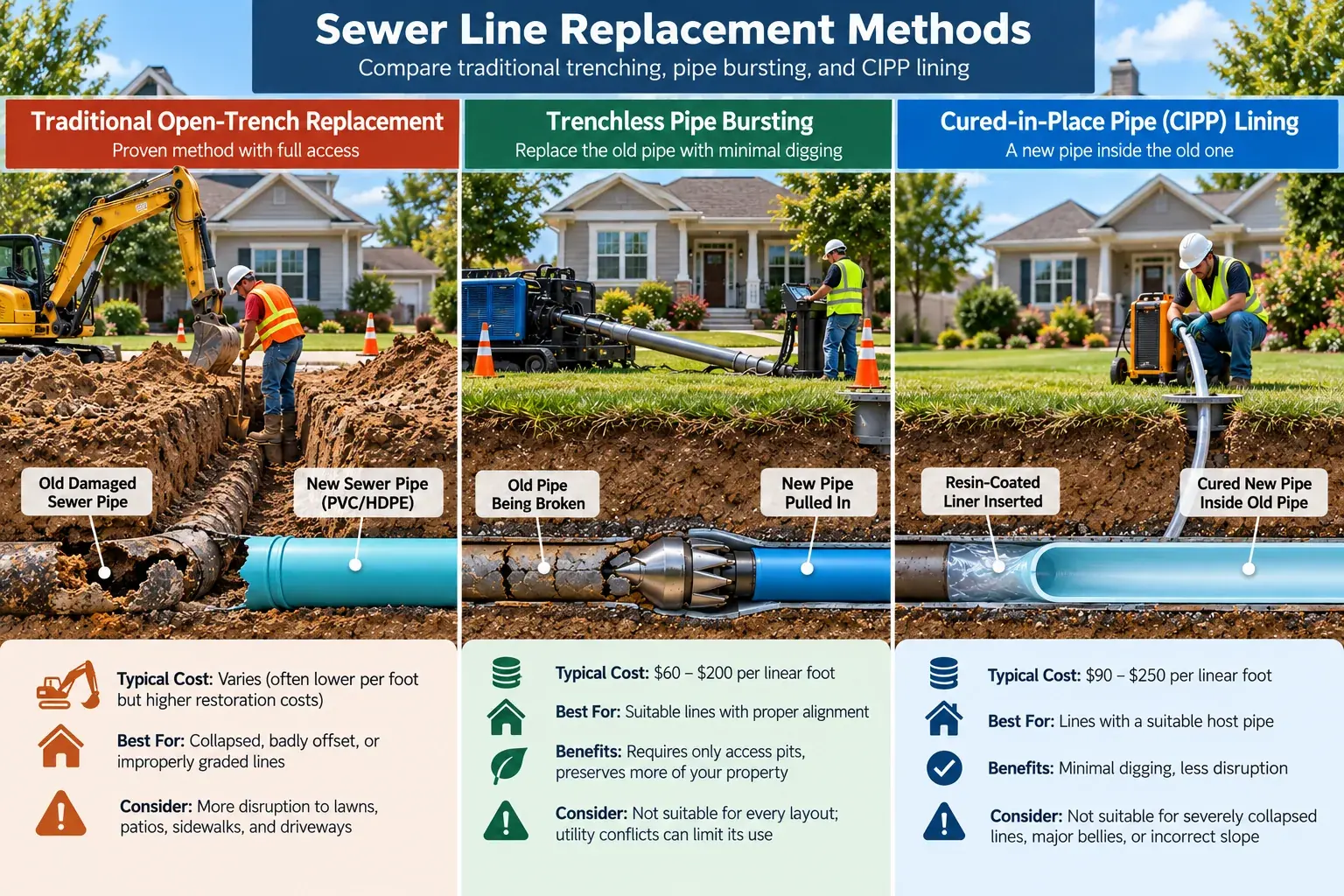
Traditional Open-Trench Replacement
Open-trench work exposes the old pipe by digging along the affected route. It is straightforward and gives the crew full access, which can make it the practical choice for collapsed, badly offset, or improperly graded lines. The tradeoff is disruption: lawns, patios, sidewalks, driveways, or plantings may need to be removed and rebuilt. A low plumbing quote can therefore become expensive after restoration is added.
Trenchless Pipe Bursting
Pipe bursting pulls a new line through the path of the old one while breaking the existing pipe outward. Typical pricing is about $60 to $200 per linear foot. It usually needs access pits rather than a continuous trench, so it may preserve more of the property. It is not suitable for every layout, and utility conflicts or poor alignment can limit its use.
Cured-in-Place Pipe Lining
Cured-in-place pipe, often called CIPP, places a resin-coated liner inside the existing line and cures it to form a new inner pipe. Typical costs run about $90 to $250 per linear foot. Because lining relies on the old route, the host pipe must be appropriate for the method. A severely collapsed line, major belly, or incorrect slope may require excavation instead.
What Changes the Average Main Sewer Line Replacement Cost?
Length and Depth
Longer runs require more pipe and labor. Deep lines need wider, safer excavation and may require shoring or specialized equipment.
Access
A clear lawn is generally easier than a narrow side yard, finished basement slab, steep slope, retaining wall, or fenced property.
Surface Above the Pipe
Concrete, asphalt, decks, patios, landscaping, and mature trees add demolition and restoration costs. If excavation affects an established yard, our backyard soil erosion guide may also help when planning the restoration phase.
Damage and Pipe Condition
A small isolated break may allow partial replacement. Widespread corrosion, root intrusion, bellies, or multiple failures can justify replacing the full run.
Soil and Groundwater
Rocky soil, unstable ground, high groundwater, and buried debris can slow excavation and require additional safety measures.
Method and Equipment
Open trench, pipe bursting, and lining have different setup, labor, and site-restoration requirements.
Permits and Public Right-of-Way
Local permits and inspections are common. Work under a sidewalk, curb, or street may require additional approvals and traffic control. For example, the City of Portland’s sewer repair guide distinguishes work on private property from work in the public right-of-way, while Los Angeles uses specific sewer connection permitting for qualifying lateral work.
Location and Timing
Labor rates vary by market. Emergency, weekend, or after-hours work may cost more than a scheduled project.
Repair or Replace: Which One Do You Need?
Not every backup calls for a complete replacement. Grease buildup, a removable root mass, or a single accessible defect may be handled with cleaning or a targeted repair. For a backup that needs immediate after-hours help, compare the likely callout charges in our emergency plumbing night-call cost guide. Full replacement becomes more reasonable when a camera inspection finds a collapsed pipe, repeated breaks, extensive corrosion, severe offsets, or widespread deterioration in an older line.
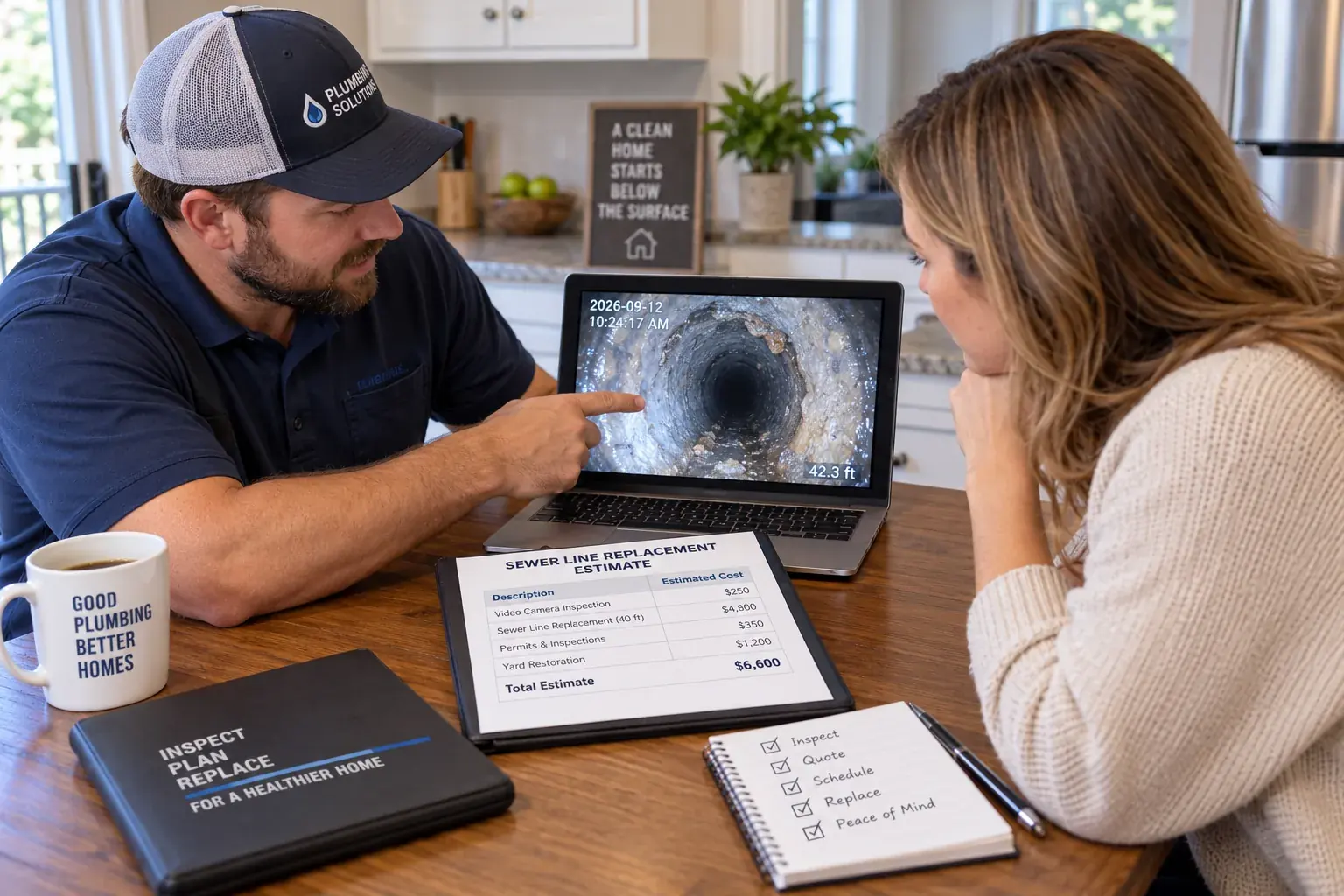
Ask the contractor to show you the inspection video and identify the defect, its distance from the cleanout, the pipe material, and the proposed start and end points. A written diagnosis makes it easier to compare bids and reduces the chance of approving a large project based only on symptoms.
Costs That May Appear Outside the Main Quote
- Video camera inspection and locating the damaged section
- Drain cleaning or hydro jetting before inspection
- Permit, inspection, utility-marking, or right-of-way fees
- Excavation safety measures for a deep trench
- Concrete, asphalt, sidewalk, or driveway replacement
- Topsoil, sod, trees, irrigation, fencing, or landscape restoration
- Temporary plumbing arrangements or sewage cleanup
- Engineering, traffic control, or municipal connection work where required
Before signing, confirm whether the bid is truly all-inclusive. The average main sewer line replacement cost can rise substantially when permits, disposal, backfill, compaction, testing, and surface repair are excluded from the initial quote.
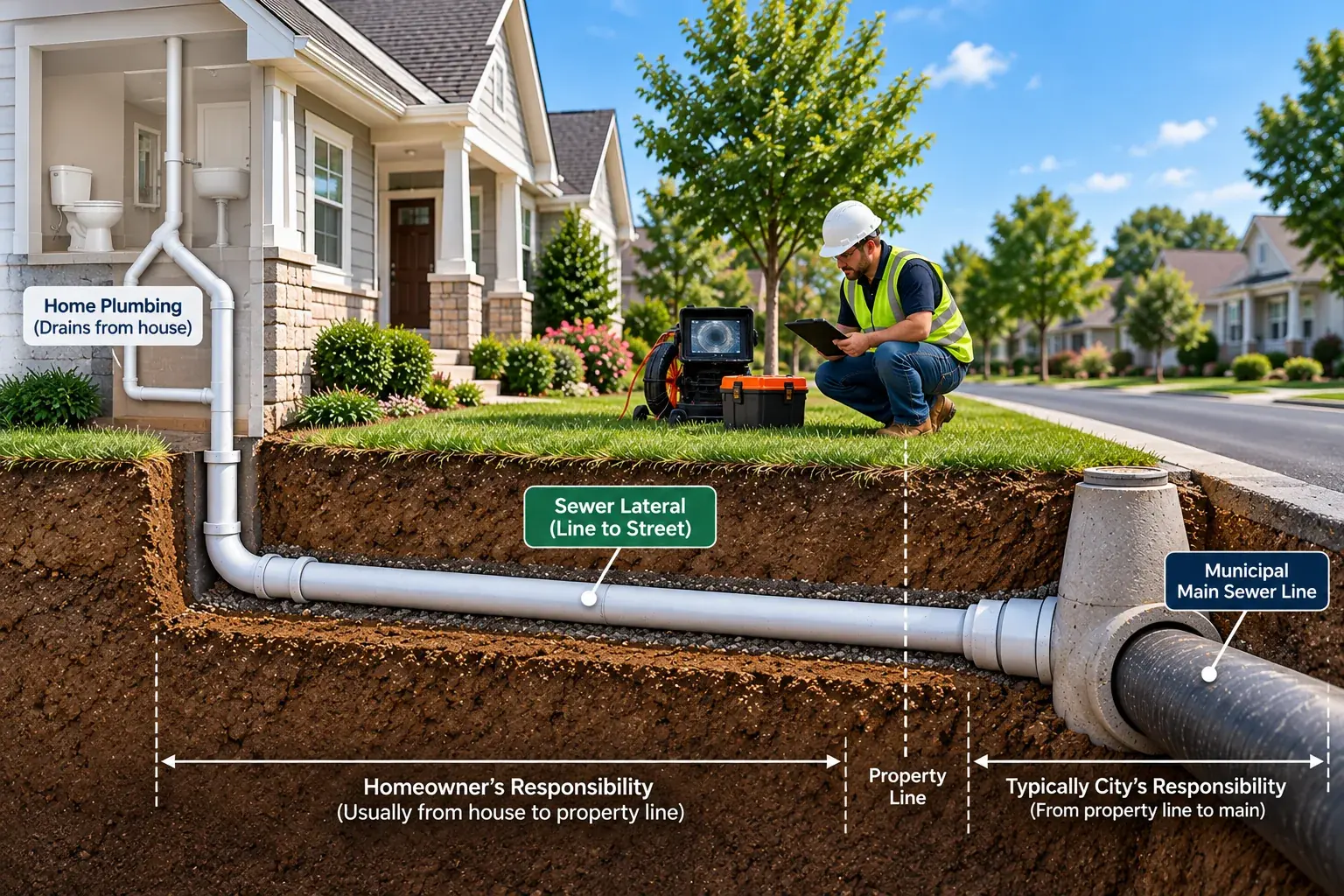
Who Pays for the Sewer Line?
In many communities, the homeowner is responsible for the private sewer lateral running from the house toward the public connection, while the municipality manages the public sewer main. The exact boundary is local and may be the property line, curb, connection point, or another defined location. Never assume the city will pay simply because the problem is near the street.
Responsibility for part of the line can affect the average main sewer line replacement cost you actually pay. Call the local sewer authority before authorizing work near the public right-of-way. Also review your homeowners policy and any service-line endorsement. Standard coverage often excludes wear, corrosion, and root damage, but optional service-line coverage or a qualifying sudden loss may change the outcome. Coverage depends on the policy language and cause of damage.
How to Get a Reliable Sewer Replacement Estimate
- Start with a camera inspection. Confirm the location and condition of the pipe before discussing a full replacement.
- Request two or three itemized bids. Each quote should use the same scope, approximate footage, method, material, and restoration assumptions.
- Verify licensing and insurance. Use a properly licensed plumbing or sewer contractor as required by your state and municipality.
- Ask who handles permits. The contract should state who pulls permits, schedules inspections, and coordinates utility marking.
- Review exclusions and change orders. Find out what happens if the crew discovers rock, a deeper pipe, utility conflicts, or additional damage.
- Compare warranties carefully. Separate the workmanship warranty from the pipe or liner manufacturer’s warranty, and ask whether either is transferable.
Can You Lower the Average Main Sewer Line Replacement Cost?
You may be able to reduce the average main sewer line replacement cost by scheduling the work instead of waiting for an emergency, obtaining comparable written bids, and asking whether a partial repair is technically sound. If trenchless work avoids an expensive driveway or established landscaping, a higher pipe-installation price may still produce a lower all-in cost. Conversely, open trenching may be more economical in an unobstructed yard.
Do not choose a method only because it has the lowest advertised price per foot. The best value is the option that corrects the actual failure, meets local code, includes necessary restoration, and has a clear warranty.
Request the Evidence Behind the Replacement Scope
Ask to see the inspection findings and the location and length of the proposed work. Have the contractor distinguish repair, lining, and replacement, including any method that the pipe condition rules out. Confirm who handles permits, right-of-way work, access, and surface restoration. If there is an active backup, separate immediate response using our emergency plumbing guide from the permanent project.
Frequently Asked Questions
How Much Does It Cost to Replace 40 Feet of Sewer Line?
A 40-foot residential sewer line commonly costs about $2,000 to $10,000 to replace, based on a broad range of $50 to $250 per linear foot. Difficult excavation or extensive surface repairs can push the total higher.
Is Trenchless Sewer Replacement Cheaper Than Digging?
Not always on the pipe work alone. Trenchless methods may cost more per foot, but they can save money when traditional excavation would require expensive driveway, patio, sidewalk, or landscape restoration.
How Long Does a Main Sewer Line Replacement Take?
A straightforward residential job may take one to several days. Permit timing, inspections, depth, weather, street work, and restoration can extend the overall schedule.
Does Homeowners Insurance Cover Sewer Line Replacement?
Coverage varies. Routine wear, corrosion, and roots are commonly excluded from basic policies. A service-line endorsement or a covered sudden event may provide protection, so check your declarations and ask the insurer for a written coverage decision.
Do I Need a Permit to Replace a Sewer Line?
Many U.S. jurisdictions require a plumbing permit and inspection. Work in a sidewalk, curb, street, or other public right-of-way can require additional permits. Your local building or sewer authority has the controlling rules.
What Are Warning Signs of a Damaged Sewer Line?
Repeated backups, multiple slow drains, sewage odors, unusual wet areas, lush patches in the yard, foundation-area moisture, and gurgling fixtures can justify a professional inspection. These signs do not prove the line needs replacement.
The Bottom Line
For budgeting purposes, expect an average main sewer line replacement cost of about $6,000, with many U.S. projects landing between $2,000 and $10,000. The broad $50-to-$250-per-foot range reflects how strongly access, depth, method, permits, and restoration affect the job. A camera inspection and two or three itemized estimates are the best starting points for turning that national range into a realistic price for your property.
Treat unusually low bids with care. The most useful quote clearly identifies the damaged section, replacement method, pipe material, footage, permits, cleanup, restoration, warranty, and possible extra charges.
Sources and Editorial Note
Cost figures are national planning estimates and were reviewed in September 2026. Actual prices vary by location and site conditions. This article provides general home-improvement information and is not a substitute for an on-site diagnosis, local code guidance, insurance advice, or a licensed contractor’s estimate.
Keep reading
Related Articles
Home Systems & Energy
Aluminum Wiring Pigtail Repair Cost for an Older Home
Home Systems & Energy