
Home Systems & Energy
How Much Does It Cost to Upgrade From 100 Amp to 200 Amp Service?
FixingManual guide: 100 amp to 200 amp upgrade cost: Fixing Manual compares panel, meter, utility, permit, and service-work costs so homeowners can evaluate quotes clearly.
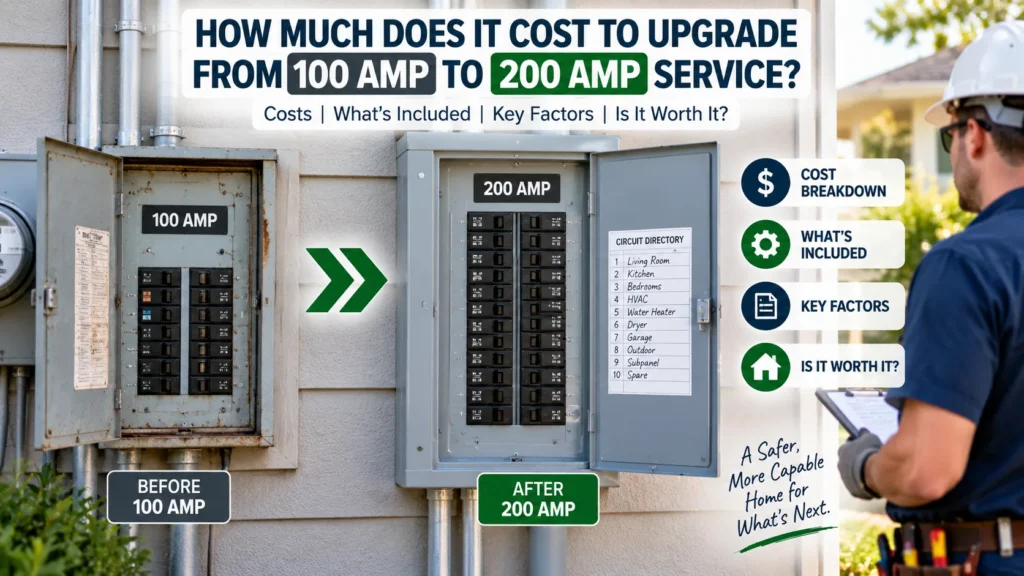
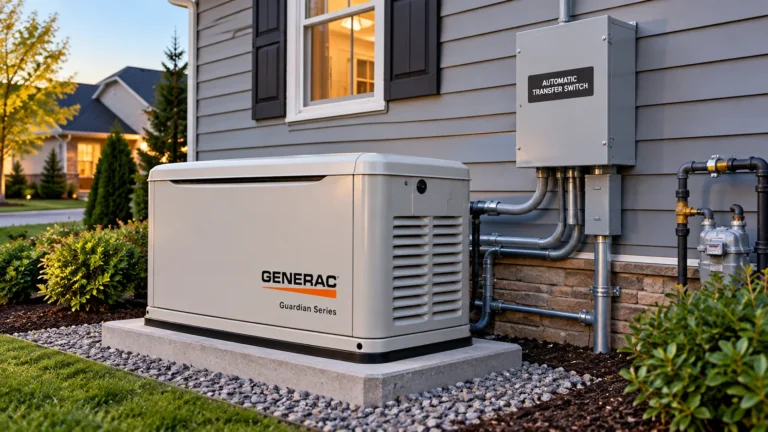
Image disclosure: Images are AI-generated illustrations, not photographs of FixingManual projects or hands-on product tests.
100 amp to 200 amp upgrade cost can run into several thousand dollars, but the scope matters more than the label on the estimate. A new breaker panel and a complete service upgrade are different jobs. Replacing the indoor box will not necessarily increase the amount of power your home can safely receive. If an inspection also identifies older aluminum branch-circuit wiring, ask for a separate assessment and remediation scope. Our aluminum wiring pigtail repair cost guide explains the repair methods, connection inventory, and questions to compare across quotes.
Published estimates illustrate the spread. HomeGuide lists roughly $1,300–$2,500 for its 200 amp panel upgrade categories. PG&E describes full upgrades in its service territory at $3,000–$8,000 for overhead service, with underground projects potentially reaching $20,000 or more when trenching is involved. These are different benchmarks, not one national average.
For an early budget, allow several thousand dollars and get the service requirements checked before accepting a firm price. This guide explains the 100 amp to 200 amp upgrade cost, what an estimate should include, and when a smaller project may meet your needs.
What the Published Prices Actually Cover
Online electrical panel replacement costs can look surprisingly low because the quoted job may exclude equipment outside the house. Use these published figures to understand scope before comparing a contractor’s total.
| Published benchmark | Reported price | How to use it |
|---|---|---|
| HomeGuide 200 amp panel upgrade categories | About $1,300–$2,500 | Confirm whether the estimate covers a panel or broader service work |
| PG&E full upgrade with overhead service | About $3,000–$8,000 | A regional utility benchmark rather than a nationwide price |
| PG&E upgrade involving underground service | Can reach $20,000 or more | Investigate trenching and utility requirements early |
The first row summarizes HomeGuide’s panel categories; the other rows reflect PG&E’s stated regional examples. None should replace a site inspection or an itemized proposal.
A low advertised price is useful only when its inclusions match your property. Ask whether it assumes an existing meter enclosure, usable service wiring, the same panel location, and no repairs to finished walls.
Panel Replacement Versus a 200 Amp Service Upgrade
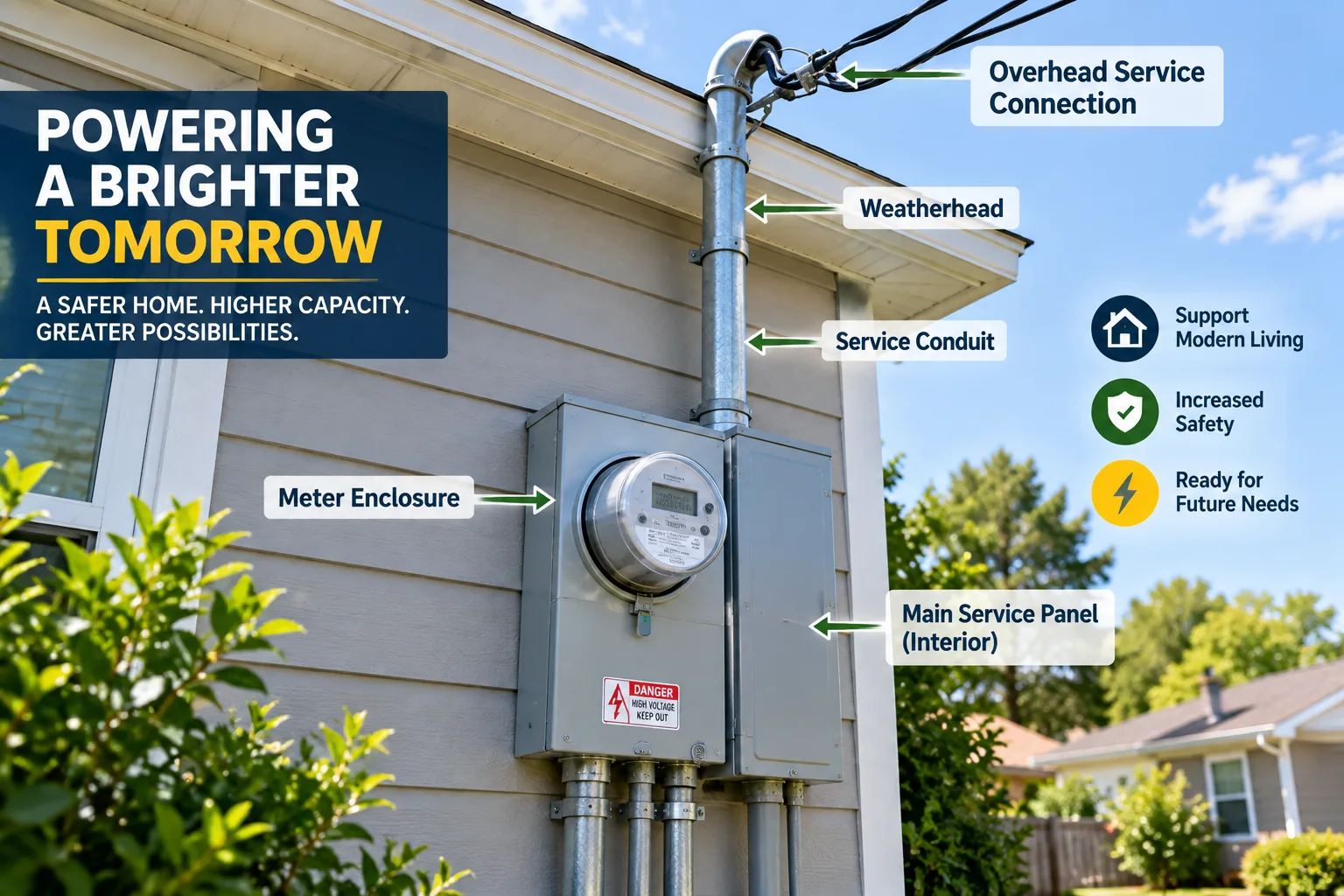
The panel distributes electricity among household circuits. The service brings electricity to the home. Increasing service capacity requires the electrician and utility to evaluate the entire relevant path, not simply install a box with a higher rating.
A 200 amp service upgrade may involve customer-owned service conductors, the meter enclosure, the main disconnect, grounding and bonding, and the panel itself. Utility equipment may also need evaluation or changes. PG&E’s electrical panel upgrade roadmap, for example, includes checking whether nearby power lines and transformers can support the proposed demand.
Ask the electrician to put the existing and proposed service ratings in writing. A panel rated for 200 amps may be supplied through a smaller service and protective device. Its equipment rating alone does not establish the home’s usable capacity.
Similarly, adding a subpanel can provide more circuit spaces without increasing the total service capacity. If your problem is a crowded breaker box, ask whether you need more spaces, more capacity, or both.
What Changes the Final 100 Amp to 200 Amp Upgrade Cost
Meter and Incoming Service Equipment
Ask which existing components can remain and which must be replaced. The proposal should identify responsibility for the meter enclosure, incoming conductors, overhead attachment or mast where applicable, and utility coordination.
Ownership boundaries vary. An electrician’s quote may cover customer equipment while the utility bills separately for its work. Get that distinction settled before treating the contractor’s number as the complete project price.
Underground Access and Restoration
An underground installation is not automatically expensive, but a required new route can add substantial work. Trenching, conduit, driveway cuts, landscaping repair, and restricted access may change the budget.
Ask who restores disturbed surfaces and to what condition. “Backfill included” does not necessarily mean replacement concrete, matching pavers, or a finished lawn. Request these as named line items or written exclusions.
Panel Location and Existing Wiring
Keeping the panel in an acceptable, accessible location may simplify the work. Moving it can require circuit extensions and repairs around the installation. Existing wiring problems may also need correction when discovered.
A service upgrade does not automatically require whole-house rewiring. Ask the electrician to identify any affected circuits, explain the reason for replacement, and price that work separately from the service increase.
Required Protection and Permits
The applicable code edition and local authority determine project requirements. Ask whether the proposal includes required surge protection, disconnect equipment, breaker changes, grounding and bonding work, permits, and inspection visits.
Avoid assuming every house needs the same package of upgrades. A written explanation of required work makes it easier to compare bids without accidentally removing something essential.
An Example Budget You Can Adapt
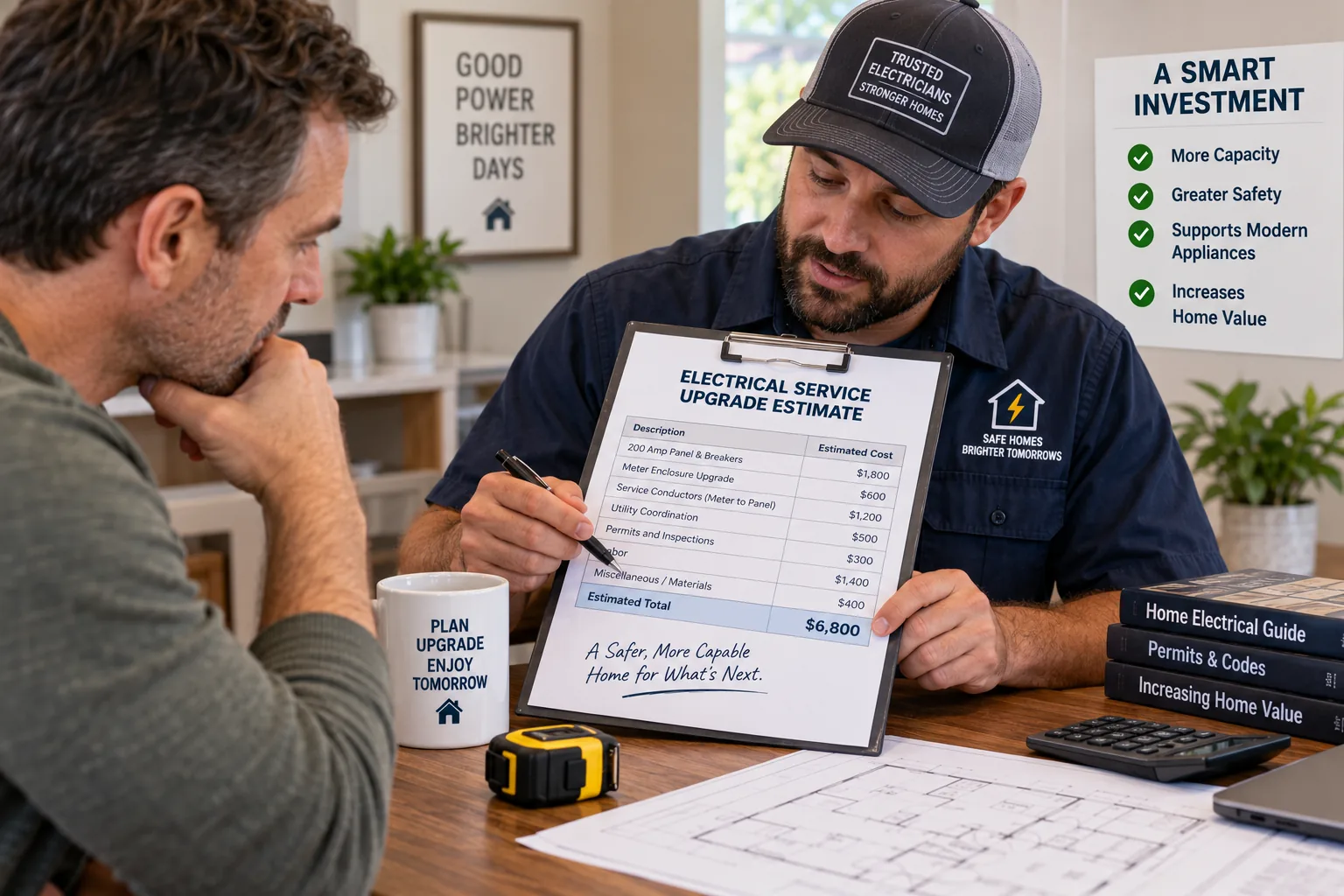
The following is a fictional planning example for a relatively straightforward project. These numbers are sample allowances, not researched local rates or a contractor quote. Major utility construction, trenching, relocation, and whole-house rewiring are excluded.
| Sample budget item | Illustrative allowance |
|---|---|
| Panel and breaker materials | $850 |
| Other customer-owned service materials | $900 |
| Electrician labor and installation | $2,000 |
| Permit and inspection allowance | $250 |
| Minor surface repair allowance | $300 |
| Example subtotal | $4,300 |
| Contingency at 15 percent | $645 |
| Example planning budget | $4,945 |
The contingency is a planning choice for this example. It is not a substitute for pricing known work. If the utility later requires a new underground supply route, revise the budget instead of expecting a modest reserve to cover a different project.
Some contractors bundle materials and labor. That is reasonable if the scope stays clear. Ask which costs are fixed, which are allowances, and which require a separate utility estimate.
Do You Actually Need 200 Amp Service?
A larger service can be useful when adding electric heating, an EV charger, a workshop, or several major appliances. If a new cooling system is part of the plan, compare the electrical scope with our central air conditioner installation cost guide. But a 100 amp service is not automatically inadequate simply because the home is older.
Have a licensed electrician evaluate the existing condition and perform an appropriate electrical load calculation for the proposed equipment. Bring model numbers or electrical specifications for planned appliances. A vague plan to “add an EV charger someday” is less useful than a defined charging requirement.
Do not determine the required service by adding every breaker handle rating together. Circuit ratings describe individual circuit limits; service sizing follows an accepted assessment method that accounts for the loads involved.
Discuss future projects during that evaluation. Paying for a service increase now may be sensible if several planned additions justify it. Equally, spending thousands on unnecessary capacity can reduce the money available for the appliances you actually want.
Alternatives Worth Asking About
If the panel is sound and the main issue is a specific new load, ask about compatible load-management equipment. Some systems control or temporarily pause selected loads so demand stays within the existing service limits.
PG&E’s PanelBoost materials describe this approach and note that a connected appliance may briefly pause during high demand. Availability and eligibility depend on the particular program and installation. Treat it as an option to evaluate, not a product every homeowner can obtain.
For EV charging, discuss the charging rate you need rather than automatically choosing the highest available setting. Your electrician can compare an appropriate charging design with the cost of a full service upgrade.
Load management does not repair a damaged panel or defective wiring. Equipment condition still needs assessment even when the calculated demand can be managed.
How Long Will the Upgrade Take?
Separate the construction day from the overall project schedule. The contractor’s installation time may be much shorter than the time needed for utility review, permits, equipment, and coordinated inspections.
PG&E’s published process includes planning, a load assessment, possible infrastructure work, and a scheduled disconnect and reconnect. Its roadmap says reconnection after panel replacement and inspection approval typically occurs within one day, but that is not a promise that the entire project takes one day.
Ask your contractor for the expected outage window, who schedules each appointment, and what happens if an inspection or utility visit is delayed. Plan separately for refrigerated items, work-from-home needs, and any powered equipment essential to someone in the household.
Before paying a deposit, confirm whether the utility has approved the proposed arrangement or whether the price remains conditional on that review. If this work is part of a larger renovation, coordinating it with your kitchen renovation timeline can help keep trade scheduling organized.
How to Compare Electrical Panel Upgrade Quotes
Request two or three written estimates based on the same appliance plans and service requirements. Give each electrician the same information so the bids describe comparable projects.
A useful proposal should clearly answer these questions:
- Is the finished installation a complete 200 amp service upgrade or a panel replacement?
- Which panel, breaker quantities, service components, and required protective devices are included?
- Who obtains permits and coordinates the utility and inspection?
- Are utility charges, trenching, relocation, and surface repairs included or excluded?
- How are unexpected repairs approved and priced?
- What workmanship warranty, payment schedule, and completion documents will you receive?
Verify licensing through the relevant state or local authority and request insurance information. Keep the permit closeout, final invoice, equipment details, and updated circuit directory with your home records.
Write Down the Loads Driving the Upgrade
List the additions you are planning, such as heating equipment, a charger, or other major appliances, and ask the electrician how the load assessment affects the recommendation. Request separate lines for the panel, meter or service work, utility coordination, permits, and restoration. If backup power is planned too, compare the transfer-equipment scope with our whole-house generator guide before approving either project.
Frequently Asked Questions
Can You Replace a 100 Amp Breaker With a 200 Amp Breaker?
No. A larger breaker is not a shortcut to more service capacity. The equipment and conductors must be suitable for the complete design. Have a licensed electrician assess the upgrade; do not remove panel covers or attempt service wiring yourself.
Will 200 Amp Service Lower Your Electric Bill?
Increasing capacity does not by itself reduce the electricity your appliances use. Savings from efficient equipment or changes in operating schedules are separate from the panel upgrade. Do not assume the installation will pay for itself through lower bills.
Does Frequent Breaker Tripping Mean You Need an Upgrade?
Not necessarily. Tripping may involve an overloaded individual circuit, faulty equipment, or another electrical problem. ESFI identifies frequent tripping, dimming lights, and other warning signs that need professional attention. Arrange professional diagnosis rather than repeatedly resetting a problem breaker. If you notice smoke, active sparking, or fire, move away and contact emergency services.
Are Rebates Available for an Electrical Panel Upgrade?
Check your state energy office and utility for current programs before signing. Eligibility can depend on location, income, accompanying equipment, and approval before installation. Budget the full project price until you have written confirmation of assistance; older online tax-credit claims may no longer apply.
Is Upgrading to 200 Amps Worth It?
It can be worthwhile when a documented load assessment supports it or the project addresses equipment that needs replacement. The strongest case combines a clear need, a complete service plan, and an estimate that accounts for outside work.
Get a Complete Price Before Committing
The cost to upgrade from 100 amp to 200 amp service depends on how much of the existing installation can remain. Start with a licensed electrician’s assessment, confirm utility requirements, and compare written scopes. That gives you a usable budget and helps prevent a low panel price from turning into a much larger, unexpected service project.
Sources
Keep reading
Related Articles
Home Systems & Energy
Aluminum Wiring Pigtail Repair Cost for an Older Home
Home Systems & Energy