
Roofing & Exterior
Signs Your House Needs Immediate Exterior House Painting Service
FixingManual guide: Spot peeling paint, blisters, damaged trim, and other signs your house needs exterior painting. Learn when repairs come first and what to ask contractors.
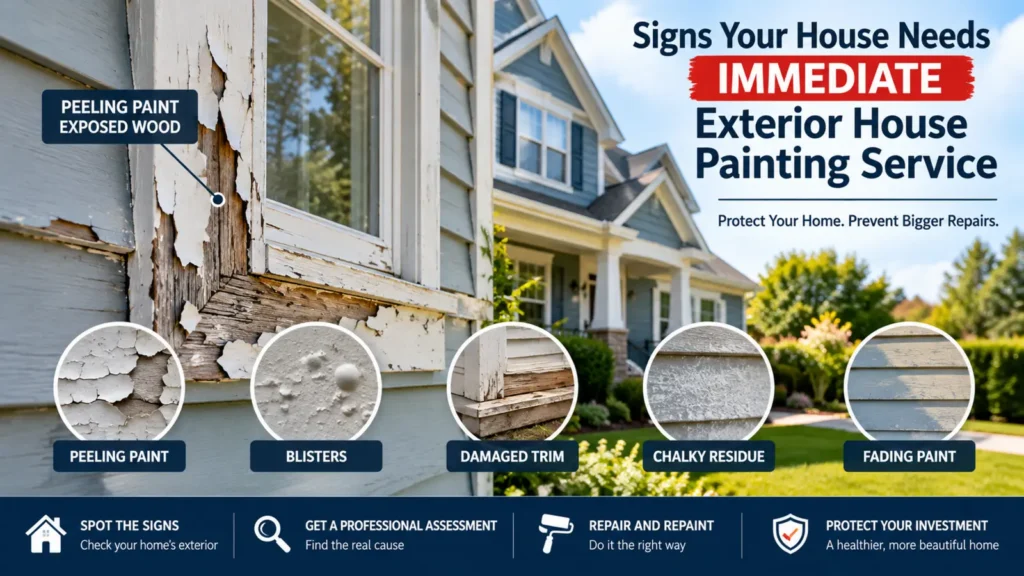
Image disclosure: Images are AI-generated illustrations, not photographs of FixingManual projects or hands-on product tests.
Peeling paint that exposes wood, spreading cracks, and recurring blisters deserve prompt attention. They can mean your exterior coating is losing adhesion or that moisture is affecting the surface beneath it. Fading alone is usually a less urgent reason to repaint.The right next step is an inspection, followed by repairs and painting when the surface is ready. An exterior house painting service should identify why the finish failed before applying another coat. Covering damp siding or damaged trim can leave the original problem unresolved.Use the signs below to decide whether to schedule a painting estimate, request a moisture investigation, or plan routine maintenance. “Immediate” should mean responding promptly to deterioration—not rushing paint onto an unsuitable surface.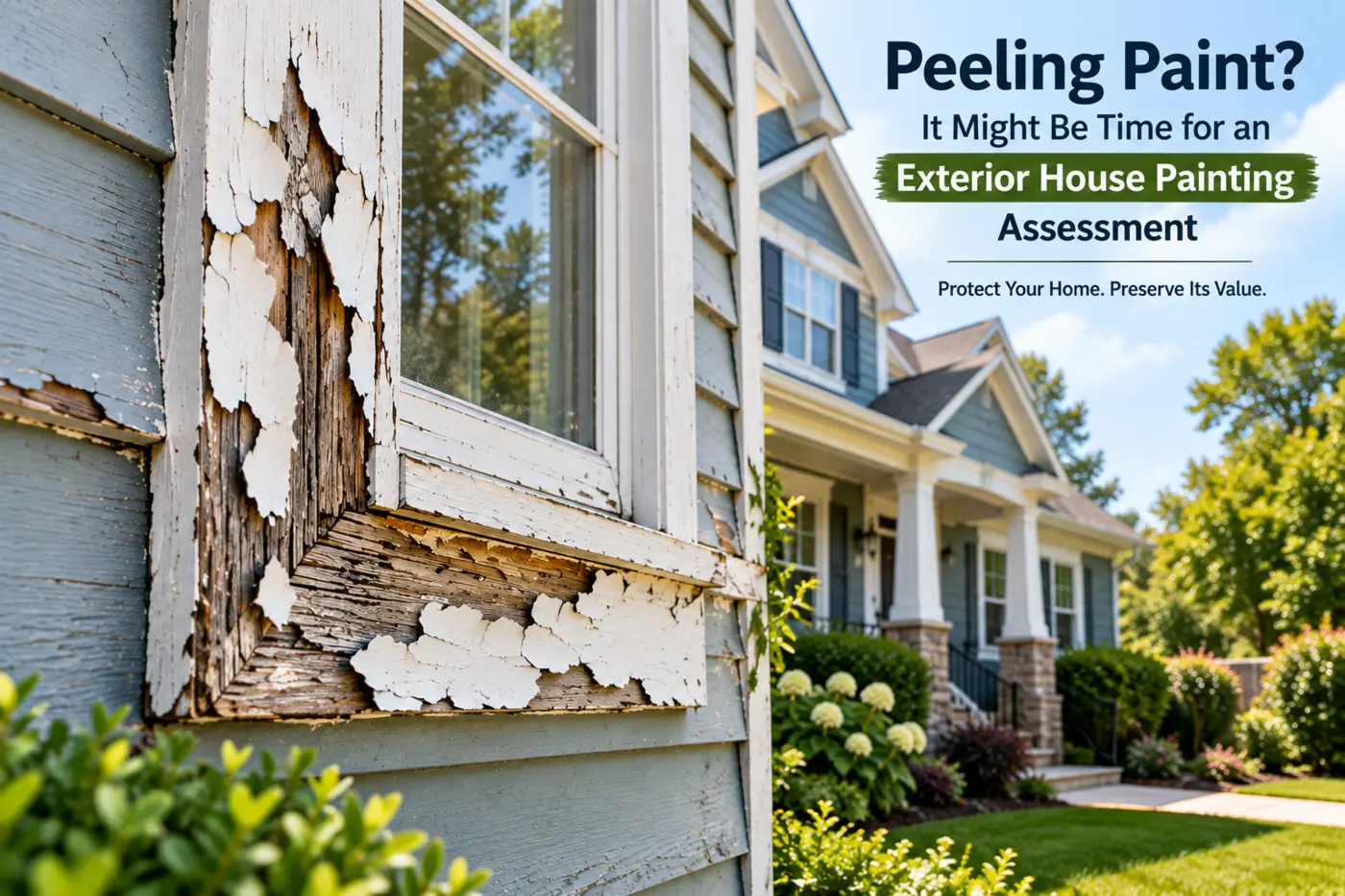
Warning Signs and What to Do Next
| What you notice | What it may indicate | Best next step |
|---|---|---|
| Peeling with exposed wood | Failed coating or moisture-related adhesion loss | Arrange inspection and surface protection promptly |
| Blisters that return | Moisture or unsuitable application conditions | Investigate the cause before repainting |
| Soft trim or swollen siding | Possible material deterioration | Request repair assessment first |
| Heavy powdery residue | Weathered coating requiring preparation | Have adhesion and cleaning needs assessed |
| Fading on otherwise sound paint | Appearance change or weathering | Plan repainting rather than emergency work |
1 Peeling Paint Is Leaving Bare Surfaces
Small flakes can be easy to dismiss until larger sections detach. Look at window trim, lower siding, porch columns, and other painted surfaces visible from the ground. Note whether the failure affects one detail or several walls.Benjamin Moore describes cracking and flaking as paint-film failure that requires removal of loose material and appropriate preparation before repainting. Painting over loose edges leaves an unstable base for the next coating. [1]Schedule a closer assessment when exposed areas are expanding. Ask whether the contractor found moisture, poor adhesion between older layers, or deterioration beneath the paint. The repair method should follow that finding.Avoid pulling away chips or sanding unknown old coatings yourself. On older homes, preparation may require lead-safe procedures, discussed below.2 Blisters Keep Returning After Touch Ups
Raised paint bubbles can have more than one cause. Sherwin-Williams identifies heat during application and moisture moving through a wall among the possible reasons for blistering. A bubble therefore does not automatically prove a plumbing or roof leak. [2]Tell the exterior house painting service when the problem appears. Does it follow rain, affect a sun-facing wall, or return in exactly the same spot after repainting? That history can help guide an inspection.A repeated failure deserves more than another touch-up. Ask how the contractor will check surface conditions and whether flashing, drainage, or another moisture source needs a separate specialist. The new finish should follow a resolved cause and suitable drying conditions.3 Cracks Are Spreading Across the Coating
A network of cracks may remain within older paint layers or extend to the material beneath them. Those situations need different preparation. Benjamin Moore distinguishes between shallow coating cracks and cracking that reaches the substrate when describing corrective work. [1]Photograph affected areas so you can compare them over time. Widespread cracking across otherwise intact siding may call for extensive paint preparation. A crack accompanied by displaced material, an opening around a window, or indoor leakage needs broader investigation.Do not assume a thicker coat will bridge every defect. Ask each exterior house painting service to explain which cracks it will repair, which require another trade, and how the proposed coating suits the surface.4 Wood Trim Looks Soft or Siding Has Swollen
Paint cannot restore the strength or shape of damaged building materials. Crumbling trim, visibly swollen panel edges, or recurring deterioration near a gutter outlet should prompt a repair assessment before a painting contract is finalized.Check from a safe position rather than probing high trim or standing on unstable steps. Photograph the location and any nearby drainage issue. Ask the contractor whether damaged sections can be repaired or should be replaced.Get carpentry allowances in writing. A quote that includes painting but excludes rotten trim can increase once preparation begins. Clarify how additional work is measured and approved, and make sure the water source is addressed before replacement materials are coated.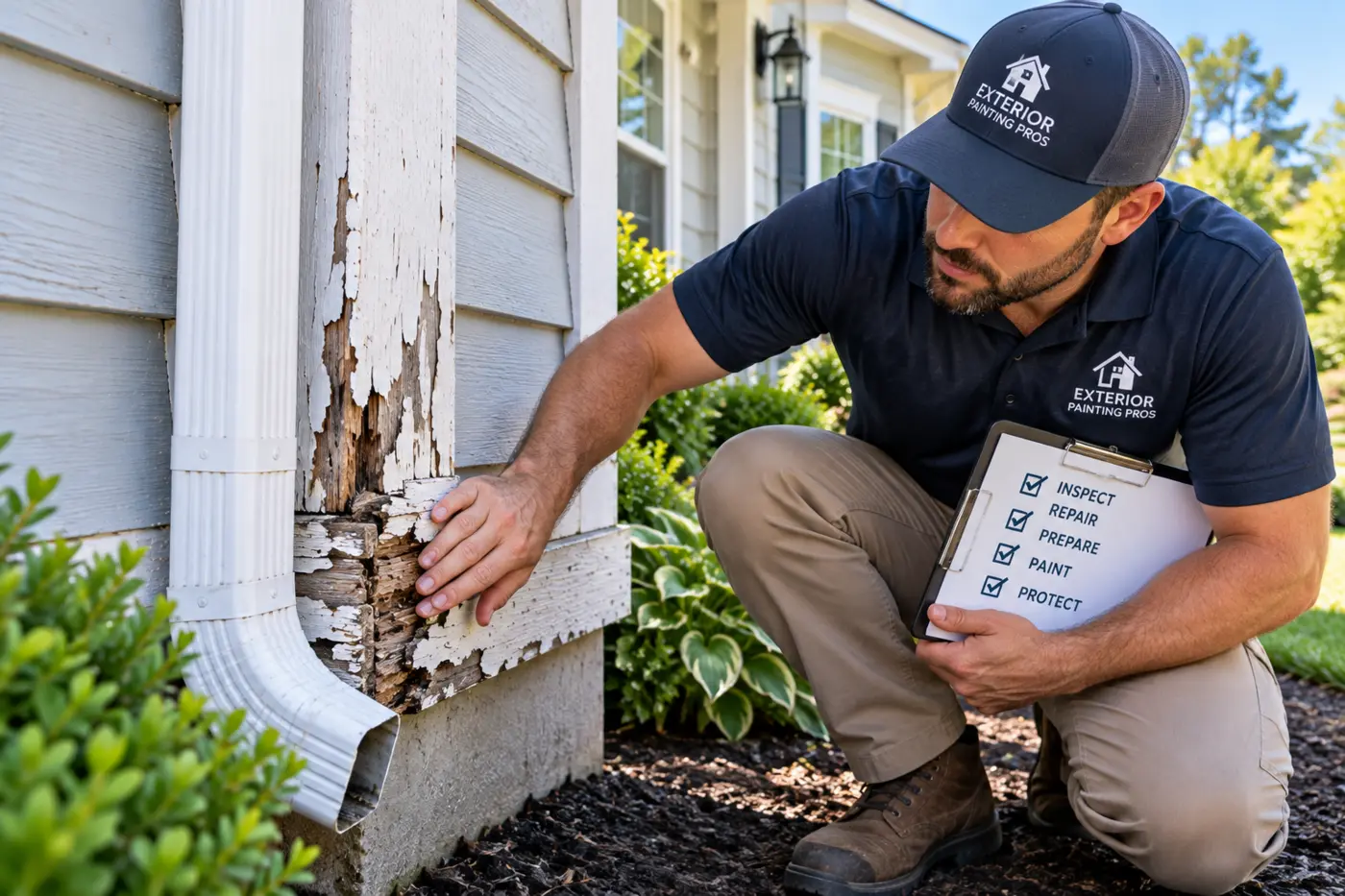
5 The Paint Leaves Heavy Powdery Residue
Chalking is a powdery residue associated with weathering of the paint film. Sherwin-Williams explains that some chalking is normal, but excessive chalking can indicate substantial coating erosion. Its guidance calls for removing residue and allowing the surface to dry before the next coating. [3]A chalky surface is not automatically an emergency. It does, however, affect preparation. Ask whether cleaning will leave a sound surface and what primer, if any, the remaining coating requires.Avoid judging readiness by appearance alone. A wall can look cleaner while retaining residue that interferes with adhesion. An exterior house painting service should select cleaning methods appropriate to the siding and existing paint, rather than using the same pressure-washing approach on every home.6 Dark or Green Patches Keep Coming Back
Discoloration on a shaded wall may be dirt, algae, mildew, or another stain. Appearance alone cannot identify it reliably. Persistent growth or dampness deserves attention before the wall is repainted.Benjamin Moore advises against painting over mildew because it can reappear through the new finish. Cleaning and appropriate preparation come first. [4]Ask why the affected section stays damp. Vegetation against the wall, water discharge, or another site condition may need attention. A coating marketed as mildew-resistant does not remove existing growth or repair a leak.Use cleaning products only as directed, and never mix cleaners. For extensive growth, concealed moisture, or indoor damage, ask whether a qualified moisture or remediation professional should assess the problem before painting proceeds.7 Failed Sealant Appears Around Vulnerable Details
Separated sealant at a joint that is intended to be sealed can allow water entry. Look for gaps around painted trim and penetrations from ground level, especially where staining or peeling occurs nearby.Request a detail-specific assessment. Exterior walls also contain drainage paths and openings that must remain functional; sealing every visible gap is not a repair strategy. The contractor should follow the siding and window manufacturers’ requirements.Ask whether the estimate includes removal of failed sealant, compatible replacement materials, and necessary drying or curing time. A line labeled “caulking included” is less useful than an explanation of where the work will occur.8 Fading Is Accompanied by Other Failures
A faded color may simply make a home look tired. If the coating remains well attached and the surface is sound, repainting can often be planned around your budget and suitable weather.The priority changes when fading appears alongside bare patches, widespread cracking, or recurring wet areas. Record those symptoms separately instead of assuming all weathering requires the same treatment.You do not need to repaint an entire house solely because one wall receives more sun. Ask whether a localized repair or one-wall repaint is practical, and discuss possible color and sheen differences before choosing a smaller scope.How to Check Your Exterior Safely
Walk around the house in daylight when the ground is dry. Take wide photographs of each wall, then closer views of accessible problem areas. Include window trim, lower siding, porch details, and places below gutters.Write down where each defect appears and whether it changes after rain. Share any history of leaks, previous coatings, and repairs with the estimator. Dates and locations are more useful than describing the whole house as “weathered.”Keep both feet on the ground for this initial check. Leave roof edges, upper stories, and uncertain surfaces to properly equipped professionals. If material appears loose overhead, keep people away while arranging assessment.Older Homes Need Lead Safe Planning
If your home was built before 1978, discuss lead-based paint before anyone scrapes, sands, or otherwise disturbs existing coatings. EPA recommends hiring a lead-safe certified contractor for renovation work in older homes where lead-based paint may be present. Covered paid work generally requires certification and lead-safe practices under the Renovation, Repair and Painting program. [5]Ask who will evaluate the coatings, contain debris, and clean the work area. Requirements can depend on the work and whether EPA or an authorized state program administers the rules. Do not accept uncontrolled paint-chip debris around the property as normal preparation.This is a planning requirement, not a reason to leave deteriorating paint untreated. Choose a firm prepared to handle the work appropriately.What an Exterior House Painting Service Estimate Should Include
When comparing an exterior house painting service, request written estimates with these details:- Specific walls, siding, trim, doors, and other surfaces included.
- Cleaning and removal of loose or failing coatings.
- Moisture concerns and repairs required before painting.
- Carpentry and sealant work, with exclusions clearly identified.
- Primer and finish products, coat requirements, and application method.
- Protection for windows, landscaping, walkways, and neighboring property.
- Access equipment, cleanup, payment milestones, and warranty terms.

Budgeting for an Exterior House Painting Service
HomeGuide lists professional exterior painting at $1.50–$5.00 per square foot. An exterior house painting service may charge more or less depending on preparation, siding, height, paint, and local labor. Use that range as an initial reference rather than a substitute for a measured estimate. [6]Confirm what the contractor means by square footage. Interior living area and paintable exterior surface area are different measurements. Also ask whether trim, access equipment, repairs, and taxes are included before comparing unit prices.For a hypothetical budget, a $5,000 painting quote plus $800 of separately quoted trim replacement totals $5,800. Setting aside another $600 would create a $6,400 cash allowance. These figures are invented planning amounts, not local prices; the reserve is not automatically payable to the contractor.Schedule Repairs Promptly and Paint in Suitable Conditions
Urgent assessment does not mean paint should be applied during rain or before damp siding has dried. Ask the exterior house painting service to follow the chosen product’s surface-temperature, moisture, rain, and recoating requirements.The schedule should allow for repairs, preparation, and suitable application conditions. Avoid accepting a universal promise that every house will be ready to paint the morning after washing. Material, weather, and site conditions differ. For related maintenance guidance, browse our Exterior Painting articles.Keep the Repair Scope Ahead of the Paint Scope
Ask each painter which moisture, siding, trim, and sealant repairs are included and which need another trade. Record preparation, coating products, access, protection, and conditions for starting work. A new finish should not hide an unresolved leak or damaged substrate. Compare any siding allowance with our siding repair guide, and investigate suspected roof water using the roof-leak guide.
Frequently Asked Questions
Does Peeling Paint Mean I Need New Siding
Not necessarily. Sound siding may need preparation and repainting, while deteriorated sections may need repair or replacement. Ask an exterior house painting service to assess the material beneath the failed coating.Can I Paint Over a Small Patch of Mildew
Have the growth addressed before painting. Benjamin Moore specifically advises against coating over mildew. Also investigate recurring dampness so the same problem is less likely to return. [4]Should I Repaint Because the Color Has Faded
Fading alone is generally an appearance issue. Check adhesion, exposed areas, and material condition before deciding how urgently to schedule the work.Is Expensive Paint Enough to Prevent Another Failure
Product quality matters, but the coating still needs a suitable surface. Ask for a compatible system, proper preparation, and correction of the condition that caused the earlier failure.Sources
[1] Benjamin Moore cracking and flaking paint[2] Sherwin-Williams paint blistering[3] Sherwin-Williams chalking paint guidance[4] Benjamin Moore mildew guidance[5] EPA Lead Renovation Repair and Painting Program[6] HomeGuide exterior house painting costsKeep reading
Related Articles
Roofing & Exterior
How to Choose Asphalt Shingles for Your Next Residential Project
Roofing & Exterior