
Interiors & Remodeling
Foundation Crack Injection Cost for a Poured Concrete Basement
Compare foundation crack injection costs for poured concrete basements, including epoxy versus polyurethane, active leaks, structural warning signs, access, warranties, and quote questions.
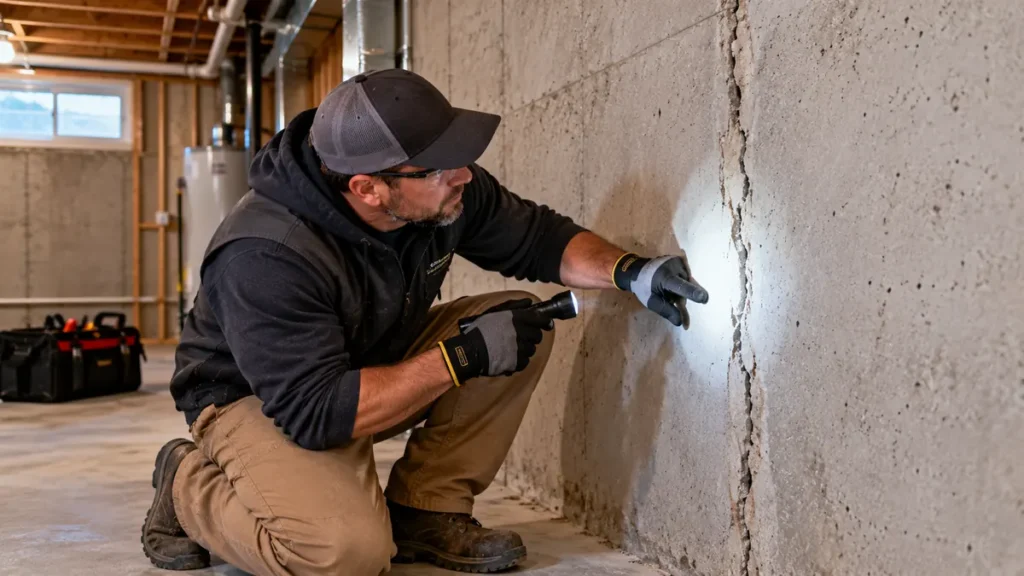
Foundation crack injection cost depends on the repair goal and whether the crack is accessible. Sealing an isolated leak in poured concrete is a different scope from repairing a moving wall or settling foundation. Before comparing estimates, ask whether the contractor is pricing leak control, concrete bonding, or broader structural work.
For basic professional injection, HomeGuide lists approximately $250 to $800 or more per crack. Treat that as a starting budget for a suitable, accessible crack, rather than a fixed national rate. Removing finished walls, investigating movement, or correcting drainage can add separate costs. [1]
The most useful foundation crack injection cost estimate describes the actual crack and the purpose of the proposed material. A lower price has little value if the repair leaves the underlying problem unresolved.
Foundation Crack Injection Cost Estimator
Use this planning tool for a suitable, accessible poured-concrete wall crack. It is based on a broad professional injection range of $250–$800 per crack from HomeGuide and does not diagnose the crack or determine whether injection is appropriate. Add documented inspection, access, restoration, or drainage costs separately.
Estimated planning range: $250–$800
Formula: number of suitable cracks × $250–$800 + documented extras. The result excludes structural reinforcement, exterior excavation, major drainage work, and unknown restoration.
Do not multiply the range by every visible line automatically. A branching crack, a hidden crack behind finishes, or a crack that needs structural evaluation may require a different scope.
Foundation Crack Injection Cost: What the Quote Should Cover
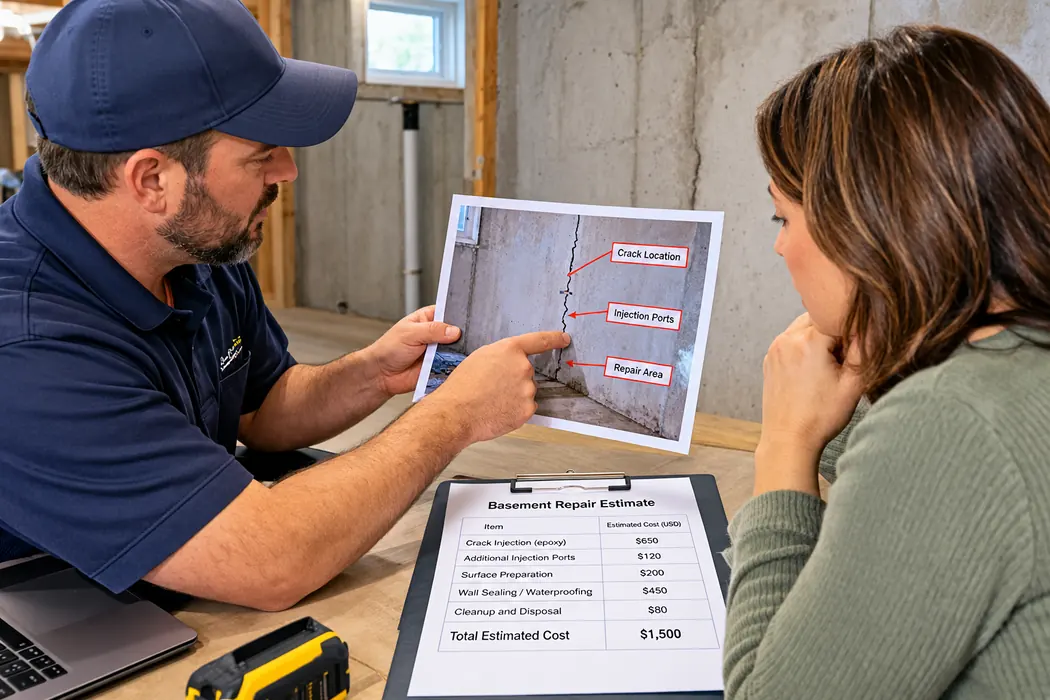
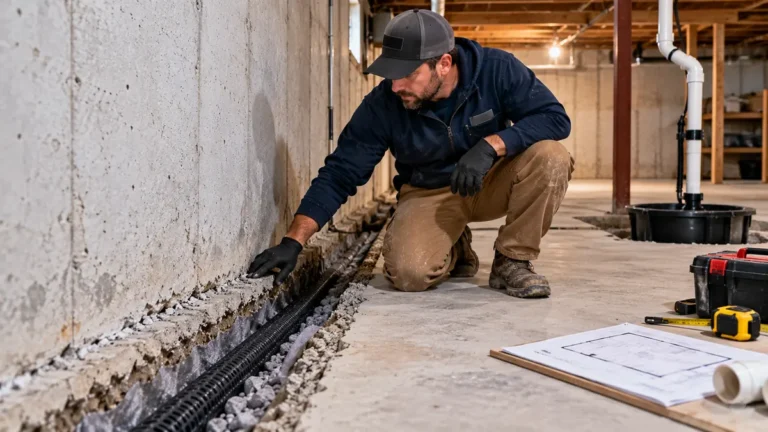
Ask the contractor to identify the crack being repaired on a photograph or simple wall sketch. The proposal should state whether its price covers the full accessible length, including the portion near the floor. Multiple branching cracks may require a different scope than one straight vertical crack.
The base quote should explain surface preparation, the injection system, materials, and removal or finishing of visible repair components. It should also say whether the technician will inspect the other side when accessible and how the completed work will be checked.
Access matters. A crack behind drywall may require opening the wall, removing insulation, protecting belongings, and restoring finishes afterward. These services are often handled by different trades. Ask who arranges the restoration and whether the foundation repair contractor includes it in the signed price.
Epoxy vs polyurethane crack injection
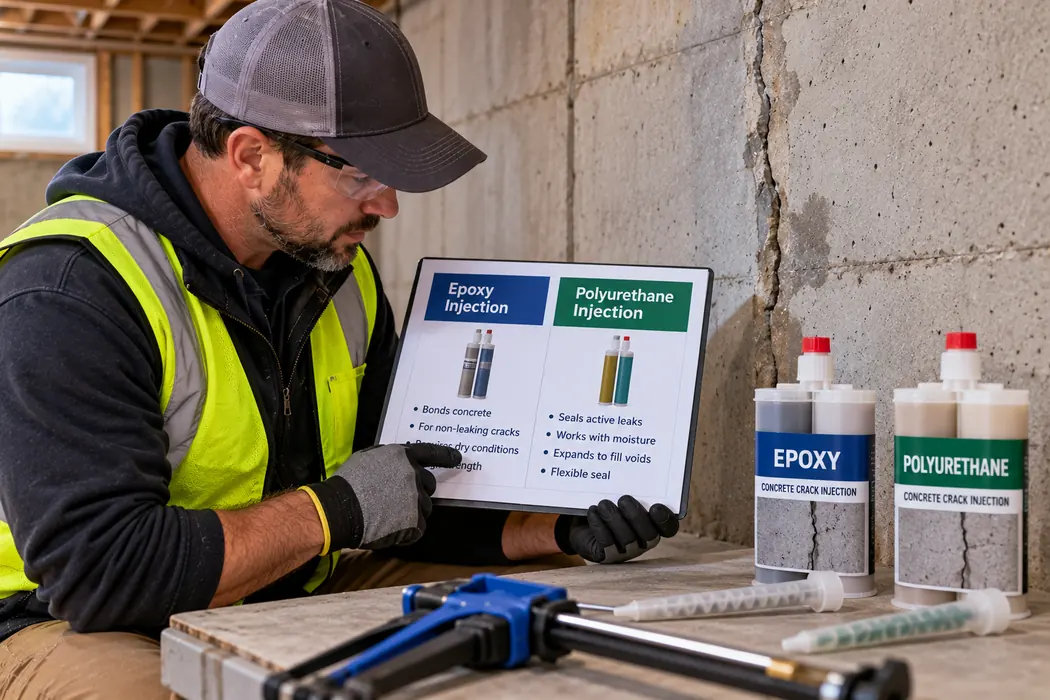
Epoxy and polyurethane answer different repair questions. The choice should follow the crack assessment and the product specifications, rather than a general claim that one material is always better.
Simpson Strong-Tie's injection guidance emphasizes sound, clean surfaces and appropriate crack preparation. It notes that continually seeping water must be stopped for a suitable epoxy injection repair, and that polyurethane resins may be needed for an actively leaking crack. [2]
Certain epoxy systems are used to bond suitable cracks in concrete. For water control, a contractor may specify a polyurethane product such as Simpson Strong-Tie’s Flex-H2O, which is designed for seeping or mildly leaking cracks in concrete or solid masonry. That product description does not establish that the wall is structurally sound. [3]
| Repair question | What to confirm before choosing a material |
|---|---|
| Stopping water entry | Product is intended for the observed moisture conditions |
| Bonding cracked concrete | Engineer or qualified specialist has established suitability |
| Continuing wall movement | A separate stabilization assessment is included |
| Old patch material | Removal and surface preparation are priced |
| Finished basement access | Opening and restoring the wall are assigned |
Ask for the exact product name. The contractor should be able to explain why it fits your wall, what surface conditions are required, and what limitations remain after the repair.
When sealing alone is not enough
A crack that changes noticeably, has offset edges, or appears alongside wall bowing deserves more than a leak repair proposal. Have a qualified structural professional evaluate the condition before treating injection as the complete solution.
Avoid diagnosing the wall from crack width alone. Its location, movement history, concrete condition, surrounding structure, and site conditions all affect the assessment. A photograph can help arrange an inspection, but it cannot establish the cause or prove that a repair is adequate.
Keep clear of a wall that appears unstable. Sudden movement, falling material, or a visibly failing support warrants urgent professional attention. Do not remove framing or excavate against the foundation while waiting for advice.
A repair plan may involve reinforcement, underpinning, or other work in addition to sealing. Those services belong in their own estimate. Comparing their total against the price of one injection would compare different projects. For a separate reinforcement scope, see the carbon fiber basement wall repair cost guide.
Why two similar cracks can receive different quotes
The visible line does not reveal everything the technician must address. Previous sealants may interfere with access. Water can make preparation harder. A crack beside plumbing or equipment may require protection or temporary relocation before work begins.
Ask whether the company has a minimum service charge. A short crack does not necessarily cost proportionally less because travel, setup, and cleanup still take time. Conversely, several suitable cracks treated during one visit may be quoted together rather than as separate full-price appointments.
Regional labor rates also affect a basement wall crack repair estimate. An urban location with limited parking and a finished basement can cost more to service than an accessible unfinished basement nearby. Describe those conditions when arranging estimates so the initial numbers are meaningful.
Build a budget beyond the injection line
Use a simple worksheet with separate entries for inspection, injection, access, finish restoration, and any approved drainage work. Mark each item as included, excluded, or awaiting a quote. This makes omissions easier to spot than a single project total.
For example, suppose a hypothetical contractor quote is $650 for one injection and a separate restoration quote is $400. Your known subtotal is $1,050. Those figures illustrate budgeting only; they are not typical prices or a prediction for your basement.
Set aside additional funds according to the unresolved conditions the inspector identifies. Ask what would trigger a change order and how its price will be approved. An unexplained contingency does not substitute for a clear scope.
Check water management around the house
Observe when the leak occurs. Note whether it follows heavy rain, snowmelt, or a plumbing problem, and share that information with the contractor. A dated record helps distinguish a recurring weather-related leak from a one-time event.
Check gutters and downspout discharge from a safe location. Ask whether surface drainage or another water source needs correction. Sealing one entry path should not be treated as a complete basement waterproofing system when water is entering elsewhere.
Keep exterior work separate until its need and extent are established. A proposal to excavate the foundation should explain why an interior repair is insufficient and what additional conditions the excavation will address. See the exterior basement waterproofing excavation cost guide for questions to ask about that separate scope.
Compare contractors and warranty terms
Request written proposals from qualified companies that regularly repair poured concrete basements. Verify licensing requirements in your area and ask for current insurance information. A contractor's experience with block walls does not automatically establish experience with your proposed injection system.
Read the warranty's actual promise. It may cover water leaking through the treated crack, workmanship, or a particular material. Ask about exclusions, transferability, service charges, and the procedure for reporting a recurrence.
Keep the invoice, photographs, product details, and warranty together. If a leak returns, describe where the water appears rather than assuming that the original crack has reopened. A new entry path and failure of the treated repair may require different responses.
Identify the Crack Before Choosing Injection
A vertical line in a poured wall may be a shrinkage crack, a leak path, or part of a larger movement problem. Direction alone is not a diagnosis. Record the location, approximate width, whether the edges are offset, and whether the crack changes after rain or seasonal conditions.
Do not treat a crack that is widening, displaced, horizontal, stair-stepped, or accompanied by wall bowing as a routine injection job without a qualified assessment. Injection can seal a symptom while the underlying movement continues.
Epoxy or Polyurethane Depends on the Goal
Epoxy is a rigid material used for suitable structural bonding in appropriately prepared concrete. Polyurethane is commonly selected for water control because it can remain more flexible and bond in damp conditions. The material choice depends on moisture, movement, crack condition, and the intended performance.
ACI guidance says the cause of the crack and the need for structural repair should be determined before epoxy injection. ICRI guidance similarly distinguishes rigid epoxy bonding from more flexible polyurethane water sealing. ACI crack-repair guidance and ICRI repair-material guidance should support the discussion, not replace a project-specific assessment.
An Injection May Not Solve the Water Source
A successful injection can close the specified pathway, but it does not automatically correct water pressure, poor grading, blocked gutters, short downspouts, plumbing leaks, or other cracks. Ask the contractor to identify whether the quote is for crack sealing only or for a broader waterproofing plan.
Observe the timing of the leak and check drainage from a safe location. If the same wall has several wet areas, request a marked plan showing which path is being repaired and which conditions remain outside the scope.
Know When Reinforcement or Engineering Comes First
Injection is not a substitute for repairing a bowing wall, active settlement, displaced concrete, or corrosion-related damage. A structural professional may recommend reinforcement, underpinning, drainage correction, or monitoring before any resin is installed.
Ask what result the proposal promises: water control, rigid bonding, crack monitoring, or structural stabilization. These are different outcomes and should not be compared as though they were the same service.
Finished-Basement Access Can Change the Price
If drywall, insulation, paneling, shelving, or equipment hides the crack, the quote should state who creates access and who restores the room. Ask whether the repair area must remain open for inspection or observation before finishes are replaced.
Compare access, protection, cleanup, disposal, drywall, trim, paint, and flooring as separate lines. A quote that only injects the exposed concrete is not equivalent to one that returns the finished room to its prior condition.
Ask What the Handover Record Includes
Request the product name, crack location, preparation method, injection method, photographs where practical, warranty terms, and any limitations. If the contractor cannot identify the treated crack later, a future leak may be difficult to distinguish from a nearby untreated pathway.
Keep the estimate, approved changes, invoice, product information, photographs, and warranty together. Ask how a recurrence is reported and whether the company will inspect the original repair or charge a new service fee.
DIY Sealing Is Not the Same as Professional Injection
A homeowner may be able to seal a minor, dry, non-structural surface crack, but a low-pressure injection requires correct preparation, ports, material selection, and safe handling. A leaking, moving, wide, displaced, or concealed crack deserves professional evaluation before a kit is used.
Do not cover a crack with paint or waterproofing coating merely to hide evidence of movement. Photograph it, record moisture and changes, and obtain an assessment when the condition is uncertain.
7 Practical Checks Before Accepting a Crack Injection Quote
1. Record where and when water appears
Give every bidder the same dated photos and a simple sketch. Label the wall, nearest corner or window, and whether the photo was taken during or after rain. Note if the wet spot first appeared above the visible crack or along the floor. Keep observations separate from guesses about what caused the leak.
Ask the contractor whether the observed crack explains the wet area. If several spots are wet, have the proposal identify which one the injection is meant to address. That distinction helps you judge whether a later damp patch is related to the original repair or needs a separate investigation.
2. Confirm what wall the quote covers
Tell the contractor if the basement includes an addition, a masonry section, or a wall hidden by finishes. Ask them to record which wall material they identified and where that identification is still uncertain. Get a marked photograph or sketch with the estimate so everyone knows which section will be treated.
Compare foundation crack injection cost only after confirming that bidders are pricing the same wall and crack. A number based on an exposed section may change if a crack extends behind a finished wall. Ask how the contractor will report that finding and whether you can review the revised scope before work proceeds.
3. Separate sealing from structural work
Ask for a plain description of the problem being addressed. If the contractor proposes a leak seal, ask whether they observed movement or damage that needs another assessment. If the quote describes concrete bonding, ask who determined that the proposed repair is appropriate and what performance the proposal is intended to restore.
A foundation crack injection cost estimate should identify any structural evaluation outside its scope. Do not treat the names of resins as a diagnosis. If a specialist identifies a separate repair, get its scope and price independently so you can compare the actual options.
4. Resolve access before agreeing to a price
Point out finished walls, shelving, nearby equipment, and stored items. Ask what needs to be moved, who will protect adjacent surfaces, and who will handle any finished materials that need to come out. Discuss the condition the room will be left in after the technician completes the injection.
If the foundation crack injection cost excludes finish work, obtain a separate written restoration quote. Include the same opening and closing scope when comparing companies. A proposal that leaves the concrete exposed for an agreed follow-up may have a different completion date from one that includes restoring the room.
5. Confirm how extra work is approved
Ask how the company handles a previous patch that conceals part of a crack or a branch that becomes visible during preparation. A useful change order should show what was found, what the contractor recommends, and how much the added work will cost. Ask for a photograph when it can be taken safely.
Keep a copy of the accepted estimate and each approved change. If the original foundation crack injection cost covered only a defined section, have any additional section named separately. This makes it clear which parts of the wall were treated and which are covered by the invoice.
6. Compare the actual warranty
Request the written warranty and match it to the address and crack identified in the quote. Check what the company will do if water returns through that crack and whether a service visit or access work is included. Ask how the company distinguishes a recurrence at the repair from water entering somewhere nearby.
Do not use the longest warranty as a substitute for the clearest repair scope. The foundation crack injection cost and warranty should be read together. Keep a note of any maintenance or reporting conditions, and get clarification in writing when the contractor’s explanation differs from the wording.
7. Agree on the handover and follow-up
Ask for the product name, the final marked location, photographs of accessible work, and the person to contact if moisture returns. Ask when the contractor recommends checking the area again and whether any nearby finishes should stay open until then. Do not cover an area that the responsible professional still needs to inspect.
Compare the final foundation crack injection cost with the accepted quote and approved changes. If there is a separate drainage or restoration contractor, keep their records distinct. A clear handover saves time if a future owner or technician needs to distinguish the treated crack from an unrelated leak.
Compare Two Quotes on the Same Basis
Suppose one bidder includes an inspection and injection, while another includes an injection and drywall repair but expects you to arrange the inspection. Put each service on its own line. A missing amount is a question for the bidder, not a zero. Ask each company to mark any work that depends on what becomes visible after opening the wall.
Keep the known subtotal separate from options you have not accepted. If a contractor quotes several cracks in one visit, ask whether the price changes if only one is suitable for injection. Record the inspection and follow-up arrangements alongside the price so the cheaper option does not look equivalent merely because it lists the same resin.
A useful foundation crack injection cost comparison should let you point to a specific crack, the work planned for it, the price for access and restoration, and the process for a return visit. When a quote leaves one of these details unclear, resolve that question before paying a deposit or scheduling a crew.
When the Crack Is Hidden Behind a Finished Wall
If the leak first shows up as a stain on drywall or damp carpet, tell the inspector what you can see without removing anything. Photograph the stain and note which side of the room gets wet first. Ask what the contractor can determine during the first visit and whether a separate visit is needed after access is arranged.
Before you compare foundation crack injection cost, find out who will make the opening and who will restore the room. Ask what the restoration quote covers: insulation, drywall, trim, paint, and any finish that is difficult to match. Record whether the area is expected to stay open for an agreed observation period, since that affects when restoration can begin.
If the wall turns out to have more than one defect, ask the inspector to mark each one and explain which observations change the repair recommendation. This gives you a way to distinguish an added repair from a change in access costs. If a second trade becomes necessary, ask which contractor will coordinate the sequence and who will confirm that the room is ready for the next stage.
After the repair, save a photo of the exposed wall with the invoice before the finishes go back. Include enough of the surrounding room to identify the location later. A close-up of resin alone may be hard to match to a new wet spot months afterward.
Frequently asked questions
How much does foundation crack injection cost?
For a suitable, accessible crack in a poured concrete basement, published cost guides commonly use a broad professional range of about $250–$800 or more per crack. Access, inspection, movement, drainage, and restoration can increase the total.
Is a vertical crack always harmless?
No. Crack direction alone cannot establish safety. Have movement, displacement, leakage, and the surrounding structure assessed before deciding that a simple seal is sufficient.
Should I use epoxy or polyurethane?
Epoxy is generally considered for suitable rigid structural bonding, while polyurethane is often selected for flexible water sealing. The contractor should match the material to the crack, moisture, movement, and repair goal.
Will injection make the basement completely waterproof?
It addresses the specified crack when appropriately selected and installed. Other wall joints, floor seams, openings, or water sources may still need attention.
Can I use the same method on concrete block?
Do not assume so. This guide concerns poured concrete. Hollow block construction has different pathways and repair considerations, so request a wall-specific assessment.
When is a crack too serious for injection alone?
Visible movement, offset edges, horizontal or stair-step cracking, wall bowing, significant widening, or related settlement symptoms require further evaluation before sealing.
Does a leaking crack require exterior excavation?
Not always. Some suitable poured-concrete leaks can be sealed from the interior, but the water source and drainage conditions still need evaluation.
Should I choose the cheapest injection estimate?
Choose after comparing the identified crack, material, preparation, access, and warranty. A clear proposal is more useful than a low price with missing details.
Can I repair a foundation crack myself?
A minor, dry, non-structural surface crack may be suitable for a carefully selected kit. Do not use DIY sealing as a substitute for evaluation of leaking, moving, wide, displaced, or concealed cracks.
What should a crack-repair warranty cover?
Review whether it covers water recurrence through the treated crack, workmanship, access, follow-up visits, exclusions, and reporting deadlines. Keep the written warranty with the project records.
Sources
- HomeGuide: Basement wall crack repair costs
- Simpson Strong-Tie: Crack injection preparation and material guidance
- Simpson Strong-Tie: Flex-H2O product information
- American Concrete Institute: Epoxy injection and crack-repair guidance
- International Concrete Repair Institute: Selecting repair materials
- Sika: Injection systems and material selection overview
Sources checked November 3, 2026. This guide is for comparing US contractor quotes; it does not diagnose a wall or provide injection instructions.
Keep reading
Related Articles
Interiors & Remodeling
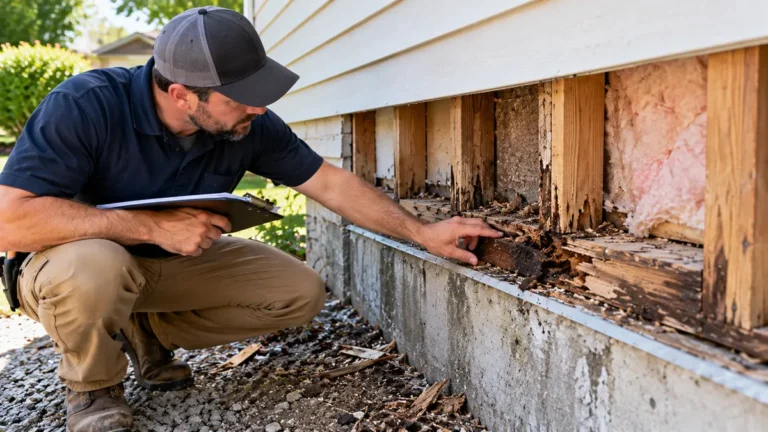
Sill Plate Replacement Cost When Rot Is Found Under Exterior Walls
Interiors & Remodeling