
Home Systems & Energy
Battery Backup Sump Pump Installation Cost and Sizing Questions
Compare battery backup sump pump costs, pump output, battery-runtime assumptions, basin fit, and the seven questions to ask before accepting an installed quote.
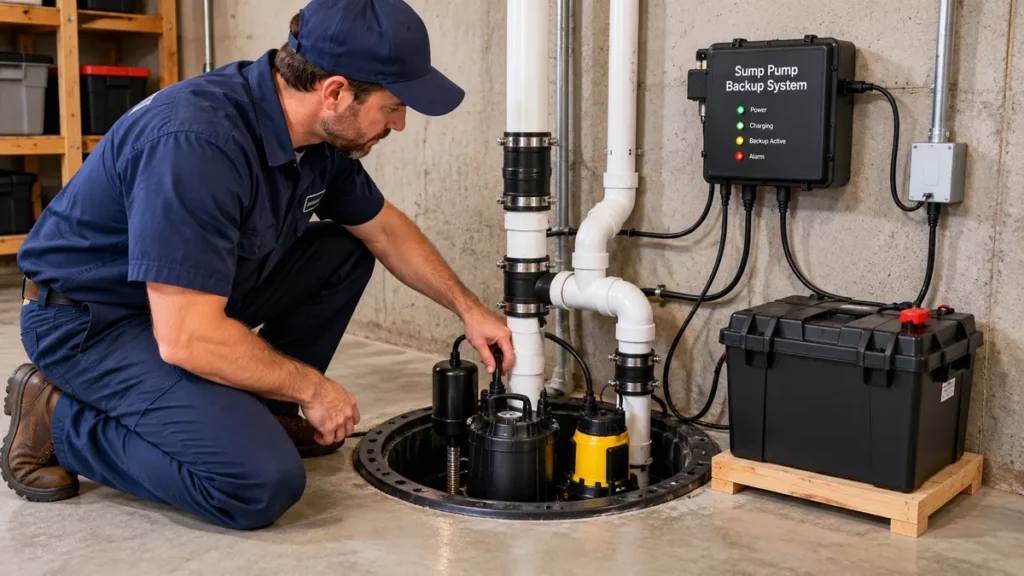
Battery backup sump pump installation cost generally starts with the backup equipment, compatible battery, plumbing modifications, and labor. HomeGuide publishes a US installed planning range of $600 to $2,000 or more. It lists combination primary-and-backup systems at $1,000 to $3,000 installed. [1]
Treat these as published planning references, not a local quote. The lower figure is most useful when an existing basin and discharge arrangement can accept the new equipment. A new pit, electrical improvements, or a long discharge replacement changes the project. Ask the backup sump pump plumber to price those items explicitly.
Capacity deserves as much attention as cost. A backup that cannot keep up with incoming water may continue running while the basement still floods. The right comparison includes pump output at your home's discharge conditions and a realistic explanation of battery runtime.
Understand the system you are buying
Many residential backup packages use a separate battery-powered pump with its own control and float arrangement. A combination package includes both the primary and backup equipment. An inverter that powers an existing AC pump is another type of system and should not be treated as the same product.
Ask the installer to describe which design is proposed and what happens if the primary pump fails mechanically. A power supply alone does not repair a seized pump. If the existing primary unit is deteriorated, replacing it during the work may be sensible, but the quote should show that change clearly.
For a complete battery backup sump pump installation cost estimate, confirm whether the battery is included. Some packages require a separately purchased battery, and the controller may accept only specified types. Have the plumber list the exact pump, controller, charger, and battery models so the sump pump battery system price is complete.
| Published installed reference | Planning range | Main comparison point |
|---|---|---|
| Separate battery backup | $600 to $2,000 or more | Existing primary pump stays in service |
| Primary and backup combination | $1,000 to $3,000 | Both pumps are part of the package |
These HomeGuide figures describe system categories, not a promise that every model or installation fits the range. New drainage, basin excavation, and unrelated basement repairs need separate allowances. [1]
Compare output at the actual lift height
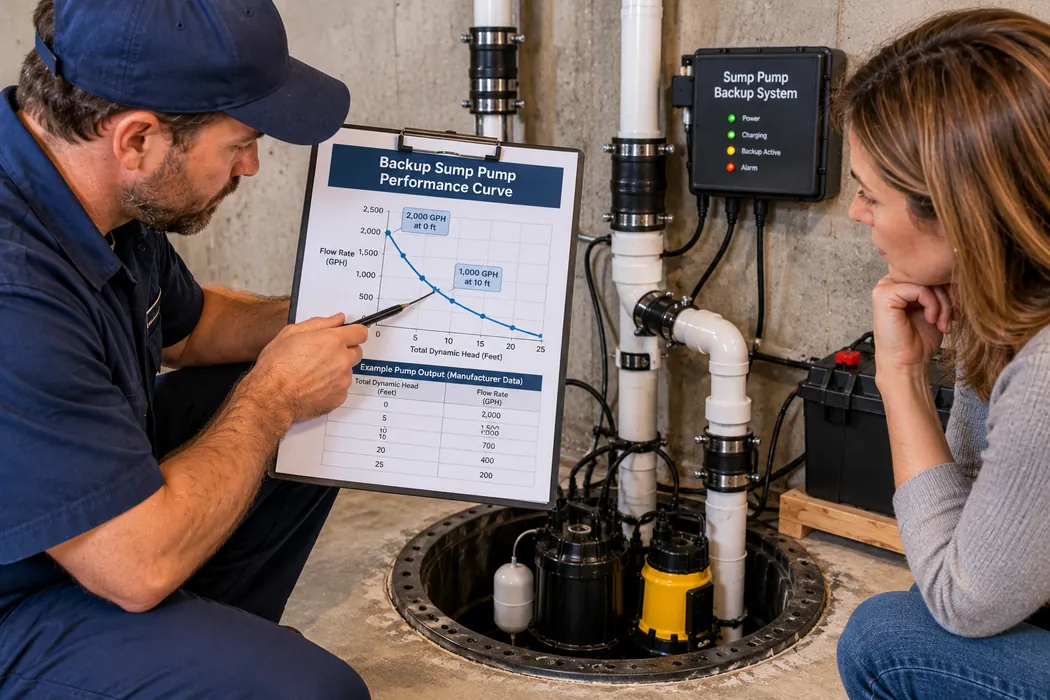
Pump capacity changes as it pushes water higher. A rating at zero lift is not the output you should expect from a basement discharging near ground level. Pipe length, diameter, fittings, and discharge configuration also affect the system's performance.
The Basement Watchdog publishes an example for its BWE backup pump: 2,000 gallons per hour at zero height and 1,000 gallons per hour at a 10-foot height. That model-specific difference shows why a large headline flow number can mislead. [2]
Ask the plumber to identify the operating point using the selected pump's performance information. Your battery backup sump pump installation cost estimate should state the discharge conditions and explain how the proposed backup compares with the water load observed in the basin during heavy rain.
Basement size alone is not a reliable sizing method. Two similar houses may have different groundwater loads and drainage systems. Describe whether the existing pump runs occasionally, cycles rapidly during storms, or appears unable to lower the water level.
Ask what the advertised runtime assumes
Battery runtime depends on the battery, pump demand, discharge conditions, and how often the pump operates. A system advertised for many hours may achieve that figure while pumping only intermittently. It should not be interpreted as continuous operation for the same duration.
For example, Basement Watchdog lists 40 hours for a specified Big Dog CONNECT configuration based on a 10 percent duty cycle. Its product information also notes that water flow affects runtime. That condition belongs beside the hours figure when you compare equipment. [3]
Ask for the runtime basis of the proposed system and how it changes under heavier cycling. Find out whether a second battery is allowed by the manufacturer and whether its price, connection hardware, and space are included. Do not combine batteries or substitute types without product-specific approval.
Separate future battery inspection and replacement expenses from the initial battery backup sump pump installation cost. A backup installed several years ago may no longer provide its original endurance. Request a practical way to test readiness before storm season.
Check whether the basin can hold both pumps
The plumber should inspect the basin dimensions and the clearance needed for both floats. Equipment that physically fits can still interfere with another pump's switch. Ask how the installer verifies operation at each activation level.
The plumbing portion of battery backup sump pump installation cost should also cover discharge fittings and check valves according to the product's instructions. If the pumps share an outlet, discuss what happens when that outlet becomes clogged or frozen. A second pump cannot overcome every common failure in a shared discharge route.
DOE Building America guidance calls for a gasketed sump cover and an appropriate discharge away from the foundation. Adding equipment should preserve service access and the cover's function rather than leaving the basin permanently open. [4]
Ask which electrical work is included and whether a licensed electrician is needed. A charger and controller need a suitable installation location and power arrangement. Improvised extension-cord arrangements should not become the permanent solution.
Decide which alarms will be useful
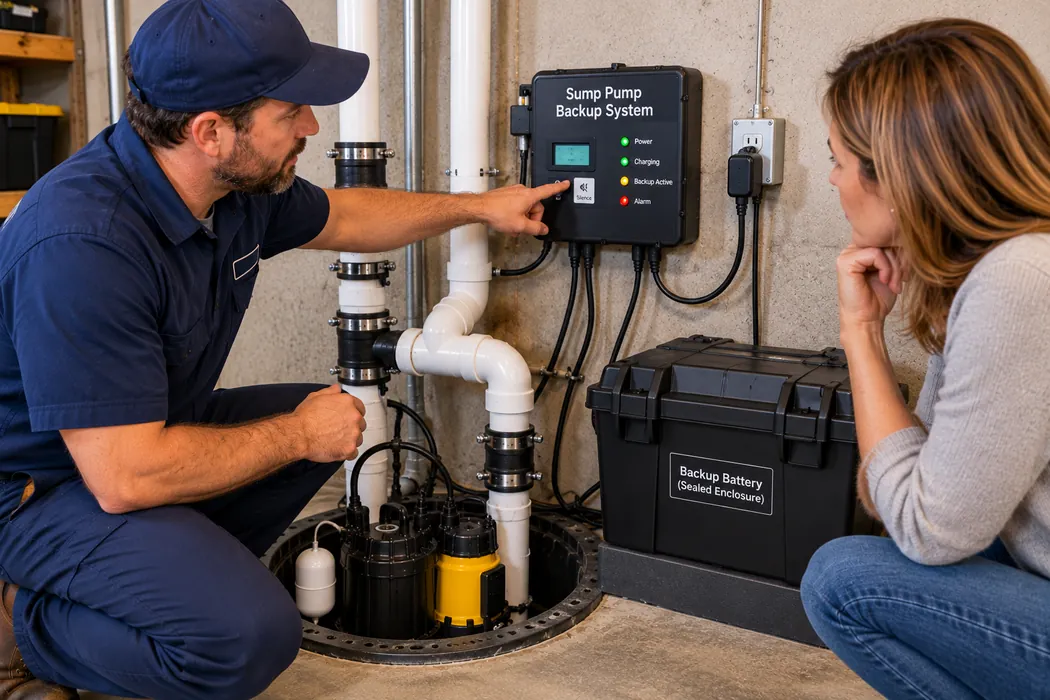
An audible alarm helps only when someone can hear it. Remote notifications may be useful when the house is unoccupied, but the equipment may require a separate module or subscription. Check whether notification hardware or subscriptions add to battery backup sump pump installation cost, and ask what happens when home internet or the router loses power.
Have the plumber explain each alert rather than treating all alarms as flood detection. A high-water alarm, power-loss notice, and battery warning describe different conditions. Know what action each message requires and which phone number to call for service.
At handoff, request a demonstration following the manufacturer's test procedure. Avoid opening energized equipment or unplugging components at random. The installer should show where the controls are, how the alarms are acknowledged, and when the system needs professional attention.
Compare the complete battery backup sump pump installation cost
Obtain proposals with the same equipment scope. Compare battery inclusion, plumbing changes, electrical allowances, testing, and removal of replaced components. Ask who handles the manufacturer’s warranty and whether service labor is covered.
A low online equipment price does not include the time needed to adapt a crowded basin or correct a poor discharge layout. Request a written price for those conditions before scheduling the work. Keep the product manuals and model numbers with the service record. Record the final battery backup sump pump installation cost alongside the equipment list, so future repair estimates can be compared with the original scope.
How to Decide Whether a Battery Backup Is Enough
A battery backup is designed to keep a secondary pump operating when the primary pump fails or the power goes out. It is not a substitute for correcting a blocked discharge, a damaged basin, poor drainage, or a primary pump that is too small for the home’s inflow. Ask the installer to identify the failure the proposed system is intended to cover.
Homes with frequent long outages, a high water table, or heavy storm inflow may need a broader plan, such as a combination system, water-powered backup where municipal water and local rules allow it, or a generator that can run the primary pump. These options have different operating requirements and should be compared rather than presented as interchangeable.
Size the Pump at the Real Discharge Height
Do not compare backup pumps only by the largest gallons-per-hour number on the box. Output falls as the pump pushes water upward and through pipe, fittings, and check valves. Ask for the manufacturer’s performance at the actual vertical lift and proposed discharge arrangement. A pump that looks powerful at zero lift may move much less water at the home’s operating point.
Consumer Reports recommends matching the backup’s output to the primary pump and accounting for vertical lift. The available space in the sump basin also matters because the second pump and float must operate without interfering with the primary pump. Basement size by itself is not a reliable sizing calculation.
Battery Runtime Is Not One Fixed Number
Runtime depends on battery type and condition, pump demand, vertical lift, and how often the pump cycles. “Runs for 24 hours” may mean intermittent operation rather than continuous pumping. Ask the installer to state the duty-cycle assumption and what runtime is expected during a severe storm with frequent cycling.
Battery condition changes over time. Flooded lead-acid batteries require water checks, while sealed AGM batteries reduce that maintenance but still need replacement and compatibility checks. Follow the pump manufacturer’s battery specification. Do not connect a larger or different battery without written product approval, and do not place a battery where leaking water or poor ventilation creates another hazard.
Check Basin, Float, Discharge, and Check-Valve Compatibility
A backup pump must fit in the existing basin with enough clearance for both float switches. The installer should test that the primary pump starts first, the backup activates at the intended water level, and neither float catches on the other equipment. A second pump cannot reliably protect the basement if both controls interfere.
Ask whether the price includes a separate discharge route, check valve, fittings, and protection against backflow. Shared discharge plumbing may be acceptable for some designed systems, but it can also become a single point of failure. The final installation should preserve service access and the sump cover’s safety function. DOE Building America guidance recommends an appropriate discharge away from the foundation and a gasketed, childproof sump cover.
What a Complete Installation Quote Should Include
| Quote item | What to confirm |
|---|---|
| Backup pump and controller | Exact model, output at lift, float arrangement, alarm, and warranty |
| Battery and charger | Battery included, approved type, enclosure, replacement plan, and charging system |
| Plumbing | Discharge pipe, check valve, fittings, backflow arrangement, and exterior termination |
| Basin work | Available space, cover changes, cleaning, or pit modification |
| Electrical work | Outlet, circuit condition, GFCI requirements where applicable, and electrician scope |
| Testing and handover | Alarm test, primary/backup activation test, manuals, and maintenance instructions |
Angi reports about $600–$1,200 for many professionally installed battery backup systems in 2026, while HomeGuide reports approximately $600–$2,000 or more installed and higher totals for combo systems. Use these as planning references only. Basin access, plumbing changes, local labor, electrical work, and equipment selection can move the actual quote outside those ranges.
When a Water-Powered Backup or Generator May Be Better
A battery system is useful where the outage is shorter than the available runtime and the battery is maintained. A water-powered backup may offer longer operation in a home with suitable municipal water pressure, but it can be unavailable on a private well and may involve local backflow or cross-connection requirements. A generator can keep the primary AC pump operating but requires safe generator planning and fuel or utility availability.
Ask the contractor to compare the options against your actual outage history, water inflow, water supply, and budget. Do not select a water-powered or generator arrangement from a generic promise of unlimited protection. The correct choice depends on the site and the rules that apply to it.
Maintenance and Testing Should Be Part of the Plan
Ask how often the battery should be inspected or replaced, how the alarm is tested, and what signs indicate a failed charger or weak battery. Keep the battery model, installation date, and test instructions in a visible service record. A backup that has never been tested may fail when the primary pump needs it.
During a professional test, ask the installer to explain the manufacturer-approved procedure. Do not unplug random components, pour water into the basin without understanding the controls, or open energized equipment. If the system sounds an alarm, the response may be low battery, high water, power loss, or a pump fault; identify the meaning before a storm occurs.
Before-Hiring Checklist for a Backup Sump Pump Installer
- Ask for the contractor’s relevant license, insurance, and sump-pump experience.
- Provide the primary pump model, basin dimensions, discharge route, and previous flooding history.
- Request pump output at the actual vertical lift, not only the zero-lift rating.
- Confirm the exact battery type, charger, enclosure, expected runtime assumptions, and replacement cost.
- Ask whether plumbing, check valves, electrical work, alarms, permits, and testing are included.
- Require a written change-order process for basin clearance, discharge defects, or electrical problems.
- Keep the product manuals, warranty, installation date, and final test record.
Seven smart checks before accepting an estimate
Use the same written brief for every contractor. This makes battery backup sump pump installation cost comparisons more useful than collecting totals for different packages. Ask for clear answers to these seven questions:
- Which primary pump stays, and which backup equipment is new?
- Does the price include the exact approved battery and charger?
- What output does the selected pump provide at the proposed discharge conditions?
- What battery, duty cycle, and operating assumptions support the runtime figure?
- Are basin clearance, check valves, discharge changes, and cover work included?
- Which alarms work locally, and which need extra hardware, subscriptions, or internet?
- Who performs testing, explains maintenance, and handles warranty service?
Take photographs of the existing equipment and keep its model information available for the site visit. Tell the contractor about previous high-water events, frequent cycling, unusual noises, and any known discharge problems. Describe what you observed rather than assuming that the motor, battery, or float is responsible. The inspection should determine which parts need attention.
Ask bidders to separate confirmed work from allowances. If electrical work or a discharge correction has not yet been assessed, identify who will inspect it and when a firm price will be available. Agree how additional work is approved before installation begins. An equipment-only offer should not be compared directly with a proposal that includes plumbing changes, testing, and cleanup.
A backup is also different from repairing damage after water has entered the house. If the basement is already wet, our guide to professional water-damage restoration explains the separate recovery scope.
At completion, keep the invoice, product manuals, battery model, test instructions, and service contact together. Ask the installer to explain any differences between the proposal and the completed work. A documented handoff helps you maintain the system and makes the final battery backup sump pump installation cost easier to understand.
Frequently Asked Questions
Will a backup prevent every basement flood?
No pump system guarantees protection against every event. Water may exceed its capacity, enter outside the collection system, or encounter a blocked outlet. The backup should be selected as one part of the home’s drainage plan.
Can I use any deep cycle battery?
Use a battery approved for the selected controller and charger. Compatibility and installation requirements vary. Ask the installer to document the exact battery type rather than assuming that similar voltage makes every battery suitable.
Is a combo system worth the higher starting price?
It can be useful when the primary pump also needs replacement. Compare the cost of retaining your current pump with replacing both. Include the condition of the existing equipment and the compatibility of the proposed package.
What should I prioritize within my budget?
Prioritize capacity at the actual operating conditions, a compatible healthy battery, reliable float clearance, and a suitable discharge. Add notification features after those needs are addressed. That order makes the installation price easier to judge against the protection you are buying.
How much does a battery backup sump pump cost installed?
Published 2026 planning references commonly range from about $600 to $2,000 or more installed, with combination systems sometimes higher. The battery, pump capacity, plumbing changes, electrical work, basin access, and local labor determine the actual quote.
How do I size a backup sump pump?
Compare the backup pump’s published output at your actual vertical lift and discharge conditions with the primary pump and observed water inflow. Do not size it by basement square footage or zero-lift gallons per hour alone.
How long will the battery run during a power outage?
There is no single runtime for every home. Runtime changes with battery condition, pump demand, lift, and duty cycle. Ask for the assumptions behind the manufacturer’s runtime figure and how heavy cycling changes it.
Should I replace the primary pump at the same time?
Not automatically. If the primary pump is reliable and compatible, an add-on backup may be enough. If it is old, noisy, short-cycling, or unable to keep up, compare a combo replacement with a separate backup system.
Does a battery backup need a separate discharge pipe?
It may, depending on the equipment and plumbing design. Ask the installer to explain shared versus separate discharge arrangements, check valves, backflow concerns, and what happens if the common outlet becomes blocked.
How often should the backup battery be replaced?
Follow the battery and pump manufacturer’s instructions and test the system as recommended. Battery life depends on type, temperature, cycling, and maintenance. Keep the installation date and replacement guidance in your service records.
Sources and further reading
[1] HomeGuide: Sump pump battery backup cost — national planning ranges and cost factors.
[2] Angi: Sump pump battery backup cost — 2026 installation and capacity planning references.
[3] Consumer Reports: Sump pump backup buying guide — pump output at lift, basin fit, battery and monitoring considerations.
[4] Basement Watchdog BWE manufacturer capacity information — model-specific performance example.
[5] Basement Watchdog Big Dog CONNECT runtime specifications — runtime assumptions and water-flow limitations.
[6] DOE Building America: Drain or sump pump installed in basements or crawlspaces — discharge and sump-cover guidance.
Sources checked November 13, 2026. Costs are U.S. planning references and vary by location, equipment, basin, discharge route, electrical work, and labor. This article is not a pump-sizing or electrical-installation procedure.
Keep reading
Related Articles
Home Systems & Energy
Sewer Camera Inspection Cost Before Buying an Older House
Home Systems & Energy