
Home Systems & Energy
Electrical Meter Socket Replacement Cost and Utility Coordination
Plan a meter socket replacement using published cost references, utility requirements, a coordinated outage schedule, and complete electrician quotes.
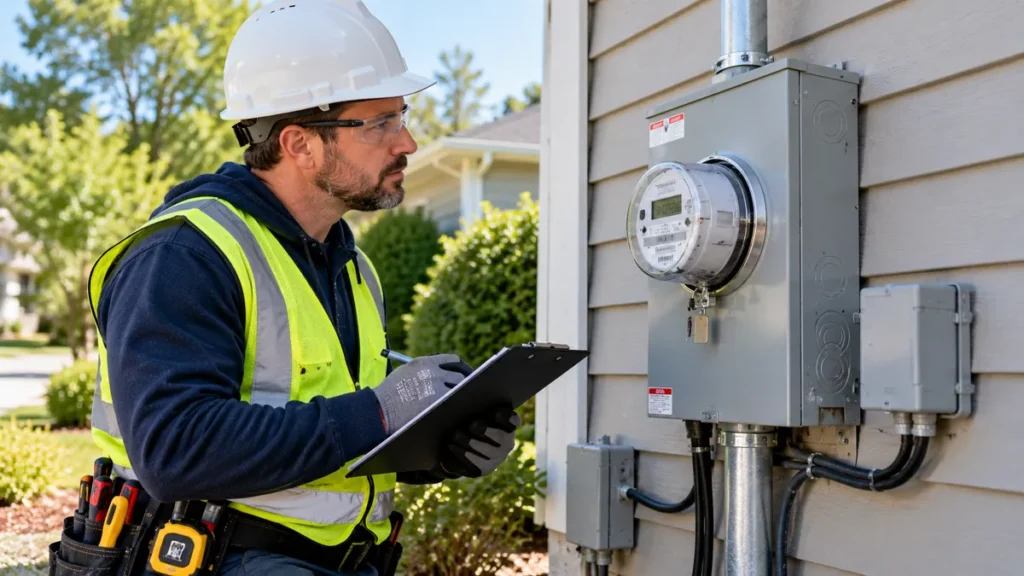
Electrical meter socket replacement cost involves more than purchasing a new enclosure. The electrician, utility, and inspection authority may each have a role, and their schedules can affect when power is restored. The equipment must also suit the service and the utility’s requirements.
HomeGuide publishes a broad U.S. electric meter-box replacement range of $500–$2,100. Treat it as an electrical meter socket replacement cost screening reference, not a quote for your address. Larger or more extensive projects can exceed it. [1]
Electrical Meter Socket Replacement Cost by Service Category
The same source lists these installed planning ranges by service category. They do not confirm which socket or service arrangement fits your property. [1]
| Published service category | Replacement cost reference |
|---|---|
| 100 amps | $500 to $1,000 |
| 150 amps | $700 to $1,500 |
| 200 amps | $800 to $2,000 |
| 400 amps | $1,500 to $5,000 |
The larger service category can exceed the general average range. Do not assume every project falls below $2,100, or that selecting a higher rated enclosure upgrades the home's service by itself.
Have the meter base replacement electrician identify the equipment being replaced and the intended service arrangement. An estimate should describe the actual project rather than rely on a generic amperage label. Utility equipment approval and associated changes belong in that discussion.
Separate the Meter From Its Socket
The meter records electricity usage; the socket or meter base is the equipment that receives it. These names sometimes get used loosely in estimates, which can obscure what is being replaced. Ask the contractor to identify each component in ordinary language.
Ownership and repair responsibilities depend on the serving utility and installation arrangement. Do not assume that everything near the meter belongs to the utility, or that every service component belongs to the homeowner. Confirm the responsibility boundary with your own provider.
Duke Energy's storm guidance, for example, tells property owners with a meter box pulled away from the home to arrange an electrician's repair and notes that inspection may be needed before reconnection. [2] That illustrates why utility restoration and homeowner equipment repairs may be separate tasks.
Treat a Damaged Meter Enclosure as a Safety Issue
If the enclosure is damaged, loose, or affected by a storm, contact the utility and a qualified electrician. Do not open it, remove the meter, break a seal, or touch exposed equipment. Loss of power does not establish that the equipment is safe to handle. The Electrical Safety Foundation says meter service and removal belong to utility personnel or approved contractors.
If there is arcing, smoke, fire, or a downed wire, keep people away and call emergency services and the utility as appropriate. Avoid standing water near damaged electrical equipment. A budgeting guide should not be used to decide that visible damage can safely wait.
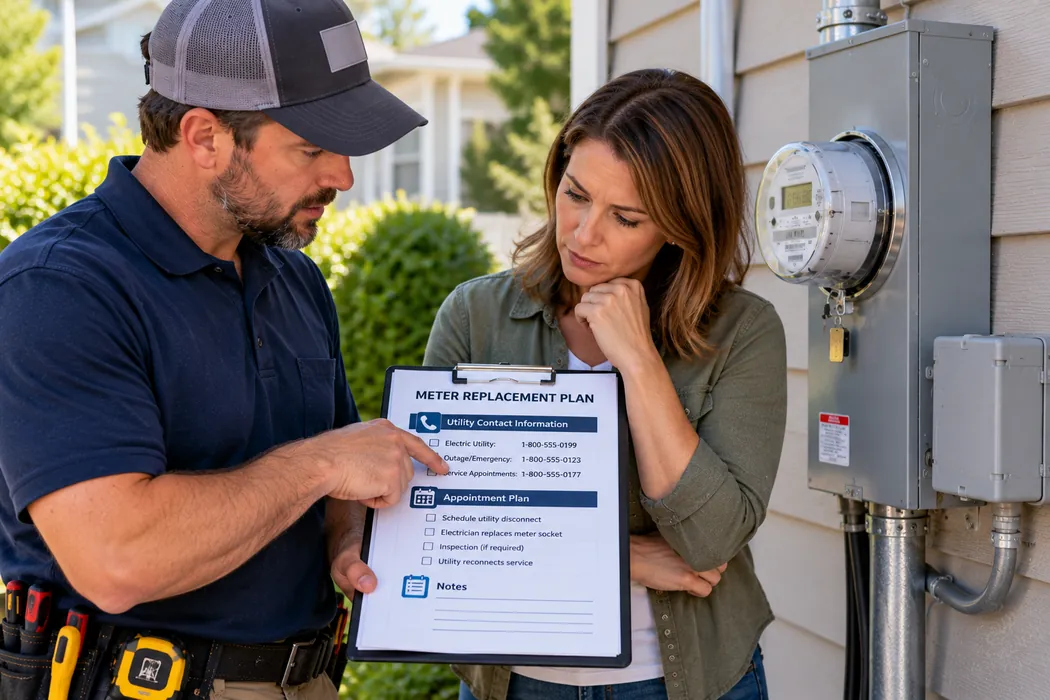
For a planned replacement without an immediate hazard, share any inspection findings and previous service records. Ask the electrician to explain why replacement is recommended and whether other equipment needs attention. Age alone is not a complete diagnosis of a particular enclosure.
Confirm Utility Approval Before Ordering Equipment
Ask which meter socket model is proposed and whether it meets the serving utility's current specifications. A retail enclosure that appears similar may not be acceptable for your service. The contractor should settle that question before scheduling the replacement.
Tell the electrician whether the property has overhead or underground service and whether there are existing solar, battery, or generator connections. Those details can affect coordination and the assessed scope. Do not assume a proposal based on a photograph captures every service condition.
If equipment must be special ordered, ask how that affects scheduling. Buying the cheapest available enclosure yourself may create delays if the utility does not accept it. Let the written proposal identify who supplies approved equipment and who handles a rejected or incorrect order.
Replacement and Service Upgrade Are Different Projects
A like for like replacement and an increase in service capacity need separate descriptions. Ask whether the proposed work changes only the socket or also affects service conductors, disconnect equipment, the panel, grounding and bonding, or the utility connection.
If an upgrade is recommended, request the reason and complete price. A new EV charger or other planned equipment may justify an assessment, but it does not automatically establish the required service size. Have the electrician evaluate the actual demand and applicable requirements. Our 100 amp to 200 amp upgrade cost guide explains how to compare a wider service project.
Local requirements can also affect a replacement. Ask which changes are required for this job and which are optional improvements. The explanation should be specific enough that you can compare bids without treating every recommendation as an unavoidable part of a socket replacement.
Utility Disconnect and Reconnection Scheduling
Ask who submits the service request, who schedules the disconnection, and who notifies the utility when the work is ready. Confirm whether you need to authorize any part directly as the account holder. Keep the relevant contact details with the appointment information.
Discuss inspection timing before choosing a work date. An electrician finishing the physical replacement does not necessarily mean the utility can reconnect immediately. Duke Energy's guidance notes that inspection may be a prerequisite in some damaged service situations. [2]
Avoid scheduling based only on an advertised number of installation hours. Ask for the expected outage window and what could extend it. Utility availability, inspection approval, weather, and unexpected damage can affect the complete timeline.
Prepare for the Planned Outage
Choose a date that accommodates work, household needs, and any electrically dependent equipment. Discuss special requirements early rather than mentioning them after the outage is booked. If reliable power is medically necessary, arrange an appropriate plan with the relevant providers before the interruption.
Ask whether the work affects access to the driveway or part of the exterior. Clear the agreed work area without approaching damaged equipment. Keep children and pets away from the work zone during the visit.
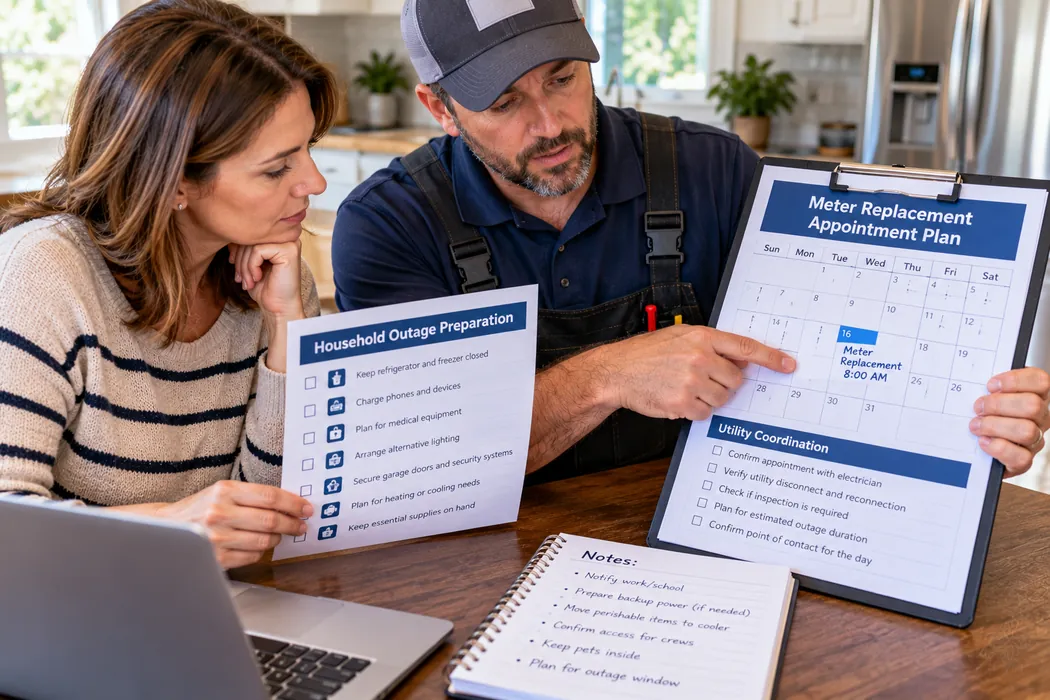
Do not improvise generator connections to cover the outage. If temporary power is needed, discuss a safe suitable arrangement separately. The meter replacement quote should identify any temporary power provisions rather than implying they are included automatically. For a separate backup-power project, see our whole-house generator planning guide.
Compare Complete Electrical Meter Socket Replacement Cost Quotes
An itemized estimate should name the socket equipment, installation labor, permit and inspection handling, utility coordination, and any associated repairs. Ask whether utility charges are included, paid separately, or still unknown.
Exterior restoration deserves attention. Replacing or relocating equipment may affect siding, mounting surfaces, or other finishes. Ask who repairs those areas and what condition the contractor will leave behind. A functional electrical replacement can still leave a separate finish project.
Request a change approval process for concealed damage or unsuitable existing components. If the service cannot be safely reconnected until additional work is complete, ask how the contractor will explain and price that work. Written scope makes an urgent decision easier to assess.
Completion Documents and Follow Up
Keep the final invoice, equipment model information, required inspection approval, and utility service records. Ask the electrician to explain any new disconnect arrangement or changed labels. Those details help future service visits and renovations.
Check that the agreed restoration work has been completed. If the utility or electrician identifies a follow up task, record who owns it and when it will be addressed. Do not treat a temporary repair as a permanent completed replacement unless the documentation says so.
Seven Easy Checks Before Accepting a Meter Socket Quote
1. Ask What Has Actually Been Assessed
Before comparing electrical meter socket replacement cost, ask the electrician to explain the observed condition and the reason for the proposed work. Share available service records and any utility notice without opening equipment or approaching visible damage. A photograph can help describe the appointment, but it does not establish the condition of concealed connections or other service components.
Have the quotation distinguish what was inspected from what remains uncertain. Ask how the contractor will document an unexpected problem and who decides the next step. This keeps an estimate for a defined replacement separate from an unsupported promise that no additional work could ever be necessary.
2. Put the Equipment Description in Writing
Ask the contractor to identify the proposed socket or meter-main arrangement, its intended rating, and the utility requirements that apply to the property. Keep the product description with the quote. Similar-looking enclosures can serve different arrangements, so a general phrase such as standard meter box is not enough to compare two offers.
A useful electrical meter socket replacement cost proposal also says who orders the equipment and handles a substitution. If the originally selected item becomes unavailable, ask for the replacement specification before accepting it. A similar purchase price does not establish that another model is appropriate for the assessed installation or acceptable to the serving utility.
3. Separate the Base Scope From Additional Work
Ask which work is included at the mounting surface, service connections, disconnect equipment, and other components the electrician identifies. Keep required changes, optional improvements, and unresolved conditions in separate lines. Do not assume a socket replacement includes a complete service upgrade simply because the equipment has a higher rating printed on it.
When electrical meter socket replacement cost differs substantially between bidders, compare these scope lines before judging the totals. One contractor may have included an assessed repair that the other has not priced. Request clarification from both rather than adding a guessed allowance and presenting the adjusted number as an actual contractor quote.
4. Confirm Who Coordinates Each Appointment
Record the contact responsible for the electrician’s visit, the utility service request, and any required inspection arrangements. Ask which authorizations the account holder must provide and when they are needed. Use verified contact information from the utility’s own channels; an illustrative checklist or an old saved phone number is not a substitute.
Electrical meter socket replacement cost and the outage schedule should describe the same project. If another appointment must happen before reconnection, ask who confirms it and how the household receives updates. Keep a named contact for delays so a change in the schedule does not leave you guessing which organization is handling the next step.
5. Agree on Access and Restoration
Discuss the safe access route, parking, pets, exterior belongings, and any area the contractor needs kept clear. Follow the electrician’s instructions without touching or moving electrical equipment yourself. If a gate or a household member’s availability affects access, settle that detail before the utility and contractor appointments are finalized.
Ask whether electrical meter socket replacement cost includes repairs to disturbed siding, mounting surfaces, or other finishes. Record what the completed area should look like and who handles any remaining restoration. The electrical scope and the finish scope may involve different contractors, so clarify responsibility instead of assuming the last crew will complete both.
6. Review the Change-Approval Procedure
Ask how additional work will be explained, priced, and approved if existing conditions differ from the estimate. Keep the original proposal and approved changes together. A useful change record states the problem found, the proposed additional scope, its price, and any effect on the outage schedule, without asking the homeowner to make a technical safety judgment.
For a project already affected by damage, discuss how urgent communication will work if the service cannot be released for reconnection as planned. Electrical meter socket replacement cost may need revision when the assessed scope changes. Ask for a clear explanation while allowing the responsible professionals to determine the work needed for the actual condition.
7. Keep the Completion Record
At handover, retain the invoice, equipment information, inspection documents supplied, and relevant utility records. Ask which outstanding items remain and who will address them. Have the electrician explain any changed labels or normal homeowner controls, and keep the service contact details available for later questions.
Compare the final electrical meter socket replacement cost with the accepted quote and approved changes. Clarify any difference in scope before treating the project record as complete. Keep written warranty terms with the equipment details rather than relying on a broad verbal description of what a future problem might be covered by.
Organize an Electrical Meter Socket Replacement Cost Worksheet
Create separate lines for the specified equipment, installation labor, associated electrical repairs, utility coordination, permit and inspection handling, restoration, and any temporary-power arrangement. Mark each line included, excluded, allowance, or not applicable. Ask the bidder to clarify an unanswered line before comparing the complete proposal with another contractor’s price.
Record when the quotation expires and whether any item still needs an assessment or confirmation. Do not turn an unresolved utility charge into a precise total by guessing. If the project changes, request an updated written scope that keeps the reason for the change visible alongside the revised price.
FixingManual recommends comparing electrical meter socket replacement cost on that defined scope. A low enclosure price is only one part of a coordinated job. The clearer proposal tells you what will be supplied, what work is included, who arranges the outage steps, and which questions must still be resolved before the appointment.
Keep the Outage Plan Separate From an Installation-Time Estimate
Ask the electrician which part of the proposed schedule describes physical work and which part depends on another appointment or approval. Keep the expected interruption window with the household plan. A short advertised replacement time does not answer every question about when normal service will be available again.
Before the appointment, review how you will receive updates if the expected window changes. Identify any work, communication, accessibility, or other household needs that make an extended interruption difficult. Discuss those needs in advance so the relevant providers and contractors can help you plan an appropriate arrangement rather than improvising during the outage.
How to Tell Whether the Meter Socket Needs Replacement
A missing seal, damaged cover, corrosion, water entry, scorching, loose mounting, unusual heat, or a meter that cannot be safely seated should be treated as an assessment issue—not a DIY repair. A utility notice, storm damage, repeated outage, or electrician finding can all lead to a replacement recommendation, but the visible symptom does not identify every failed component.
Ask the electrician to describe what was observed, what is being replaced, and what remains untested. Do not remove the meter, open the socket, break a utility seal, or touch exposed conductors. CPSC recall guidance specifically warns consumers not to open meter-breaker enclosures and says qualified contractors should handle repairs.
Meter, Meter Socket, Service Entrance, and Main Panel Are Different
The utility meter measures usage. The meter socket or meter base holds the meter. The service entrance conductors carry power toward the home, and the main panel distributes it. Quotes often use “meter box,” “meter can,” and “meter socket” loosely, so ask the contractor to identify the exact component and boundary of work.
Ownership varies by utility and location. HomeGuide describes the homeowner as commonly responsible for the socket while the utility owns the meter, but the serving utility’s rules control your property. Confirm responsibility before assuming that the utility will pay or that the homeowner can order the equipment independently.
Electrical Meter Socket Replacement Cost: What the Price Includes
| Cost item | What to confirm |
|---|---|
| Socket or meter-main equipment | Exact model, service rating, utility approval, and who supplies it |
| Electrician labor | Removal, installation, conductor work, testing, and cleanup |
| Utility coordination | Disconnect, seal removal, service request, and reconnection process |
| Permit and inspection | Who applies, pays, schedules, and handles corrections |
| Related repairs | Service conductors, mast, weatherhead, grounding, bonding, panel or siding |
| Restoration | Exterior patching, paint, siding, trim, or weather sealing |
HomeGuide reports approximately $500–$2,100 for many meter-box replacements, with higher ranges for larger service categories. Angi’s 2026 guide reports a wider $500–$5,000 range depending on amperage, location, labor, and project scope. These are national planning references, not a quote for your address. The socket itself is only one part of a coordinated service job.
Replacement Is Not the Same as a Service Upgrade
A like-for-like socket replacement does not automatically increase the home’s electrical capacity. A service upgrade may also require larger conductors, a new disconnect or panel, grounding and bonding changes, utility approval, and a different meter arrangement. Ask the electrician to price the replacement and any upgrade as separate scopes.
If an upgrade is recommended for an EV, heat pump, addition, or workshop, ask what load calculation or existing condition supports it. Do not assume a higher-rated socket alone creates a higher-capacity service. The contractor should explain required work versus optional future planning.
Utility Coordination Can Control the Timeline
Ask who contacts the utility, who schedules the disconnect, whether an inspection is required before reconnection, and which steps require you as the account holder. Physical installation may finish before the utility can re-energize the service. Utility availability, weather, permit review, and unexpected damage can extend the outage.
Use contact information verified through your utility’s official website or bill. Keep the service request number, appointment window, electrician contact, and inspection status together. Do not schedule the project around an advertised labor duration alone.
Storm Damage, Corrosion, and Water Entry Need Immediate Attention
If the socket is pulled from the wall, cracked, scorched, buzzing, wet, corroded, or associated with arcing or a burning odor, keep people away and contact the utility and a qualified electrician. Do not stand in water near the equipment. If there is smoke, fire, or a downed wire, leave the area and call emergency services and the utility.
A power outage does not prove that the meter socket is safe. Do not reset breakers repeatedly or improvise a generator connection. A temporary repair, if authorized by the responsible professionals, should be clearly identified as temporary and followed by a written completion plan.
Weatherhead, Mast, Grounding, and Siding May Add Cost
A socket replacement can reveal a damaged service mast, weatherhead, mounting board, service conductors, grounding electrode connection, or water pathway. Ask the electrician to list each related item separately and explain whether it is required for safe reconnection, required by the utility, required by the inspector, or simply recommended as an improvement.
Confirm who restores siding, trim, stucco, paint, or exterior sealing. A quote can include safe electrical work while excluding cosmetic restoration. Compare the same finished condition in every bid.
Questions to Ask Before Hiring an Electrician
- What exact component is damaged or being replaced?
- Is the proposed equipment approved by the serving utility?
- Is this a like-for-like replacement or a service-capacity change?
- Who supplies the socket and handles a rejected or unavailable model?
- Who schedules utility disconnect, inspection, and reconnection?
- Are permit fees, utility charges, testing, and return visits included?
- Could the work expose damaged conductors, mast, grounding, or weatherproofing?
- What exterior restoration is included, and who completes excluded work?
- What warranty and completion records will I receive?
Illustrative Budget Example
Illustrative example—not a quote: A straightforward approved socket replacement with accessible mounting and no conductor damage may fall within common planning ranges. A storm-damaged installation requiring a new socket, mast repair, grounding work, inspection, utility coordination, and siding restoration can cost substantially more. The difference comes from the complete service condition and coordination—not simply the price printed on the enclosure.
Request an itemized quote and a written change-order process. If the electrician cannot confirm a component until the utility disconnects the service, keep that uncertainty visible instead of treating the lowest possible number as the final budget.
Completion Records to Keep
Keep the final invoice, equipment model, permit or inspection documentation, utility service request details, warranty terms, photographs of completed exterior work, and any updated panel or disconnect labels. Ask who should be contacted if the meter cannot be reseated, power is intermittent, or water enters the enclosure later.
Frequently Asked Questions
Will the Utility Pay for a New Meter Socket?
Responsibility depends on the utility and equipment arrangement. Ask your provider to confirm the boundary before relying on a repair assumption. The utility owned meter and the homeowner's enclosure may have different responsibilities.
Does a New Socket Increase Available Power?
Not by itself. Capacity changes require an assessment of the complete service and applicable utility requirements. Ask for a separate upgrade scope when that is the goal.
Can I Replace the Cover Instead?
That depends on the diagnosed damage and equipment suitability. Have a qualified professional assess the enclosure. A cosmetic cover change should not be used to conceal unresolved corrosion, loose equipment, or electrical damage.
Can I Replace the Socket Myself?
Use a qualified electrician and the utility's authorized process. The service connection and reconnection requirements make this a coordinated electrical project. Compare complete estimates and settle the outage plan before authorizing work.
How Much Does Meter Socket Replacement Cost?
HomeGuide reports roughly $500–$2,100 for many replacements, while Angi’s 2026 guide reports a broader $500–$5,000 range depending on service size and scope. Utility charges, permits, conductor repairs, mast work, grounding, and restoration can change the total.
Who Owns the Meter Socket?
Ownership and repair boundaries vary by utility. The utility meter and homeowner socket may have different responsibilities. Confirm the boundary with your own utility before arranging work or assuming who pays.
Do I Need a Permit to Replace a Meter Socket?
Permit and inspection rules vary by jurisdiction. Ask the electrician or local building department who applies, pays the fee, schedules inspection, and coordinates release for reconnection.
Can a Damaged Meter Socket Be Repaired Instead of Replaced?
That depends on the specific damage, equipment condition, utility requirements, and whether the enclosure remains suitable. A qualified electrician and the utility should determine the safe approved option.
How Long Will the Power Be Off?
The physical work may be only part of the timeline. Utility scheduling, inspection, weather, and unexpected damage can extend the outage. Ask for an outage window and a communication plan rather than relying on labor hours alone.
Can I Buy the Meter Socket Myself?
Do not order a generic socket before the electrician and utility confirm the approved model and service arrangement. An apparently similar enclosure may be rejected or unsuitable for the property.
Sources
- HomeGuide: Electric meter box replacement cost benchmarks — national planning ranges and responsibility notes.
- Angi: Electrical meter box replacement cost — 2026 planning ranges and cost factors.
- U.S. Consumer Product Safety Commission: Guide to Home Wiring Hazards — service and electrical warning guidance.
- CPSC meter-breaker safety recall — consumers should not open certain service enclosures.
- Duke Energy: Meter-box damage and reconnection guidance — utility-specific example, not a nationwide ownership rule.
- Electrical Safety Foundation: Meter installation and service safety.
Sources checked November 13, 2026. This guide covers homeowner budgeting and coordination. It is not an electrical installation procedure. Images are illustrations, not evidence of an inspected installation.
Keep reading
Related Articles
Home Systems & Energy
Sewer Camera Inspection Cost Before Buying an Older House
Home Systems & Energy