
Home Systems & Energy
EV Charger Installation Cost in a Detached Garage
Plan detached garage charging with a clear equipment scope, electrical supply assessment, trenching and restoration questions, and complete contractor quotes.
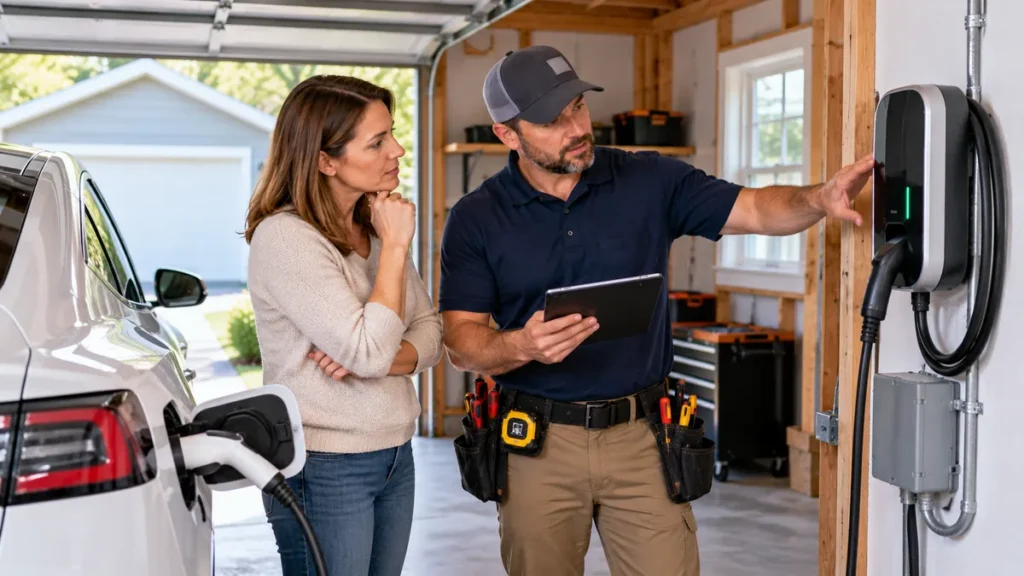
Detached garage EV charger installation cost depends on the existing electrical supply, the charging equipment, and the route between buildings. An existing garage outlet does not establish that the building has enough capacity for a Level 2 charger. Have a qualified electrician assess the supply and proposed charging demand before ordering equipment or arranging excavation.
HomeGuide lists $1,200–$3,000 for a typical residential Level 2 charger and installation. [1] Use this as a general screening reference, not a detached garage EV charger installation cost quote. A new feeder, excavation, service changes, or pavement restoration can take the project beyond that range.
Detached Garage EV Charger Installation Cost: Start With the Scope
The same cost guide separates a typical Level 2 installation into the following categories. These figures describe its national reference project rather than your property's final bill. [1]
| Typical Level 2 installation category | Published range |
|---|---|
| Materials | $450 to $1,000 |
| Labor | $750 to $2,000 |
| Charger and installation total | $1,200 to $3,000 |
| Detached garage feeder and excavation changes | Obtain a site specific quote |
The total already incorporates materials and labor. Do not add every row together. Ask each electrician which parts of the typical project are included and which garage specific work is additional.
Two properties with the same parking arrangement can have very different installation costs. One garage may already have an adequate electrical supply. Another may have only a small existing circuit serving lights and a door opener. Comparing the charger price alone misses that distinction.
Match Charging Speed to Your Routine
Start with daily mileage, the hours the car normally remains parked, and the vehicle's charging capability. Level 2 uses a 240 volt supply, while some households can meet daily needs with suitable Level 1 charging. DOE's Alternative Fuels Data Center explains that home electrical capacity and driving patterns should inform the choice. [2]
Tell the installer whether you usually recharge overnight or need substantial charging between trips. Ask what charging rate the proposed installation will provide with your specific vehicle. Buying equipment with a higher advertised output does not mean the car or electrical supply can use all of it.
Consider another vehicle only if it is a realistic future need. Ask for separate pricing for today's installation and any sensible provision for later expansion. That keeps optional planning from becoming an unexplained requirement in the base quote.
Assess the Garage Supply Before Trenching
Request an assessment of the home's service and the electrical supply to the garage. Ask whether the existing feeder and garage panel can support the planned charging load alongside current uses. Empty breaker spaces alone do not answer that question. See our 100 amp to 200 amp upgrade cost guide if the electrician identifies a wider service project.
EV charging is treated as a continuous load in the applicable electrical code. The contractor should explain the proposed charging setting and circuit arrangement for the selected equipment. Do not use a universal circuit size from an online guide. The DOE home-charging guidance explains the need for an appropriate professional installation.
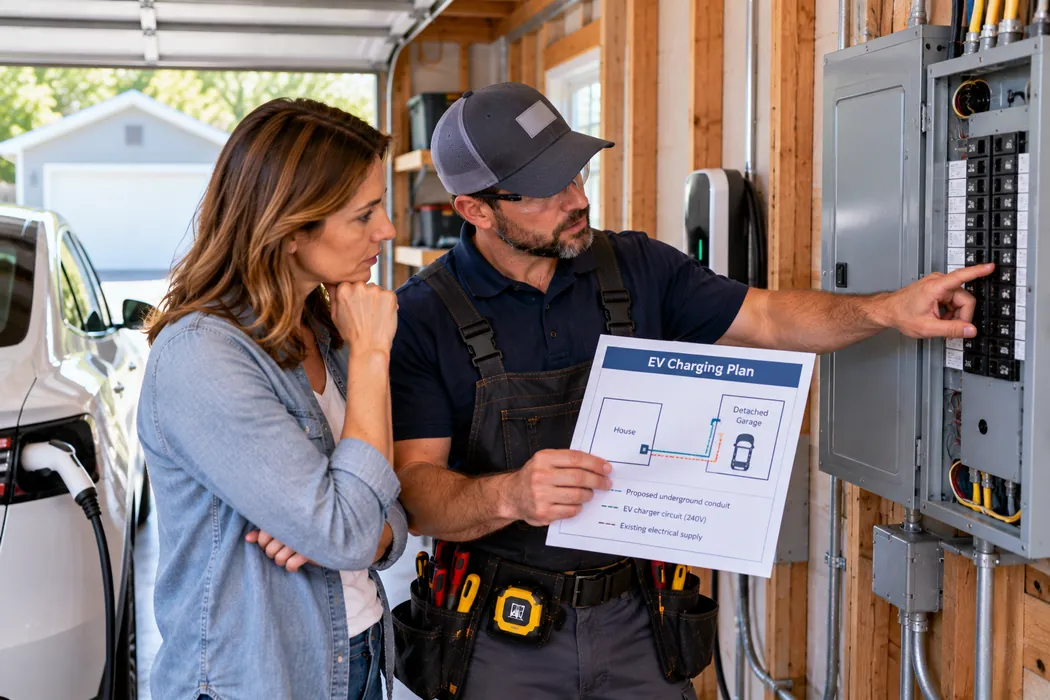
If an upgrade is recommended, request the reason and separate cost. Ask whether a compatible charging configuration or professionally designed load management arrangement is an option. The answer depends on equipment, site conditions, and local requirements; it should not be promised before the assessment.
What Level 2 Charger Trenching Adds
The proposed route deserves a site visit. A straight path through accessible soil is a different job from crossing a driveway, avoiding a tree root area, or working beside existing underground services. Have the contractor show the intended route before you approve excavation.
Ask who arranges utility locating, who performs the excavation, and what restoration is included. Marking public utilities may not identify every privately installed line. Tell the contractor about irrigation, landscape lighting, previous outbuilding wiring, and other known buried features.
Do not use a generic per foot trenching figure as a complete electrical quote. The project can involve excavation, suitable wiring and conduit, building entry work, inspections, backfill, and surface repairs. The estimate should describe those items and identify anything another contractor must complete.
Lawn and Pavement Restoration
Clarify whether the job leaves rough backfill or a restored surface. Lawn repair, driveway work, and landscaping replacement can create a meaningful difference between bids. Photograph the agreed route and surrounding finishes before work begins so expectations are clear.
Inspection Before Concealment
Ask how inspections will fit the excavation schedule. The installer should explain when work may be covered and who coordinates approval. Do not assume the trench can be closed immediately after the electrical materials are installed.
Charger Location and Connection Options
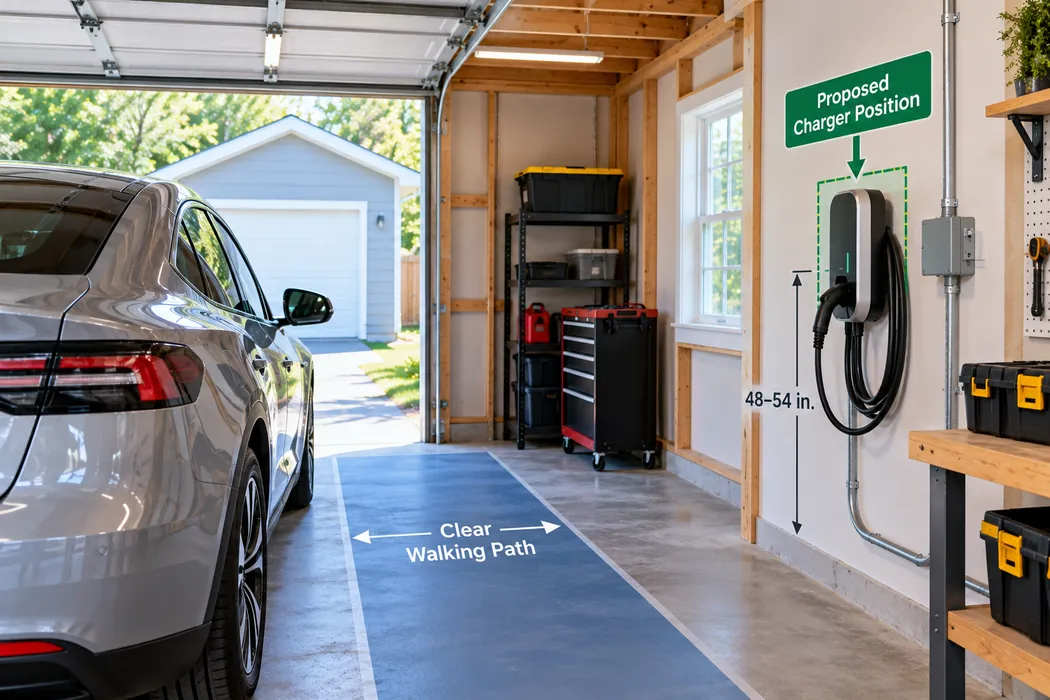
Show the electrician how you park the vehicle. Consider charging port location, ordinary walking paths, cable storage, and access to the garage door. A charger placed solely beside the easiest electrical entry point may be inconvenient every day.
Discuss hardwired and plug connected options for the selected equipment. Ask what each requires and why the contractor recommends one for your site. Do not assume an existing receptacle is suitable merely because a charging plug appears to fit.
For an exterior location, DOE recommends equipment rated for outdoor use. [2] Ask whether the enclosure and installation location suit your weather exposure. Even inside a garage, vehicle movement, storage, and moisture should be considered when selecting the mounting position.
Compare Complete Garage EV Circuit Installation Quotes
Give each bidder the same vehicle information and coverage request. A useful quote names the charger model, proposed operating output, electrical work, route, permits, and finish restoration. It should identify whether you supply the charger or the contractor provides it.
Ask who handles unexpected underground conditions or unsuitable existing wiring. Request a written approval process for additional work. That helps you evaluate a discovery without feeling that the whole installation has become an undefined commitment.
Check relevant licensing and insurance, and ask about experience with detached garages. The lowest charger package price may exclude exactly the work your property needs. Compare the completed project instead of an advertisement built around a simpler installation.
Incentives and Running Costs
Check current utility programs before ordering equipment. Eligibility may depend on the model, installation date, account, or contractor. Do not subtract an incentive from the budget until the responsible program confirms that your project qualifies.
Ask whether a charging schedule can work with your electricity rate. A connected charger may provide useful scheduling features, but internet access and account requirements can matter in a detached building. Confirm which features continue working without a reliable connection.
The installation price and the cost of charging are separate questions. Your vehicle use, electricity rate, and charging losses affect operating expenses. Keep those assumptions explicit when comparing home charging with public stations.
Seven Easy Checks Before Approving a Detached Garage Charging Quote
1. Describe the Vehicle and Charging Routine
Give every bidder the same vehicle information, usual parking arrangement, daily travel pattern, and available charging window. Explain whether the project serves one vehicle now or includes a realistic plan for another later. Ask which assumptions the installer used when recommending the charging equipment and its proposed operating output.
A useful detached garage EV charger installation cost estimate connects the electrical proposal to those needs. Keep optional future provision separate from the base installation. If your routine changes before equipment is ordered, ask whether the original recommendation still fits rather than assuming that the largest advertised charger is automatically the best choice.
2. Record What the Existing Supply Assessment Covers
Ask which parts of the home’s service, garage supply, and existing equipment have been assessed and what remains uncertain. Keep available records with the quote. The DOE electrical-contractor handbook explains why a site assessment and load calculation matter; spare breaker positions do not by themselves establish available capacity.
When a detached garage EV charger installation cost proposal includes an upgrade, request the reason and a separate description of that work. Ask whether the contractor has evaluated suitable alternatives for the actual site. Leave the technical selection to the responsible professional rather than choosing a feeder, breaker, or charging setting from an online example.
3. Ask for a Clear Route Description
Have the contractor show where the proposed electrical route enters and leaves each building and which surfaces it crosses. Discuss access, fixed landscaping, known buried features, and any part of the route that cannot yet be assessed. Keep a sketch or marked photograph with the proposal so changes can be compared with the agreed starting point.
Detached garage EV charger installation cost should identify who handles locating, excavation, electrical work, inspections, backfill, and restoration. Ask specifically how privately installed lines will be identified. Do not assume that a general trenching line includes every service or that permission to excavate is the same as an electrical design.
4. Check How the Charger Works With Everyday Parking
Show the installer where the charging port sits when the car is parked normally. Discuss the route between the vehicle, charger, garage door, and household walking space. Include cable storage and protection from vehicle movement in the conversation. A convenient-looking position on a photograph may not work for a different vehicle or garage.
Before accepting detached garage EV charger installation cost, ask the contractor to confirm the actual mounting and clearance requirements for the selected equipment. Do not use the dimensions printed on an illustrative image as a specification. Keep the final agreed position with the product information and have any proposed change reviewed before work proceeds.
5. Confirm Equipment Supply and Connected Features
Record who supplies the charger, its exact model, intended connection arrangement, included accessories, and warranty terms. Ask what happens if that equipment is unavailable when installation is scheduled. A substitution should be reviewed for suitability and any change in scope before it is accepted, rather than approved only because its price is similar.
A detached garage EV charger installation cost package should also explain which features require an internet connection or account. Ask how normal charging, schedules, and support work if connectivity is unreliable at the garage. Confirm any ongoing charges directly with the provider instead of assuming that every feature in an advertisement is included indefinitely.
6. Agree on Inspections and Work Sequencing
Ask who arranges the required permits and inspections and how those appointments fit the work sequence. Confirm who communicates when a stage is ready for inspection and how delays are handled. Keep responsibility for work by another trade visible so an unfinished surface or access task does not become a surprise during installation.
Compare detached garage EV charger installation cost using the complete sequence, not just the time spent mounting the charging unit. Ask what needs to be available before the crew arrives, how the garage can be accessed during the work, and which activities must wait until the appropriate professional has released the installation for normal use.
7. Define the Handover Before Work Starts
Ask what equipment information, inspection records, warranty details, and operating instructions you will receive. Arrange a demonstration using your vehicle where appropriate. Confirm the intended charging setting and any agreed limitations without changing installation settings yourself. Have the installer explain ordinary controls and the process for reporting a concern.
At completion, compare the final detached garage EV charger installation cost with the accepted proposal and approved changes. Review restoration, cleanup, cable storage, and outstanding tasks. Keep the records together so a later service provider can understand the equipment and the work already completed without relying on a generic package name.
Build a Detached Garage EV Charger Installation Cost Worksheet
Use separate lines for the charger, assessment, garage supply work, route preparation, electrical installation, permit and inspection handling, restoration, and commissioning. Mark each item included, excluded, allowance, or not applicable. If the contractor offers a single package total, request a written list of the work that total covers.
Compare the same defined scope in each offer. If one bidder includes pavement repair and another stops at backfill, ask for clarification before judging the totals. Do not insert an invented price for the missing work and describe the adjusted number as an actual contractor estimate. Leave uncertain items visible until the responsible bidder provides an answer.
Keep the base detached garage EV charger installation cost separate from optional future provision or unrelated renovation work. This makes the immediate decision easier to assess while preserving a clear record of alternatives. If the budget changes, request a revised specification rather than assuming that every omitted line leaves the same finished installation.
Plan for the Garage After Installation
Explain how the garage is used beyond parking: storage, tools, bicycles, access to the yard, or other routine activities. Ask the installer to consider those uses when agreeing on the final position and cable arrangement. Keep the operating instructions accessible to everyone who will charge the vehicle so the agreed routine is understood.
For the detached garage EV charger installation cost comparison, distinguish installation responsibilities from ongoing ownership tasks. Ask who provides service support, which maintenance instructions apply to the actual equipment, and how a damaged cable or failed charging session should be reported. Do not open equipment or attempt a repair based on a troubleshooting description.
Check Program Eligibility Before Counting a Rebate
Retain written program information and ask the administering organization to confirm the relevant model, purchase, installation, and application requirements for your project. If approval is needed before ordering, resolve it first. Record the expected reimbursement separately from the amount that must be paid to the contractor.
FixingManual recommends keeping a detached garage EV charger installation cost budget that still makes sense if an incentive is delayed or unavailable. Treat an unconfirmed offer as a question to resolve, not a guaranteed deduction. Keep the actual approval and supporting project records together if you decide to proceed through a program.
How Much Does a Detached Garage EV Charger Installation Cost?
Published planning references for a typical home Level 2 charger and installation are not the same as a detached-garage quote. HomeGuide reports roughly $1,200–$3,000 for a typical complete Level 2 installation, while Angi’s 2026 guide reports about $555–$1,380 for professional installation before major upgrades. A detached garage can cost more when the work requires a new feeder, trenching, conduit, driveway cutting, panel changes, permits, or surface restoration. These ranges are budgeting references, not promises.
Ask for the cost in separate lines: charger, electrical assessment, new circuit or feeder, excavation, underground route, garage panel work, permits, inspections, restoration, and commissioning. This prevents a low charger-installation price from being compared with a complete property-to-garage project.
Level 1 or Level 2: Choose the Charging Speed You Actually Need
Level 1 uses a standard 120-volt outlet and can be enough for a plug-in hybrid or an EV that travels short distances and sits overnight. Level 2 uses 240 volts and generally adds range faster, but it requires more involved electrical planning. ENERGY STAR lists typical ranges of about 2–5 miles of range per hour for Level 1 and about 10–20 miles per hour for Level 2, with the vehicle, charger, temperature, and battery state affecting the real result.
Before buying a high-output charger, write down daily mileage, overnight parking time, the vehicle’s maximum AC charging rate, and whether another EV may use the garage. A charger that exceeds the vehicle’s ability may add cost without improving charging. The best choice is the smallest properly designed installation that reliably meets your routine.
Why a Detached Garage Needs a Supply and Load Assessment
A garage light, door opener, or existing receptacle does not prove that the building can support EV charging. The electrician should review the home’s service, the garage feeder or branch circuit, the garage panel, grounding, existing loads, and the proposed continuous charging load. An empty breaker position is useful information, but it is not a complete capacity assessment.
If a panel or service upgrade is recommended, ask for the observed condition, the code or design reason, and a separate price. Also ask whether a compatible lower charging setting or professionally designed load-management option could meet your actual routine. Do not select a breaker, wire size, or charging setting from a generic online example; the equipment, route, panel, and locally adopted code must be evaluated together.
Trenching, Driveways, and Existing Underground Utilities
The route between the house and garage can be the largest unknown. Soil, distance, tree roots, drainage, a concrete or asphalt driveway, retaining walls, irrigation, landscape lighting, and privately installed utilities can all change the work. Request a marked route before approval and ask who is responsible for locating, excavation, conduit, backfill, inspection access, and restoration.
| Factor | Question for the contractor |
|---|---|
| Existing supply | Can the home service and garage panel support the proposed charging load? |
| Distance and route | What path will the wiring take, and what surfaces must be opened? |
| Underground work | Who locates private lines, excavates, backfills, and restores the area? |
| Equipment connection | Is the charger supplied by the contractor or the homeowner? |
| Permits | Who applies, pays, schedules inspection, and handles corrections? |
| Future changes | Which expansion options are included and which are optional? |
Do not accept a vague “trenching allowance” without the assumptions behind it. If the final route cannot be confirmed before digging, the quote should explain the allowance, change-order process, and approval point. Photograph the route and nearby surfaces before work begins.
Hardwired Versus Plug-In EV Charger in a Detached Garage
The selected charger may be available as hardwired equipment or as a plug-connected unit, but the right choice depends on the product instructions, location, protection, outlet design, and local requirements. A plug that physically fits an existing receptacle does not prove that the receptacle, circuit, grounding, and enclosure are suitable for continuous EV charging.
Ask the installer to compare both options for your garage. Confirm the exact charger model, connection method, receptacle type if applicable, weather exposure, cable management, and maintenance access. For an exterior installation, DOE recommends outdoor-rated charging equipment. Indoor garage placement still needs protection from vehicle impact, storage items, moisture, and walking paths.
Charging Location Problems Homeowners Commonly Miss
Stand where the car normally parks and consider the charging-port location, door clearance, cable reach, vehicle movement, and a safe place to hang the cable. A charger mounted near the electrical entry point may be cheaper but inconvenient every night. A longer cable is not always the best answer if it crosses a walking or driving path.
Ask for the proposed mounting position on a marked photo or simple plan. Include the garage door, storage shelves, bicycles, lawn equipment, and the normal route to the house. If you expect another vehicle, request a separately priced expansion option rather than paying for an oversized installation without a defined need.
Permits, Inspection, and Utility Incentives
EV charging installations must follow applicable local and state rules, and permits may be required. DOE explains that charging equipment is treated as a continuous load under the relevant electrical code and that installations should comply with local, state, and national requirements. Confirm the current requirement with the local authority or have the electrician document how it will be handled.
Utility rebates and other incentives can change by location, equipment model, account type, and application date. Check eligibility before ordering the charger. Keep the incentive separate from the contractor’s price until the administering program confirms that your project qualifies. A rebate should not be treated as guaranteed savings.
Safety Problems That Should Stop a Routine Installation
Stop normal use and contact a qualified professional if the garage has a hot or discolored receptacle, burning odor, repeated breaker trips, damaged wiring, water intrusion near electrical equipment, sparking, shock or tingling, or unexplained charging interruptions. Do not continue charging through a damaged cord, use an extension cord across the yard, or reset a tripping breaker repeatedly.
The Electrical Safety Foundation recommends using charging equipment according to its instructions and having the installation performed by a qualified electrician. This article is for budgeting and contractor questions, not for opening panels, wiring feeders, installing breakers, or modifying charger settings.
Illustrative Detached-Garage Budget Scenarios
Illustrative example—not a quote: A garage close to the house with an adequate panel, accessible wiring route, and no surface repair may resemble a simpler Level 2 installation. A garage across a paved driveway may need a new feeder, excavation, conduit, inspection, and pavement restoration. Even with the same charger model, the second project can be substantially more expensive because the property route—not the charger alone—drives the work.
Compare bids only after each contractor states the same charger, operating setting, route, permit responsibility, restoration standard, and completion documents. If a condition is unknown, keep it labeled as an allowance or unresolved item rather than presenting an invented total as a reliable estimate.
Before-Hiring Checklist for a Detached Garage EV Charger
- Verify the electrician’s license or registration requirements for your jurisdiction.
- Ask for liability insurance and workers’ compensation coverage where applicable.
- Provide the vehicle model, daily mileage, charging window, and future-use assumptions.
- Request a written supply/load assessment and a separate price for any panel or service work.
- Confirm the exact charger model, connection type, warranty, and who supplies it.
- Ask who handles permits, inspections, utility locating, excavation, backfill, and restoration.
- Require written approval before concealed conditions or extra work create a change order.
- Ask for final equipment information, inspection records, panel labeling, and a safe handover demonstration.
Frequently Asked Questions
Does a Detached Garage Always Need a New Feeder?
No. The existing supply may be suitable after professional assessment. Ask for a documented explanation of capacity and compatibility rather than assuming replacement is necessary solely because the garage is detached.
Can I Run an Extension Cord Across the Yard?
Do not use an extension cord or multiplug adapter for EV charging. The Electrical Safety Foundation warns against this practice and recommends qualified installation and equipment used according to its instructions. A cord across the yard is not a substitute for an assessed charging installation.
Is the Charger Included in Every Quote?
No. Some estimates cover installation of homeowner supplied equipment; others include a specific charger. Compare the model, warranty, installation scope, and total price before choosing between them.
What Should I Receive at Completion?
Ask for the permit and inspection records where applicable, equipment information, warranty details, and a demonstration with your vehicle. Review the charging settings and cable storage. Resolve incomplete restoration or unexplained charging limitations before accepting the finished project.
How Much Does a Detached Garage EV Charger Cost?
A typical home Level 2 installation is often reported around $1,200–$3,000 before unusual detached-garage work. A new feeder, trenching, driveway restoration, panel upgrade, or permit can raise the total. Get a site-specific quote.
Is Level 1 Charging Enough for My EV?
It may be enough for a plug-in hybrid or short daily driving with overnight parking. Level 2 is faster and may be more practical for higher daily mileage. Compare your routine with the vehicle’s charging limits before choosing equipment.
Can I Use the Existing Garage Outlet?
Only after a qualified electrician confirms that the outlet, circuit, grounding, protection, and continuous load are suitable. A three-prong appearance or a working garage light does not prove that the outlet is ready for EV charging.
Does the Garage Need Its Own Electrical Panel?
Not always. The correct arrangement depends on the existing supply, route, equipment, garage loads, and local requirements. Ask the electrician to explain whether a feeder, branch circuit, panel change, or another design is appropriate.
Who Pays for Trenching and Driveway Repair?
The accepted scope should identify excavation, locating, conduit, backfill, concrete or asphalt repair, landscaping, and cleanup. Do not assume those items are included because the quote says “installation.”
Can I Install the EV Charger Myself?
Do not perform panel, feeder, trench, or charger wiring work based on a general online guide. Use a qualified electrician who can assess the system, obtain required approvals, and complete the installation according to the product instructions and local code.
Sources
- HomeGuide: Electric car charging station cost — consumer cost planning reference.
- Angi: EV charging installation cost guide — 2026 planning ranges and cost factors.
- U.S. Department of Energy Alternative Fuels Data Center: Charging at home — Level 1/Level 2, outdoor equipment, capacity, permits, and code considerations.
- ENERGY STAR: Electric vehicle chargers — charging-speed ranges, safety certification, smart features, and contractor guidance.
- DOE and NREL: Plug-In Electric Vehicle Handbook for Electrical Contractors — planning and assessment background.
- Electrical Safety Foundation: Electric vehicle charging safety — safe-use and qualified-installation guidance.
Sources checked November 13, 2026. This guide covers homeowner budgeting and contractor coordination, not electrical installation instructions. Images are illustrations, not proof of an inspected installation or approved design.
Keep reading
Related Articles
Home Systems & Energy
Sewer Camera Inspection Cost Before Buying an Older House
Home Systems & Energy